
Last updated November 17, 2026
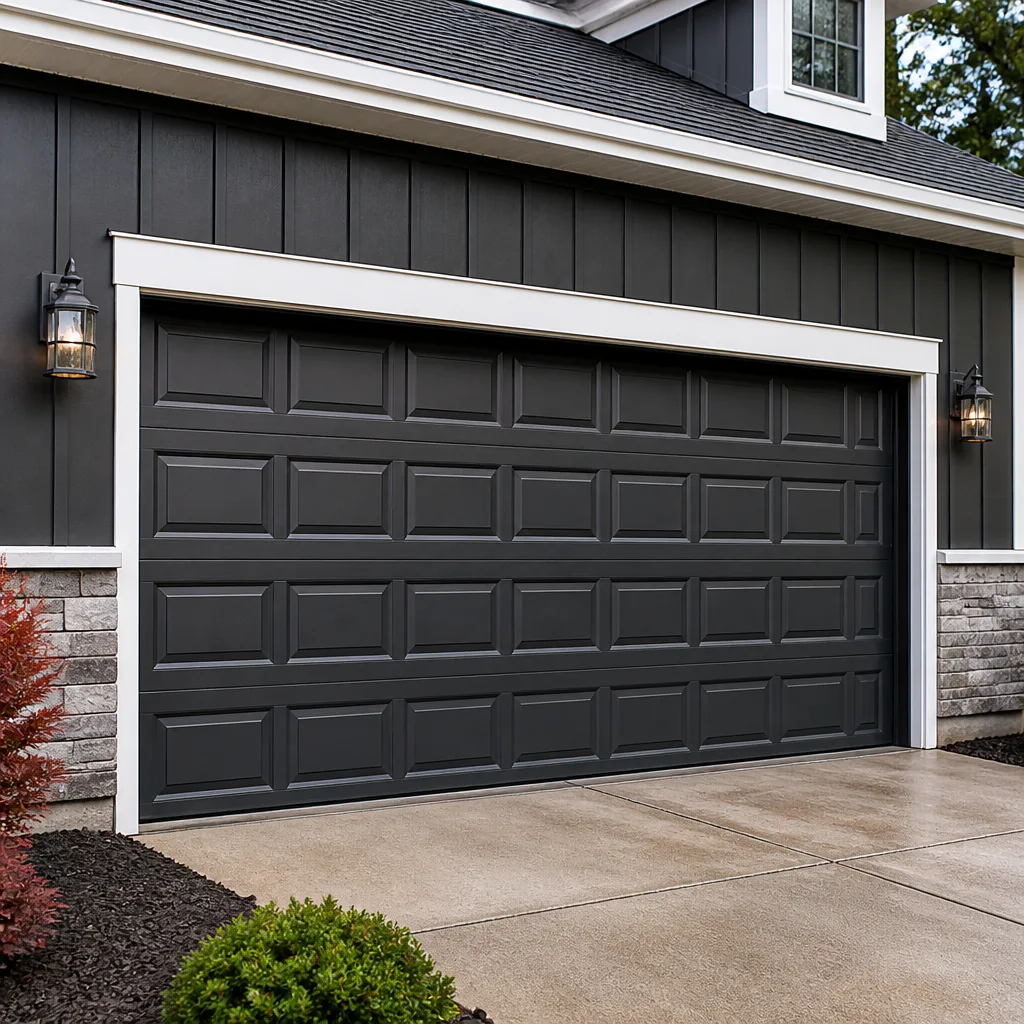 Raised-panel steel
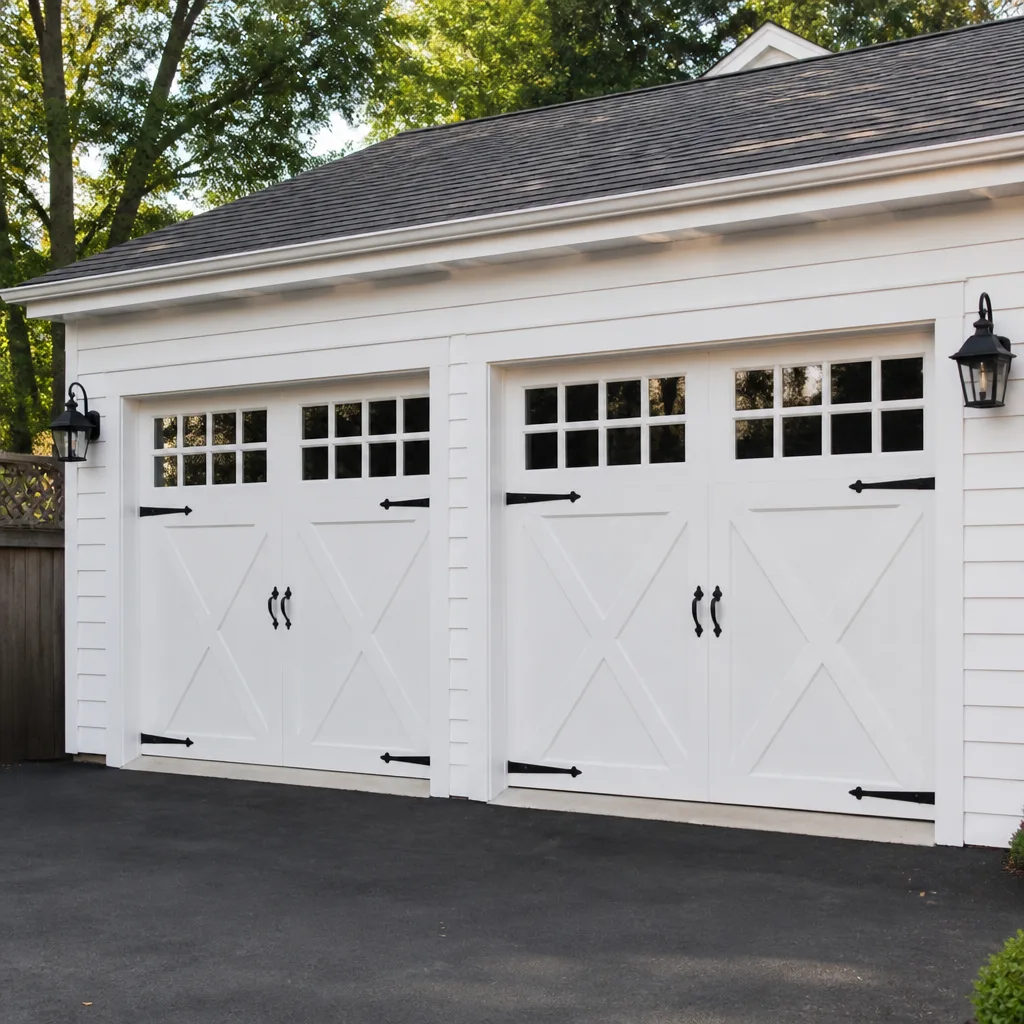 Carriage house
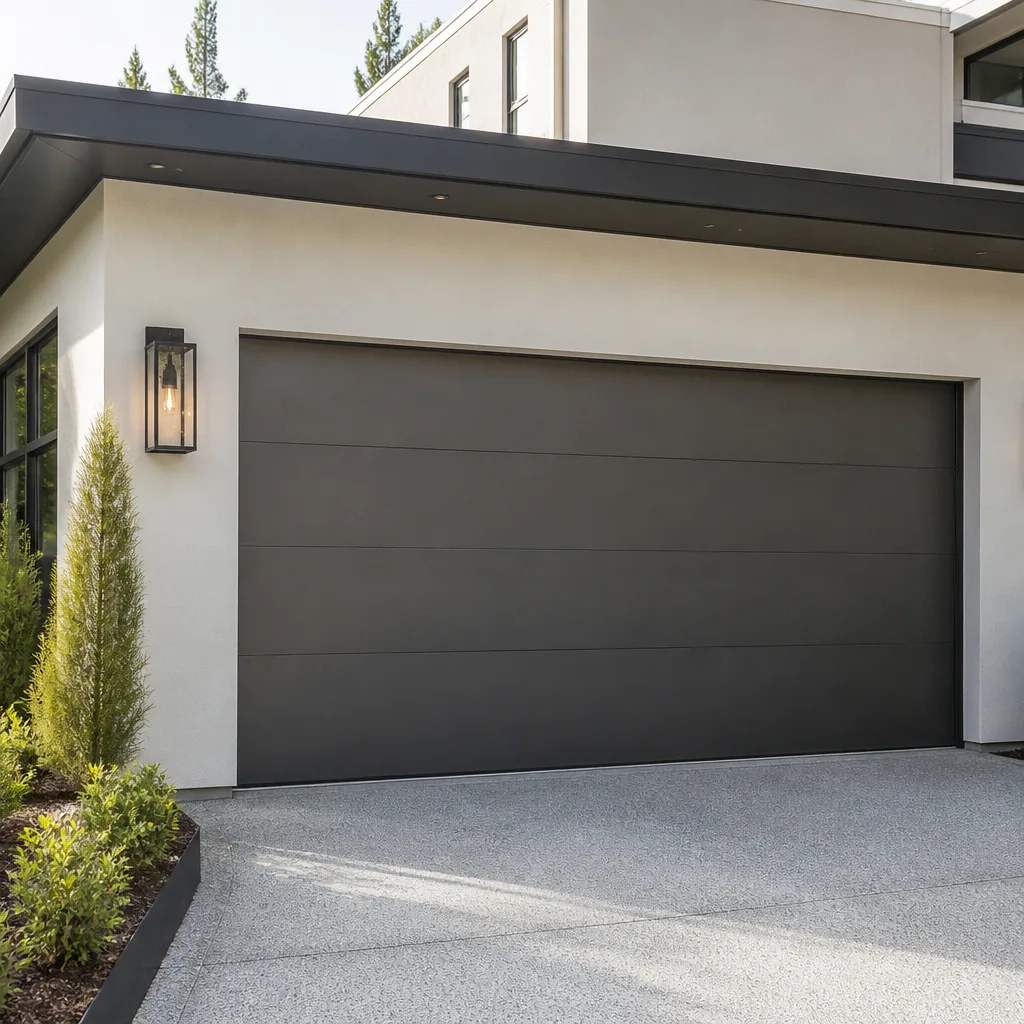 Modern flush
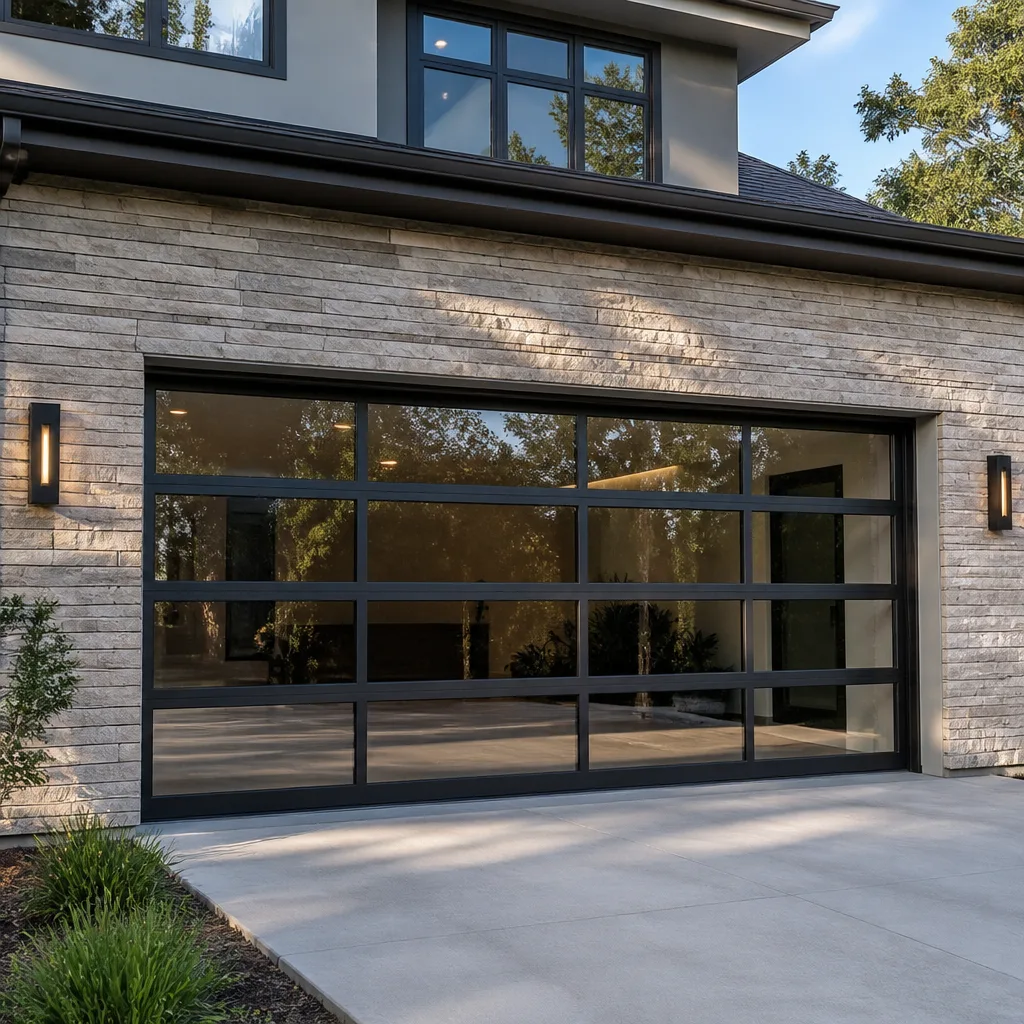 Full-view glass
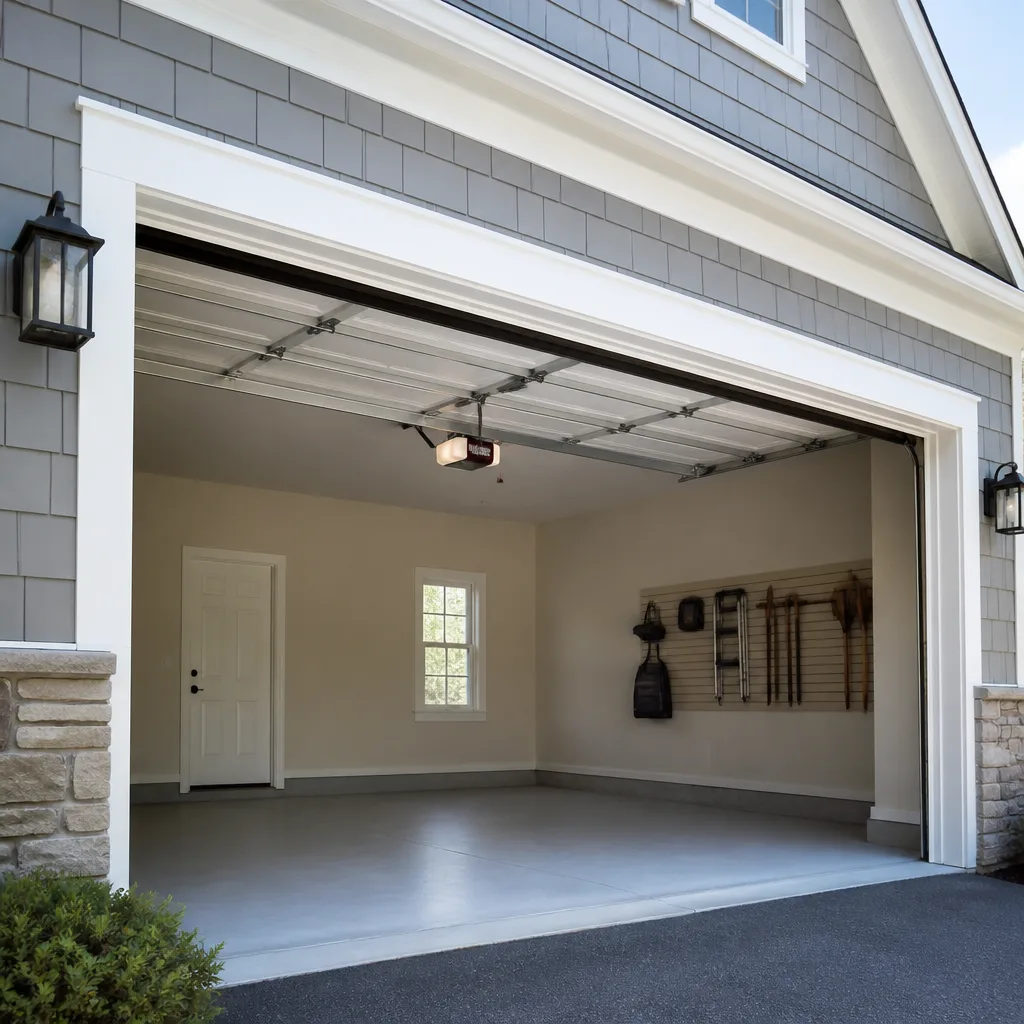 LiftMaster openers
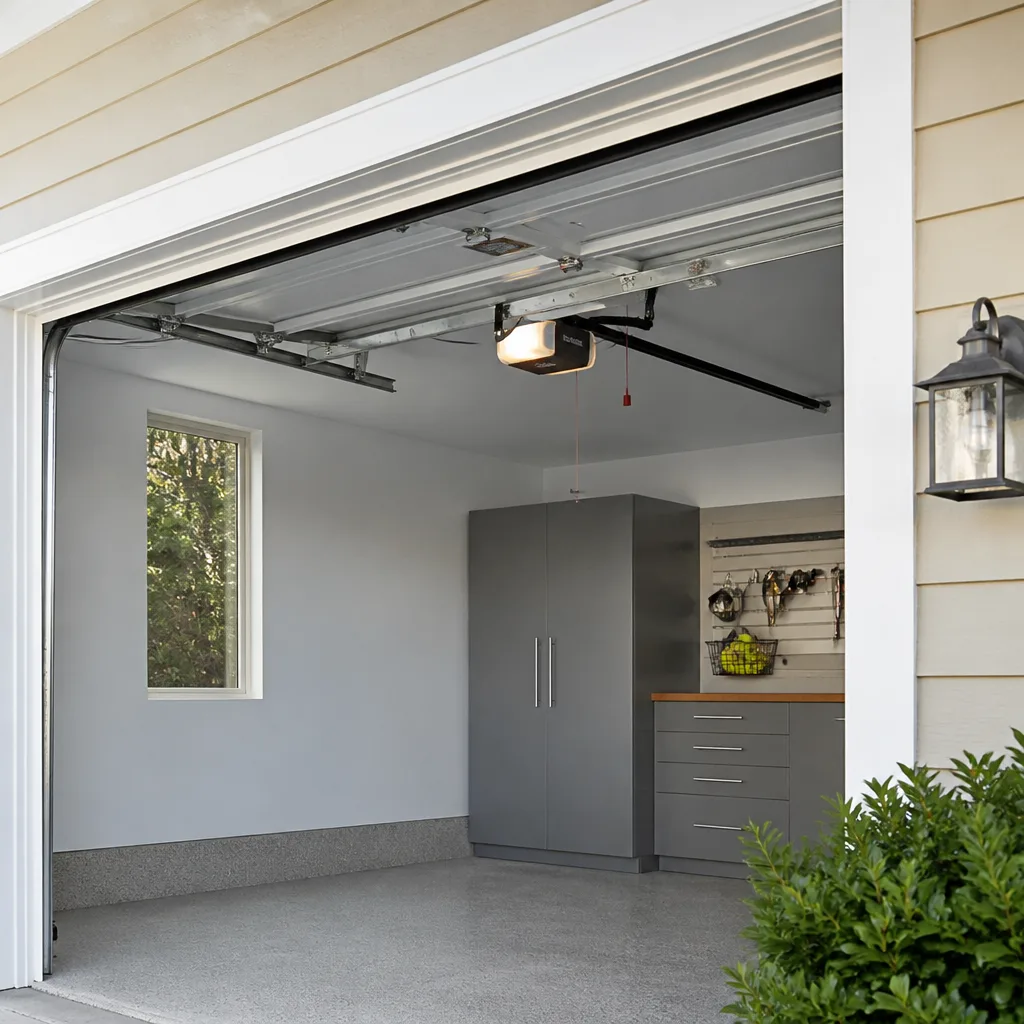 Chamberlain openers
Full 25-point door and opener safety check with every visit - springs, cables, rollers, tracks, and your LiftMaster or Chamberlain opener included
You get a price before we start. It does not change when the pro arrives.
Get your free estimateEmergency Garage Door Troubleshooting: Common Problems and How to Fix Them
Here’s something we don’t mind admitting: at least one emergency call a week turns out to be a wall outlet that lost power or a photo-eye with a spider web strung across it. That’s a free fix, and you deserve to know it before you pay an emergency rate. The truth is that roughly a third of the garage door panics we hear about in Sunrise Manor resolve with four checks you can run in under five minutes. This guide walks you through those checks, shows you how to spot the emergencies that look like opener problems but aren’t, and marks the exact point where the smart move is to put the tools down and call.
Quick Answer
Before calling anyone, check four things: the power source (outlet, breaker, and any wall switch), the manual release cord position, the photo-eye alignment and cleanliness, and whether the wall button works while the remote doesn’t. These resolve about a third of garage door emergencies. If the door is crooked, one side hangs lower than the other, or you hear a loud bang from above, stop immediately. That’s usually a broken spring or cable, and those are not homeowner jobs.
Styles & brands we work with
- Raised-panel steel
- Carriage house
- Modern flush
- Full-view glass
- LiftMaster openers
- Chamberlain openers
Table of Contents
- The Five-Minute Self-Check Sequence
- How to Use the Manual Release Cord Safely
- Problems That Look Like Opener Failures (But Aren’t)
- What to Do When Your Door Is Stuck Mid-Travel
- The Exact Moment to Stop and Call
- Why Sunrise Manor Heat and Dust Cause Specific Failures
- Brand-Specific Quirks Worth Knowing
- Common Mistakes to Avoid
The Five-Minute Self-Check Sequence
Run these four checks in order. Each one takes about a minute, and together they catch the majority of false alarms we hear about across Sunrise Manor. Keep a flashlight handy and skip the ladder entirely for now.
- Power source. Confirm the opener is plugged in at the ceiling outlet. If it’s plugged into a GFCI outlet, press the reset button. Check your breaker panel for a tripped circuit. Sunrise Manor homes built in the 1990s and early 2000s often share the garage circuit with exterior outlets, so a tripped GFCI from a landscape light is a common culprit.
- Wall switch and lock feature. Some wall consoles have a “lock” or “vacation” button that disables the remotes. Press and hold it for three seconds to toggle it off. If the opener hums but doesn’t move, this is often the fix.
- Photo-eye check. Find the two small sensors near the bottom of each track, about six inches off the floor. Wipe both lenses with a dry cloth, then confirm the LED on each is solid, not blinking. A blinking light means misalignment or obstruction. Dust storms in Sunrise Manor coat these lenses fast, and a single cobweb across the beam stops the door cold.
- Remote isolation test. Press the wall button inside the garage. If the door moves but the remote doesn’t, the problem is the remote (dead battery, lost programming) not the opener. If neither works, move to step one again.
If all four pass and the door still won’t budge, or if it moves but something sounds wrong, you’re past the self-check stage. That’s when it’s time for a real diagnosis.
How to Use the Manual Release Cord Safely
Every opener has a red or yellow release cord hanging from the trolley. Pulling it disconnects the door from the opener so you can raise it by hand. Here’s the part most guides skip: the wrong way to use it creates a whole new problem, and sometimes an injury.
Only pull the cord when the door is fully closed. If the door is partway up, the springs are under tension and the door can slam down or snap upward the instant it disconnects. We’ve seen doors come off their tracks entirely because someone pulled the cord mid-travel. The right sequence:
- Confirm the door is fully closed and sitting flat against the floor.
- Stand to the side, not underneath, and pull straight down on the cord in one firm motion.
- Lift the door slowly with both hands, keeping your body clear of the frame. A standard single-car door weighs around 130 to 150 pounds; a double-car door can run well past 200. It should lift with controlled effort. If it feels feather-light or won’t budge, stop. A spring is broken or badly out of adjustment.
- Once raised, prop it open or close it slowly and leave it disconnected until help arrives.
When the door reconnects, the trolley has to re-engage with the carriage. Some LiftMaster and Chamberlain openers re-engage automatically the next time the opener cycles; others need a manual push. If you’re not sure which you have, don’t guess at it. Call and we’ll walk you through it in two minutes.
Problems That Look Like Opener Failures (But Aren’t)
When a garage door doesn’t open, most people blame the opener. In our experience across Sunrise Manor, that’s the wrong call more often than not. Here’s the pattern: if the opener strains, grunts, or runs for a second and stops, the problem is almost never the opener itself. It’s the door fighting back.
Think about what a garage door actually is. It’s roughly 200 pounds of panel and hardware riding on two torsion springs (or extension springs on older doors) and a pair of cables. When a spring lets go, the opener suddenly has to lift that full weight alone. It can’t, so it either stalls or the safety system kicks it back down.
Signs you’re looking at a spring or cable problem, not an opener problem:
- A loud bang from the garage, often sounding like a gunshot, followed by a door that won’t lift
- The door opens a few inches and stops, then reverses
- One side of the door sags visibly lower than the other
- A visible gap in the spring coil above the door, or a spring that looks stretched out
- A dangling cable, or one that’s come off its drum
This distinction matters because torsion springs and cables are high-tension components. They’re wound to hundreds of pounds of force, and if you try to touch them without the right tools and training, the wrong move can break a wrist or worse. Garage door repair in Sunrise Manor starts with a diagnosis of exactly which component failed, not a parts swap. If you see any of those signs, close the door, don’t run the opener again, and call.
What to Do When Your Door Is Stuck Mid-Travel
A door frozen halfway open is one of the trickier situations we get called about in Sunrise Manor, and the wrong sequence here can make things worse. Here’s exactly what to do:
- Kill the power at the wall switch or breaker. Don’t try to run the opener “just to see if it clears.” If the door is off-track, running the motor can twist the panels or snap a cable under load.
- Don’t force the door up or down by hand. A jammed door has something binding: a bent track, a roller out of its channel, or a broken spring. Forcing it can drop the door or bend panels beyond repair.
- Look, don’t touch. With a flashlight, check the tracks for bends or foreign objects, check for debris under the door, and look at the rollers. If something obvious is stuck, like a ladder fallen against the door, remove it (from a safe angle) and retry once.
- If the door moves freely by hand but not by opener, the issue is likely electronic: safety reversal, limit switch, or a worn drive gear. If it won’t move by hand at all, treat it as a mechanical failure and stop.
- Leave it and call. A stuck door is an inconvenience; a door that collapses is a hazard. Don’t leave a car or a person under it, and don’t leave a door partway open overnight if you can avoid it. If you must, secure the door with clamps on the track as a temporary barrier.
If the problem is electrical, that’s a different kind of work. Garage door opener repair and installation in Sunrise Manor covers the drive gear, logic board, and limit switch work that gets a stranded door moving again.
The Exact Moment to Stop and Call
Half of good troubleshooting is knowing what not to touch. Here are the clear stop points. If any of these apply, put the tools down and call us. There’s no ambiguity and no “let me try one more thing.”
- You see a broken spring, a gap in the coil, or a sagging door: stop.
- A cable is dangling, frayed, or off its drum: stop.
- The door is off its tracks or one panel is bent: stop.
- Any part of the door has crashed to the floor or the ceiling: stop.
- The opener works but the door travels unevenly or slams: stop.
- You’ve gone through the five-minute check and nothing’s obviously wrong, but the door still refuses to move: stop.
None of these are DIY situations in Sunrise Manor or anywhere else. A garage door is a heavy, spring-loaded machine, and the parts that fail are the parts under the most tension. If you’re at any of these stop points, call (888) 274-8795. We answer around the clock, quote you on the call, and hold that number when we arrive. That’s the 90-Day Done Right Promise in writing.
Why Sunrise Manor Heat and Dust Cause Specific Failures
Sunrise Manor sits at the edge of the desert, and the conditions here eat garage door hardware faster than a lot of other places. Summer temperatures regularly push past 110 degrees, and the dust is constant. Here’s what that means for your door:
- Spring fatigue. Metal springs lose tension faster in extreme heat cycling. A door that opened fine at 60 degrees can suddenly feel heavy at 115. We count spring cycles for a living, and a Sunrise Manor spring often gives out years earlier than the same spring in a cooler climate.
- Lubrication breakdown. Heat bakes grease in the rollers, hinges, and springs until it turns gummy. That’s when you hear the grinding. A yearly clean-and-lube extends roller life noticeably.
- Photo-eye contamination. Desert dust plus monsoon-season humidity means the safety sensors cloud fast. If your door reverses the instant it closes, clean both lenses first.
- Track warping. Metal tracks expand and contract with heat cycling, and fasteners can loosen. A track that’s out of true lets rollers pop out of the channel.
If your door has been in place for years without a service call, this is a good season to have it inspected. Otto’s Garage Door Sunrise Manor home is the place to start. Newer doors? garage door installation in Sunrise Manor with the right spring rating for this climate is worth asking about.
Brand-Specific Quirks Worth Knowing
We’ve worked on all the major openers and doors, and a few brand quirks are worth knowing before you start troubleshooting:
LiftMaster and Chamberlain share engineering, so their wall consoles work similarly. If the remotes won’t work but the wall button does, check the lock button first. Both brands also use a safety beam that wears faster than people expect, especially in the dust.
Craftsman openers, especially the older chain-drive models, sometimes stall when the drive gear wears down. You’ll hear the motor run without the chain moving. That’s a gear replacement, not a motor replacement, and no amount of remote reprogramming will fix it.
Raynor doors are common in Sunrise Manor builds, and their springs tend to be sized to the door weight from the factory. When a Raynor spring fails, we match the cycle rating rather than just swapping sizes.
For any of these, the safest troubleshooting is a visual check plus the five-minute sequence above. Once you’re past that, it’s a professional repair.
Common Mistakes to Avoid
- Spraying WD-40 on the springs. WD-40 isn’t a lubricant for high-tension torsion springs, and it attracts dust. Use a proper garage door lubricant, and never put anything on a spring you can’t fully inspect.
- Pulling the manual release while the door is partway up. That’s how a door crashes down or comes off the tracks. Only pull it when the door is fully closed.
- Trying to “help” a straining opener. If the opener is straining, the problem is almost never the opener. Forcing it up by hand can do the same damage as running it against a broken spring.
- Replacing a remote before testing the wall button. Most “dead remote” calls we hear about in Sunrise Manor are a lock button, a dead remote battery, or a photo-eye fault. Test the wall button first.
- Ignoring a sagging door. A door that hangs low on one side is telling you a spring or cable is failing. Waiting turns a $40 fix into a full track-and-panel repair.
- Running the opener after a loud bang. If you hear the gunshot sound, the spring is broken. Stop running the opener; every cycle after that strains the motor and cables.
- Calling a number that “dispatches” a technician from out of state. Ask for a published address and a license number you can verify. That’s how you know who’s actually coming to your door.
See the difference
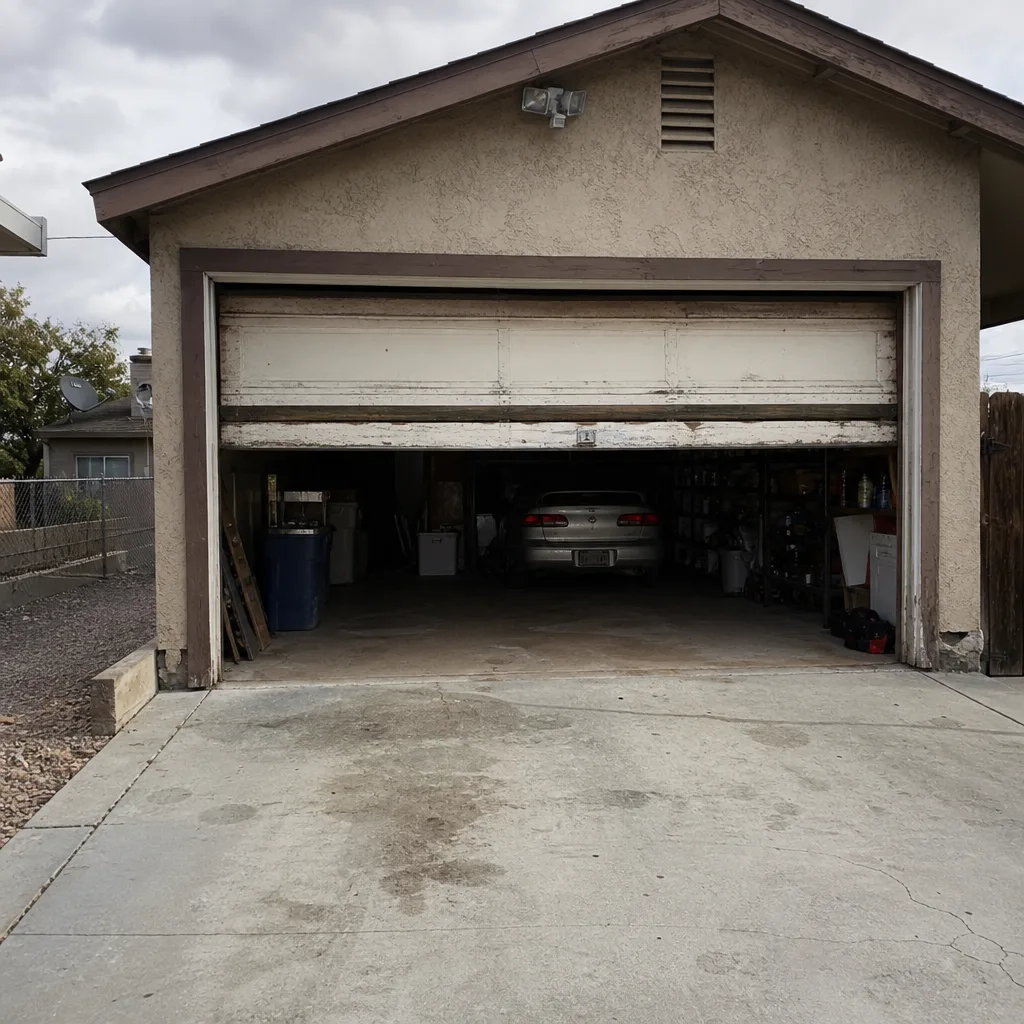 Before
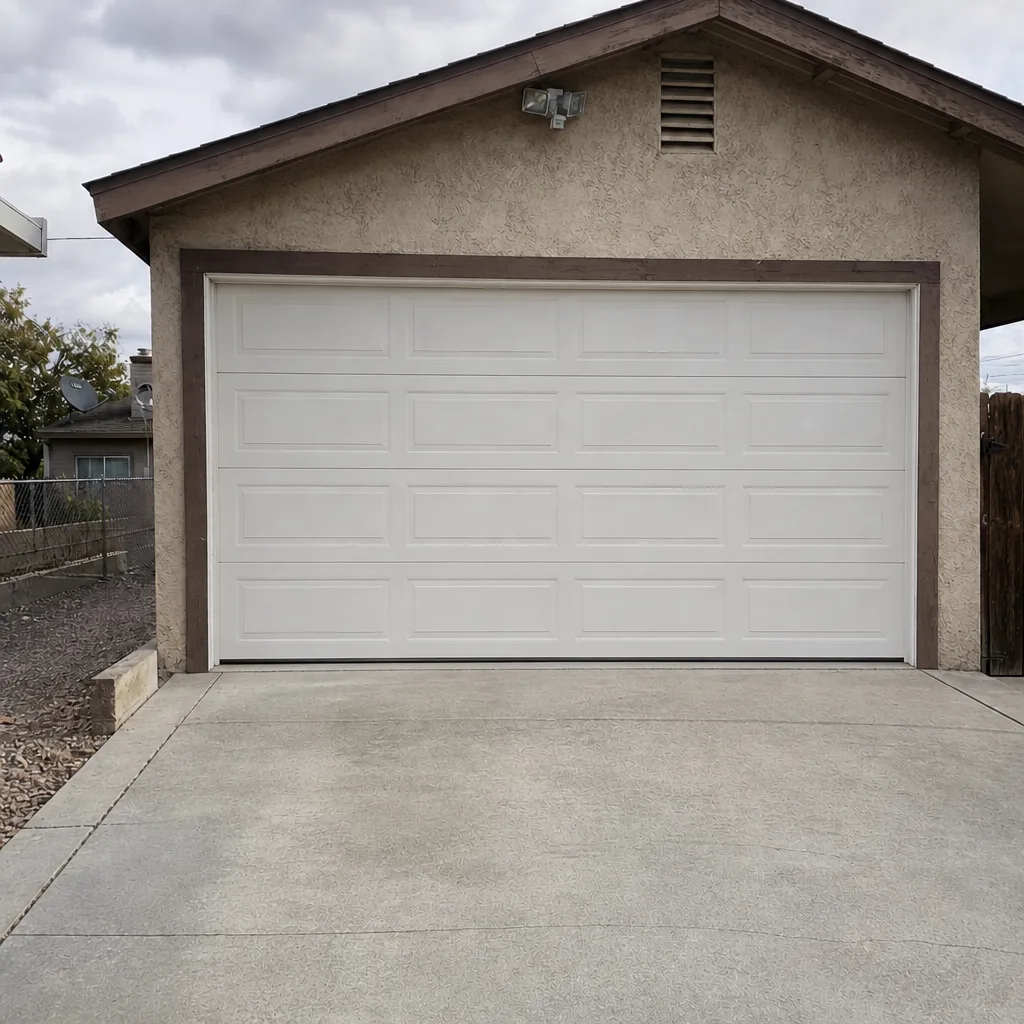 After
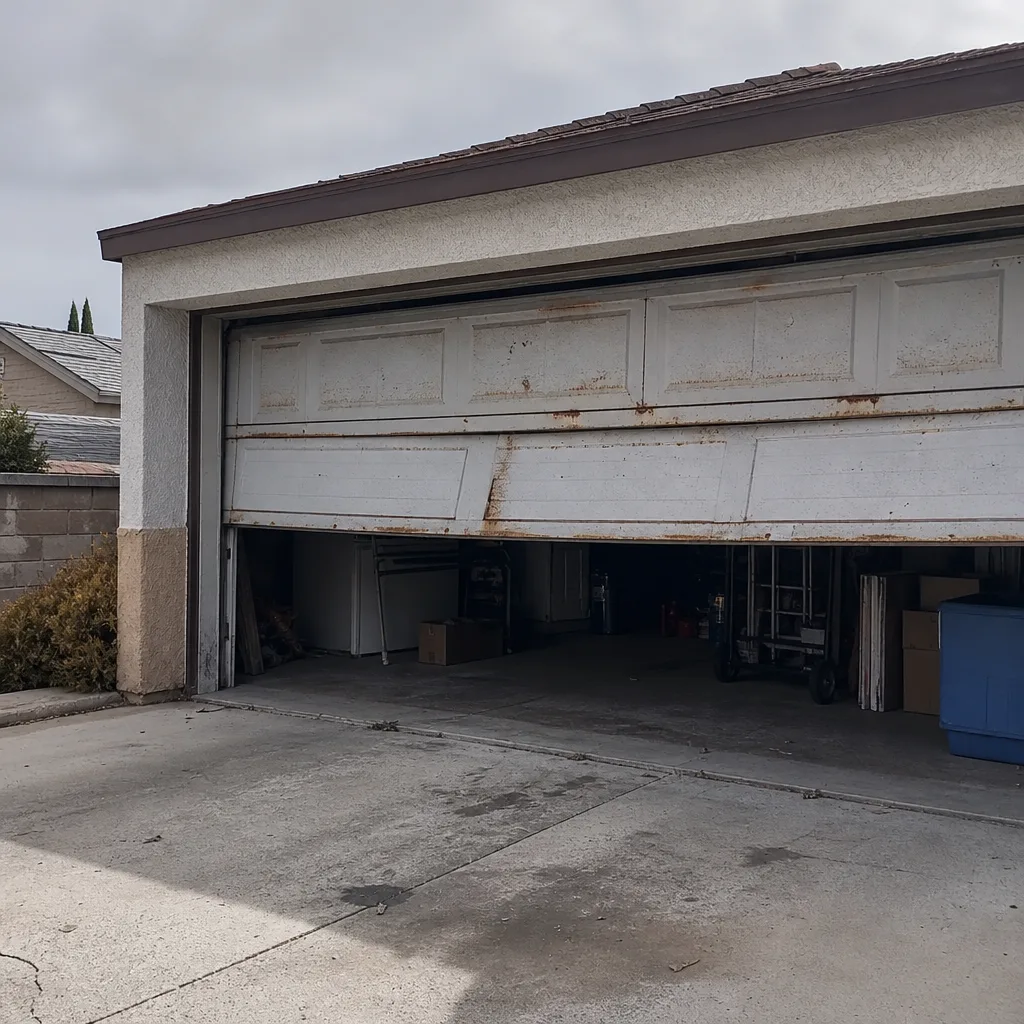 Before
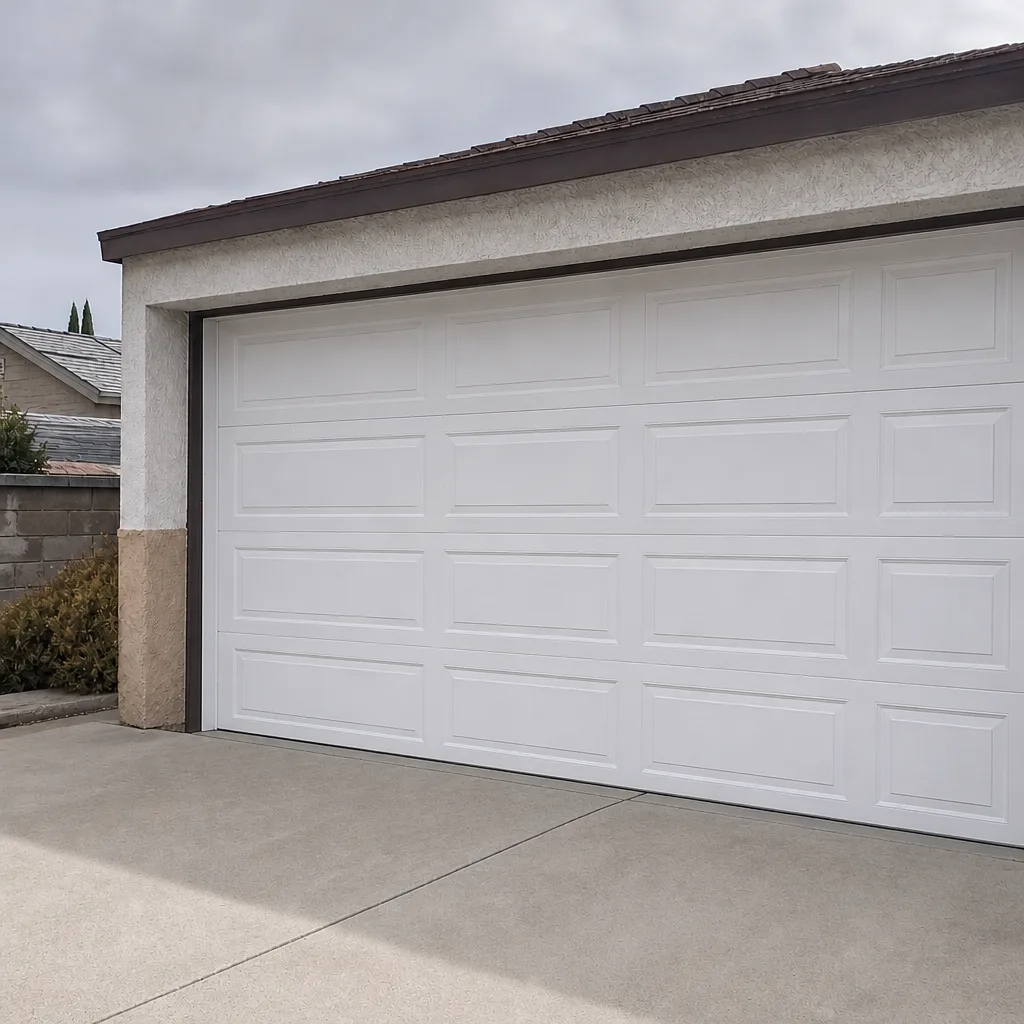 After
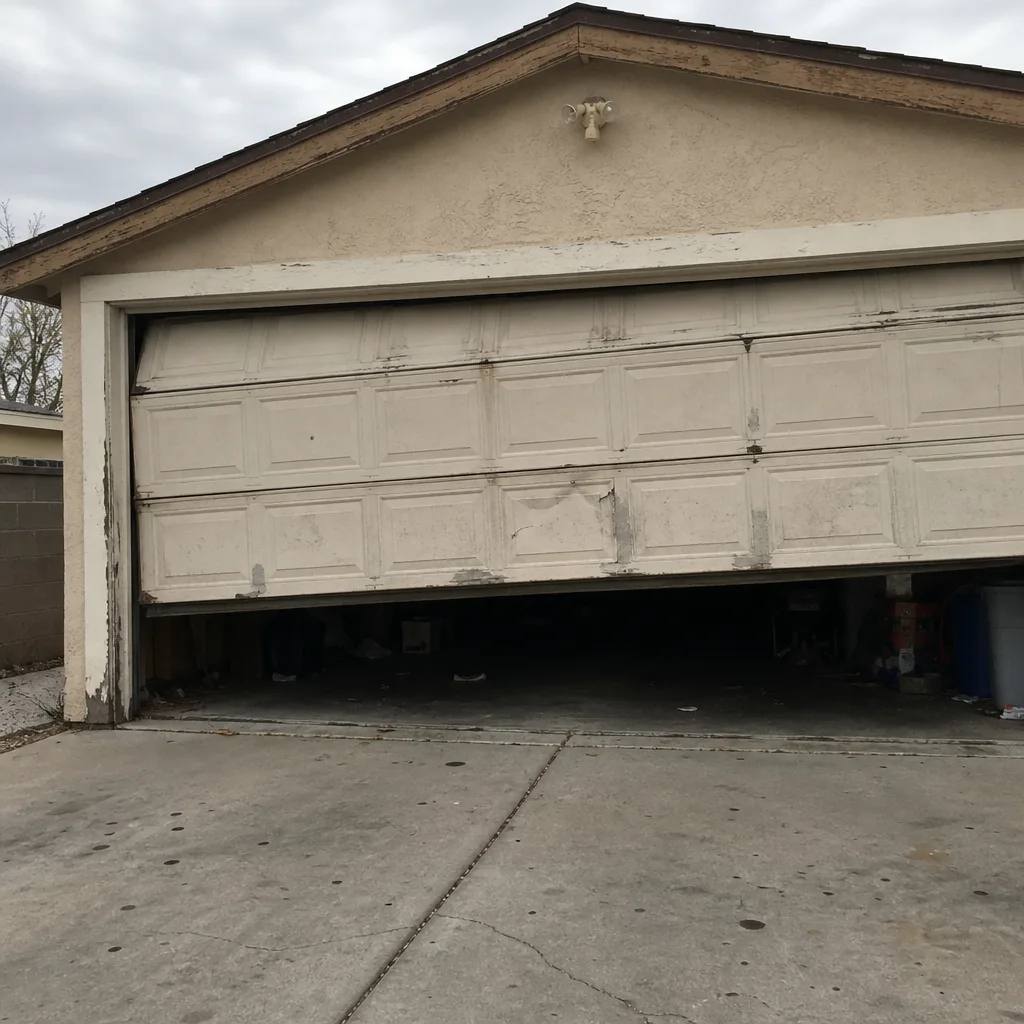 Before
 After
When to Call a Professional
Call when the five-minute self-check doesn’t fix it, when you see a broken spring or cable, when the door is off-track, or when anything about the sound or motion feels wrong. Those are all signs the work has moved past troubleshooting into repair, and the components involved are under enough tension to hurt you. Our technicians have up to 22 years of experience and are background-checked, and every job gets the 90-Day Done Right Promise in writing. Otto’s Garage Door Sunrise Manor offers free estimates in Sunrise Manor. Call (888) 274-8795 and someone answers, day or night. If you’d rather not guess, ask for a free second opinion on any written estimate you’ve already received.
Frequently Asked Questions
If the opener runs but the door doesn’t move, the likely culprit is a broken spring, a worn drive gear, or a disconnected trolley. Start with the visual check: look for a gap in the spring above the door or a cable hanging loose. If either is present, stop running the opener and call (888) 274-8795 for a same-day repair quote.
Yes for most repairs. Spring, cable, roller, and opener issues are usually resolved in a single visit, and we run emergency calls around the clock. Call (888) 274-8795 and we’ll give you an honest estimate on the phone. New door installation is a scheduled job, not a same-day one, and we’ll walk you through the timing.
Torsion spring replacement typically lands in the $250 to $400 range for a standard residential door, and usually includes a fresh set of springs, a lube, and a balance check. We quote the job on the call and the price doesn’t change between the phone and the driveway. That’s the whole point of the 90-Day Done Right Promise.
It doesn’t. We quote before we leave and hold that number. If we find something you didn’t mention, like a bent track alongside a broken spring, we’ll show you and get your okay on any added cost before we touch it. No surprise invoices.
Yes. Every technician who shows up is background-checked and works under our license, and the same name on that license is the one you’ll see on the invoice. We’ll give you the license number on request before anyone leaves the driveway.
That’s almost always the photo-eye safety sensor. Wipe both lenses, check that the LEDs are solid and not blinking, and make sure nothing is in the beam path. A cobweb or a dust film in Sunrise Manor will do it. If it still reverses after cleaning, call (888) 274-8795; the sensor alignment or wiring may need attention.
The Bottom Line
Most garage door emergencies are either a five-minute fix or a professional job, and very little in between. Start with the four self-checks: power, release cord, photo-eyes, and the wall button versus remote test. That sequence clears roughly a third of the panic calls we get. If you see a broken spring, a dangling cable, a sagging door, or a loud bang from overhead, stop and call. The parts under that door are heavy and under tension, and there’s no upside to testing them yourself. For anything past the self-check, call Otto’s Garage Door Sunrise Manor at (888) 274-8795 for a free estimate. Someone answers, day or night.
Written by the team at Otto’s Garage Door Sunrise Manor.