
Last updated November 17, 2026
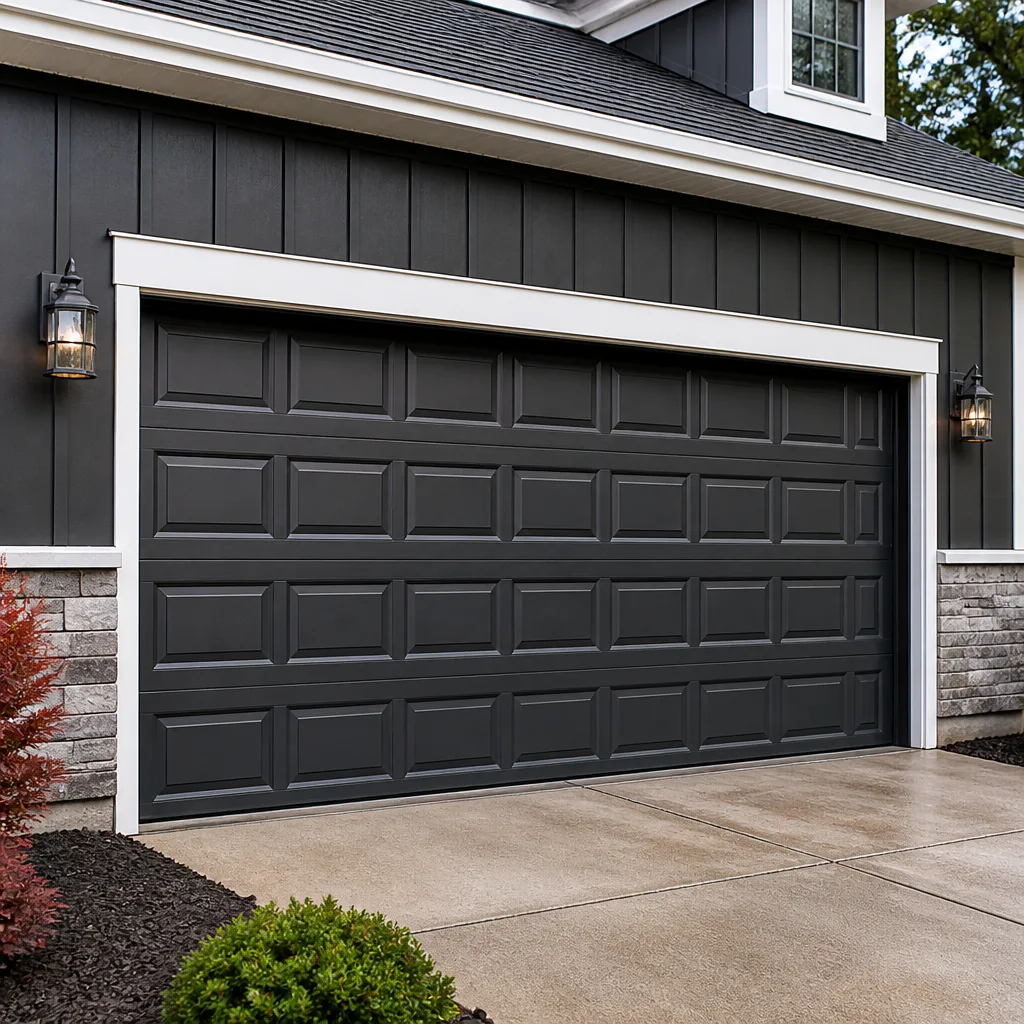 Raised-panel steel
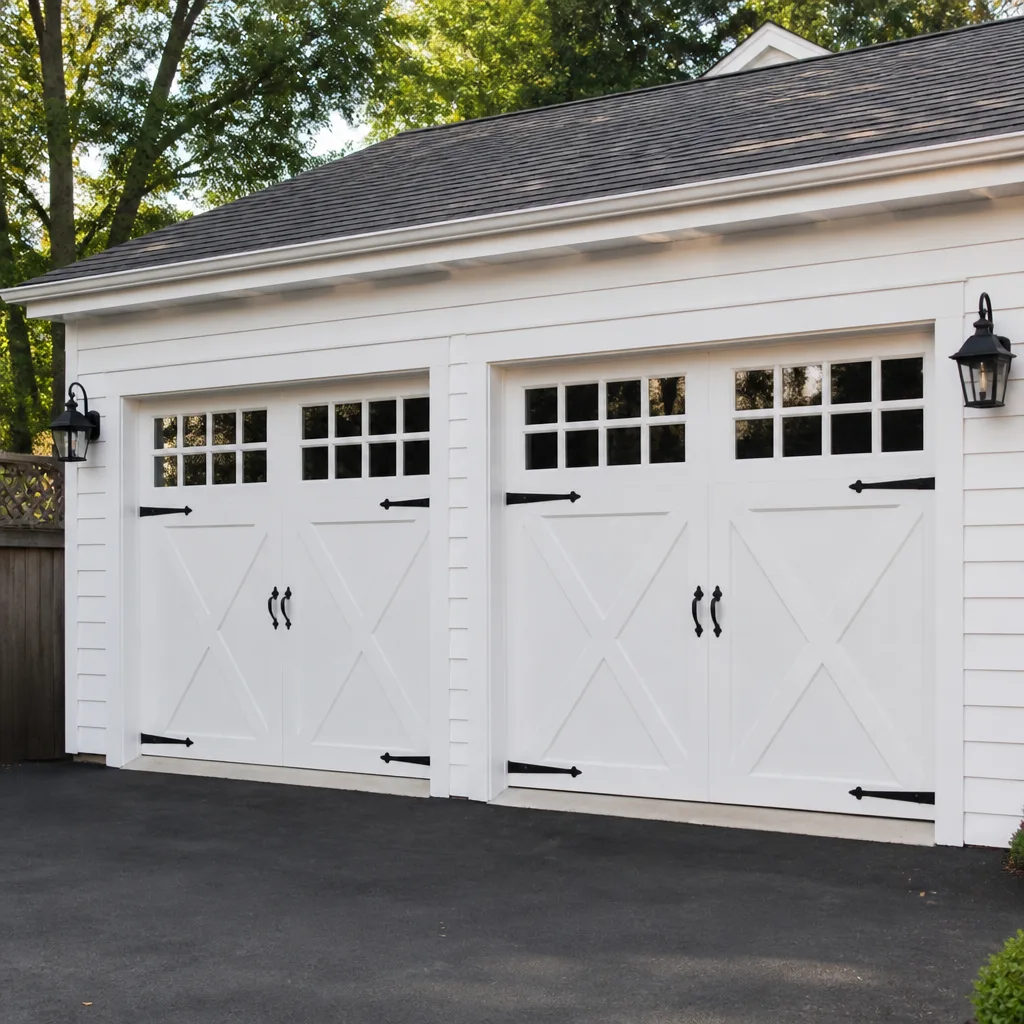 Carriage house
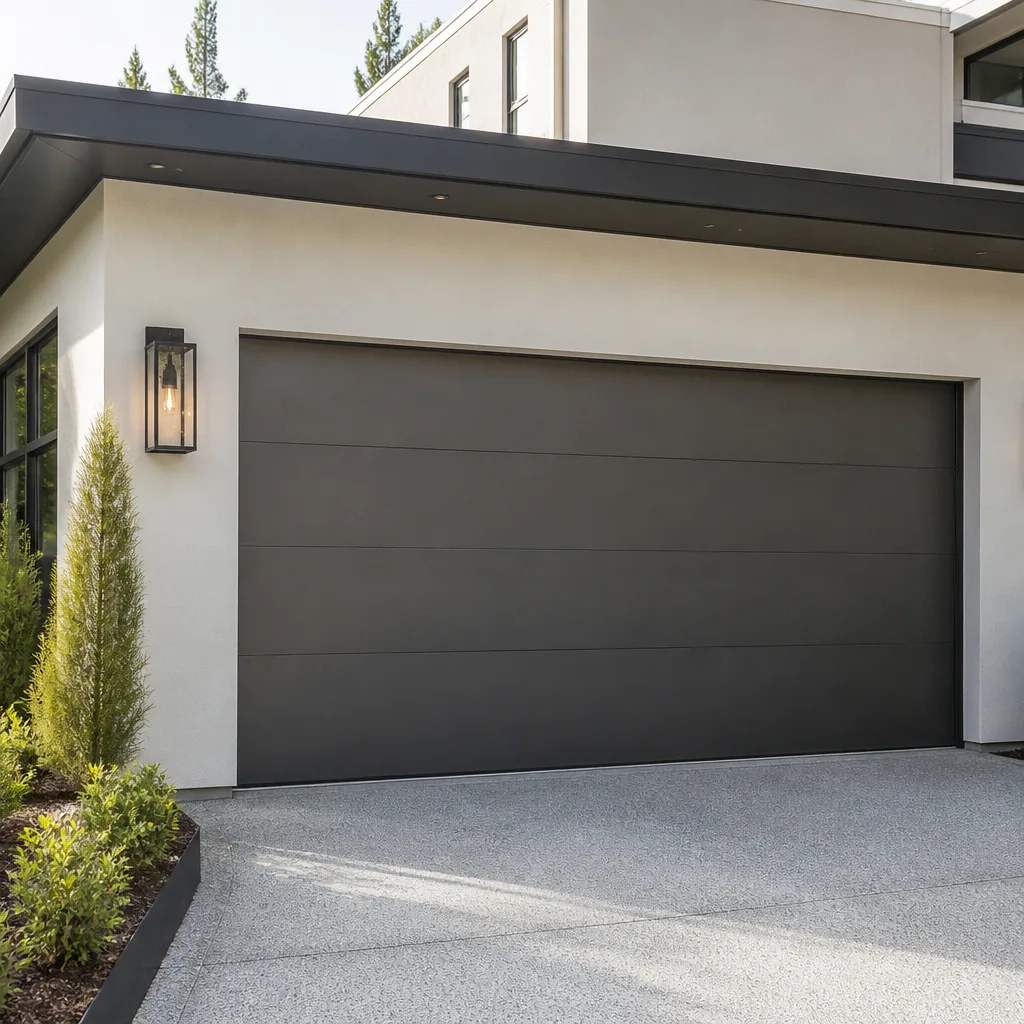 Modern flush
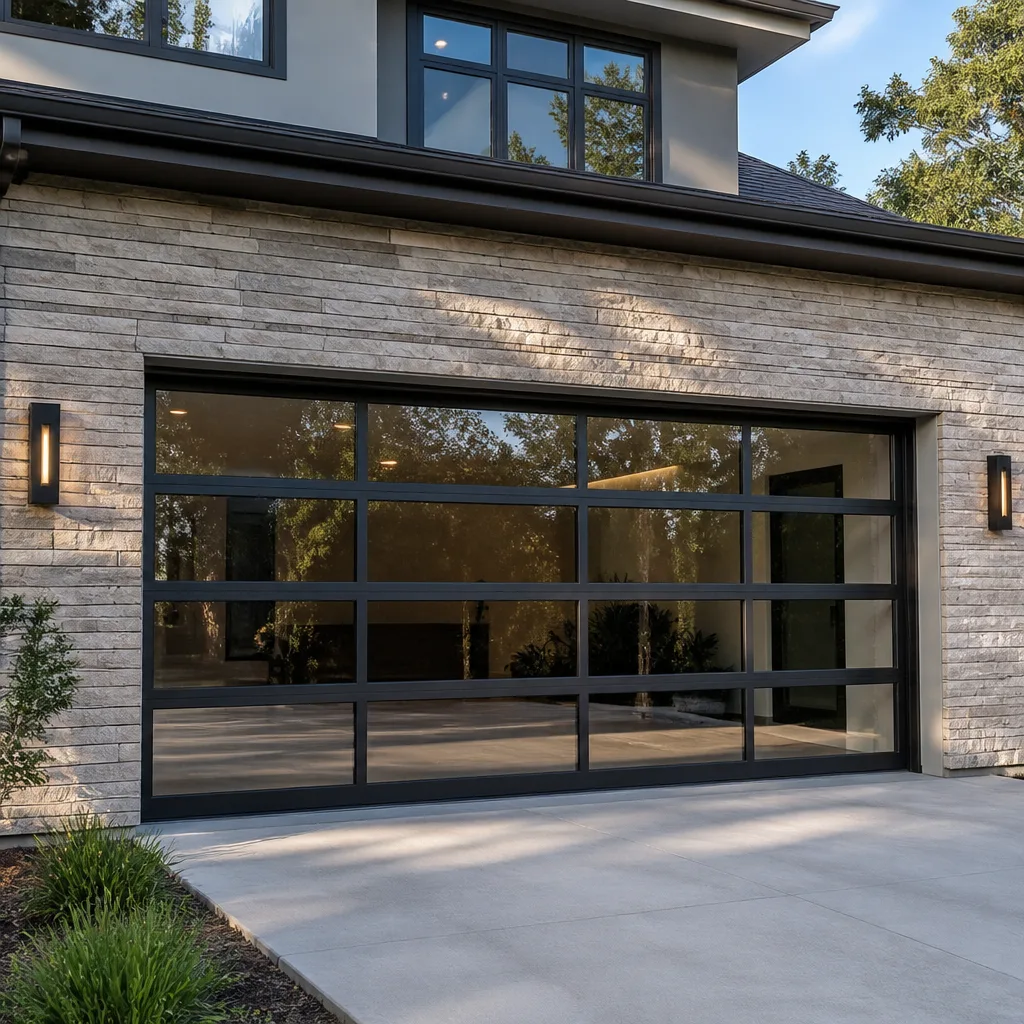 Full-view glass
 LiftMaster openers
 Chamberlain openers
Full 25-point door and opener safety check with every visit - springs, cables, rollers, tracks, and your LiftMaster or Chamberlain opener included
You get a price before we start. It does not change when the pro arrives.
Get your free estimateGarage Door Warning Signs: A Sunrise Manor Homeowner’s Reference Guide
A grinding noise and a scraping noise sound almost identical through a closed garage door. They mean opposite things. Grinding is usually your opener’s gears stripping – a $150 fix this week if you catch it, closer to $400 once the gearset is gone and the motor’s been fighting a dead weight for a month. Scraping is a seized roller dragging a track toward a bend, and if you let that ride you’re not looking at a roller anymore, you’re looking at a cable snap. Same volume, same part of the door, completely different clock. This guide is written from Sunrise Manor, where sun and dust chew through hardware faster than most of the country ever sees, and it’s built to tell you which sound, which gap, and which hesitation means “schedule it this month” and which one means “stop using the door today.”
Quick Answer
Most garage door warning signs fall into two buckets: noises that tell you which part is failing, and visual clues that tell you how fast. In Sunrise Manor, grinding means opener gears, scraping means a seized roller, popping means a binding spring or a worn hinge plate, and rattling means loose hardware that’s about to loosen something structural. A door that reverses on its own is a safety sensor failure, not a quirk – stop using it until it’s checked.
Styles & brands we work with
- Raised-panel steel
- Carriage house
- Modern flush
- Full-view glass
- LiftMaster openers
- Chamberlain openers
Table of Contents
- The Sound-to-Cause Reference: What Each Noise Is Telling You
- Desert Wear: What UV Damage and Oxidation Look Like Before They Fail
- The Gap Test: Why a Quarter-Inch Seal Gap Costs You Money in Sunrise Manor
- The Response Clock: This Month vs. Stop Using It Today
- The Sign Everyone Explains Away: A Door That Reverses Unexpectedly
- Your Monthly Five-Minute Walkaround
- Brand Notes: What We See on Common Openers and Doors
The Sound-to-Cause Reference: What Each Noise Is Telling You
Sound is the earliest warning a garage door gives you. It’s also the one homeowners misread most, because we lump every bad noise into “it’s just loud.” It isn’t just loud. Each noise has a source, and each source has a timeline.
Grinding. A low, continuous grind that starts the moment the opener engages is almost always the plastic or metal gears inside the opener head. On a chain-drive LiftMaster or Chamberlain, the drive gear wears against the worm gear and the teeth round off. You’re hearing the last few thousand cycles before it strips completely. Caught this week, it’s a gear-and-sprocket replacement. Caught next month, you’re often into a new opener head, and you’ve been running the motor against a jammed rail for weeks. If the opener is straining, the problem is almost never the opener – but grinding is the exception. Grinding is the opener.
Scraping. A scrape that follows the door up and down, metal on metal, is a roller that’s stopped turning. It’s dragging instead of rolling, and it’s pulling the track out of line a fraction at a time. In Sunrise Manor we see this most on west-facing doors where the afternoon sun bakes the steel rollers and the lubricant cooks off. Left alone, a seized roller bends the track, and a bent track is what snaps cables.
Popping. A sharp pop at the start or middle of travel is usually a binding torsion spring, a hinge plate that’s jumped its slot, or a section joint flexing. Springs are 200 pounds of stored tension riding on two coils – popping there is a stop-and-call, not a wait-and-see.
Rattling. Loose bolts, worn hinges, a rail that’s worked itself free. Not urgent by itself, but rattling loosens the next thing down the line, and that next thing is usually a bracket.
Desert Wear: What UV Damage and Oxidation Look Like Before They Fail
Sunrise Manor sits in country that punishes steel and paint. Summer surface temps on a dark garage door push well past what the manufacturer tested for, and the UV load doesn’t let up. A door that would last fifteen years in a milder climate often shows real wear here in half that. The trick is knowing what you’re looking at before it turns into a repair.
- Chalking paint. Run your hand across a panel and it comes away powdery white. That’s UV breaking down the finish. Left alone, moisture gets under it, and the panel starts to pit from the inside.
- Fading toward pink or grey. A red or brown door going chalky is the first stage. Buckling at the panel seams is the second, and that’s when the panel stops sealing.
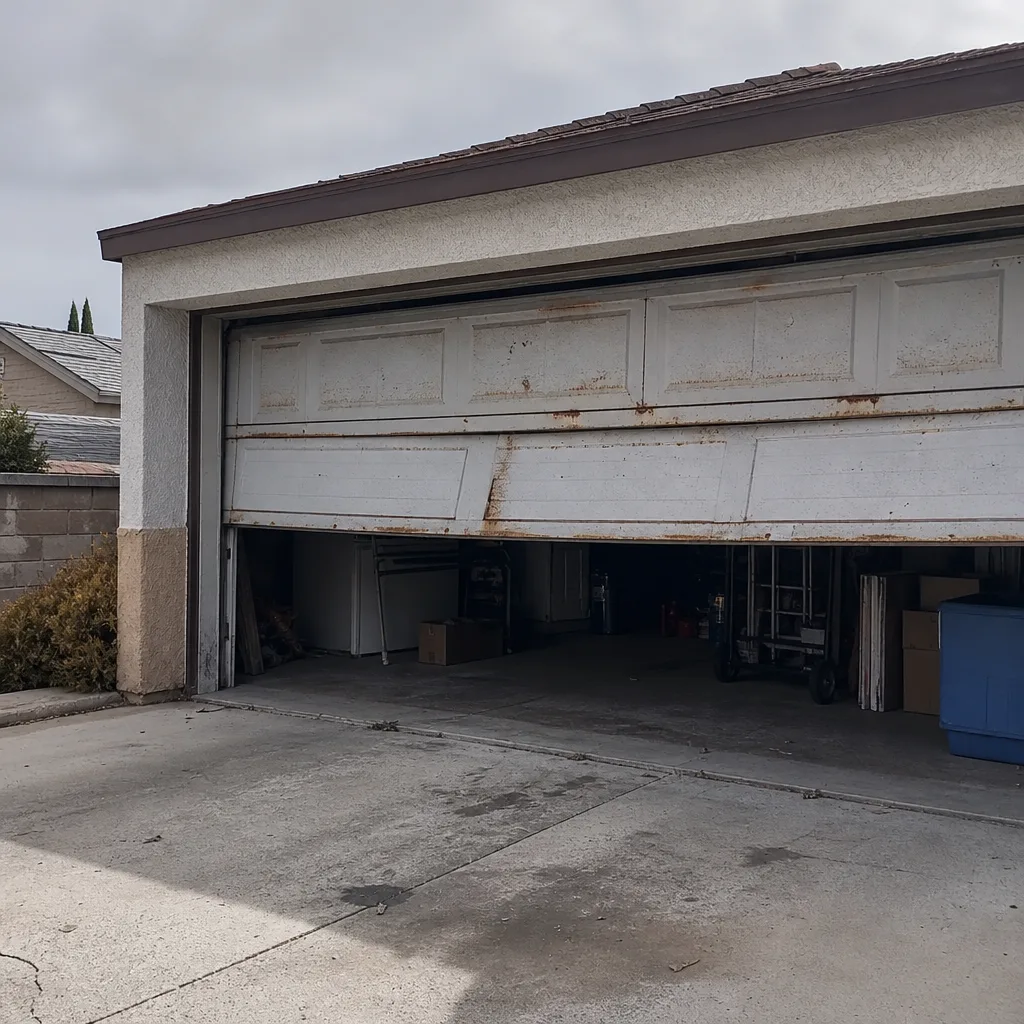
- Rust bloom at the bottom edge. Water pools on the bottom section after every monsoon and every hose-down. Rust starts at the seam, spreads under the paint, and eats the section from the bottom up.
- Oxidized hardware. Look at the hinges and rollers. Healthy steel is bright. Dull grey with a chalky film means oxidation, and oxidation seizes a roller before the roller ever grinds. In our experience, a hinge that’s gone chalky in Sunrise Manor is often within a season of freezing up.
Panels don’t buckle overnight. They chalk, fade, pit, and then bow – usually three to five summers in, depending on which way the door faces. If your door faces west or south, mentally shorten every timeline on this page.
The Gap Test: Why a Quarter-Inch Seal Gap Costs You Money in Sunrise Manor
Here’s a warning sign you can check in ten seconds with a coin. Close the door, stand inside, and look at the bottom seal. If you can see daylight under it, you’ve got a gap. Slide a quarter under the seal and it goes through – that’s roughly a quarter-inch gap, and in Sunrise Manor that gap means two things.
First, you’re air-conditioning your driveway. A quarter-inch gap across a nine-foot door is a lot of open area. Through a Sunrise Manor summer, that’s money leaking out of your house every single day the AC runs, which is most of them.
Second, you’re inviting pests. Scorpions, mice, and the occasional black widow will happily use a quarter-inch seam as a doorway. The seal on a door that’s seen a dozen desert summers hardens, cracks, and flattens out. A replacement bottom seal is one of the cheapest fixes on any door, and it pays for itself in cooling costs before the summer’s out.
While you’re down there, run the same test along the sides and top. A door that doesn’t sit square in the opening will show an uneven gap – tight at one corner, wide at the other. That’s not the seal, that’s the door out of adjustment, and it needs a wrench on it before it wears the tracks.
The Response Clock: This Month vs. Stop Using It Today
Not every warning sign is an emergency. Sorting them wrong costs you money either way – you either panic over a rattle or you run a door that’s a spring away from dropping a section on a car. Here’s how we sort them.
Stop using the door today and call. These are the ones where a person can get hurt or a door can come down:
- A torsion spring that’s visibly broken – usually a clean gap in one coil. Do not run the opener. It’s lifting the whole door on one spring, and that’s a failure waiting on the next cycle.
- Any popping or snapping sound at the spring or cable, especially if the door hangs uneven.
- A door that reverses on its own before it reaches the floor.
- A cable that’s visibly frayed, kinked, or off its drum. High-tension cables and springs are the one part of this trade that genuinely kills people who improvise – resist the urge to poke at it, and get a trained technician out.
Schedule this month. These are expensive inconveniences heading your way, not emergencies:
- Grinding from the opener head – the gears are going but haven’t gone.
- A scraping roller. Still a roller today, a track and cable tomorrow.
- A bottom seal with a quarter-inch gap. A seal and a bolt check.
- Chalking panels. Time to plan the refinish or the panel, not yet a call-out.
When in doubt, a free second opinion on any written estimate is the cheapest insurance you’ll ever get. Send us the quote and we’ll read it with you.
The Sign Everyone Explains Away: A Door That Reverses Unexpectedly
This is the one that gets hand-waved the most. The door goes down, stops a foot off the floor, and goes back up. The homeowner calls it “finicky.” It isn’t finicky. It’s the safety reverse system doing exactly what it’s built to do – stopping when it thinks something’s in the way. The question is why.
Every modern opener, whether it’s a Craftsman or a LiftMaster, runs two safety systems. The photoelectric eyes at the bottom of the tracks break a beam and reverse the door if anything crosses it. The pressure or force sensor reverses the door if it meets resistance. Either one failing gives you the same symptom: a door that won’t close, or one that reverses on the way down.
The causes, roughly in order of how often we see them:
- Misaligned safety eyes – nudged by a broom, a bike, or a stray soccer ball. The eyes need to be pointed at each other and dead level.
- Dirty lenses. Desert dust coats the eye glass faster than you’d think. A wipe with a soft cloth fixes more of these than anything else.
- Sun glare hitting the receiving eye. South- and west-facing doors in Sunrise Manor get this one bad in the late afternoon.
- A worn seal creating resistance at the floor, which the force sensor reads as an obstacle.
- A failing logic board or a force setting that’s drifted out of spec.
The reason to take it seriously: a door that reverses on its own has a safety system that’s either broken or compensating for something else that’s broken. If the eyes are misaligned, the door might not stop for a child or a pet either. If the force setting has drifted, the door has lost its ability to sense resistance. Either way, you’ve got a 200-pound door that isn’t listening. Stop using it, and get it checked.
Your Monthly Five-Minute Walkaround
The single best thing you can do for a garage door in Sunrise Manor is look at it once a month, on purpose. Five minutes, once a month, catches most of what this guide describes before it turns into a bill.
- Listen. Open and close the door once. Don’t talk over it. Name the noise – grind, scrape, pop, rattle.
- Look at the springs. Two coils over the door, or extension springs along the sides. A clean break in a coil means stop. Don’t touch it. Call.
- Run the quarter under the seal. Any daylight, any coin slides under, that’s a seal.
- Eyeball the hinges and rollers. Chalky grey is oxy; bright is healthy. A roller that’s stopped turning is dragging a track.
- Test the reverse. With the door closing, wave something solid across the safety eyes. The door should reverse immediately. If it doesn’t, the eyes are the first thing to check.
- Look at the paint. Chalking, fading toward pink, rust at the bottom seam. These are the early signs of a panel that’s heading for trouble.
Keep a little notebook, or just take a photo on your phone each month. The photo from January and the photo from July tell you more about the pace of wear than any one inspection.
Brand Notes: What We See on Common Openers and Doors
Different brands fail in different ways, and knowing the brand on your door tells us a lot before we ever get there. On the opener side, we see the most gear wear on older chain-drive Craftsmans and Chamberlains – the plastic drive gears are the weak point, and grinding is the first sign. LiftMaster units tend to run longer but their logic boards will throw a reverse fault before the gears go. On the door side, the door matters as much as the opener. A steel door from any of the major manufacturers will do the same things in the desert: chalk, fade, rust at the bottom seam. What changes is which section goes first, and how the finish holds up to the UV.
When you call, tell us the brand and roughly how old the door is. It doesn’t need to be exact. A LiftMaster that’s grinding and a fifteen-year-old steel door with chalky panels are two very different service calls, and the more you can tell us on the phone, the closer our quote gets to the final number. That’s the whole point of no-hassle upfront pricing – the number doesn’t move between the phone and the driveway. Our technicians have up to 22 years of experience across all the major brands, and they’ll tell you what’s left on your springs the way you’d tell someone what’s left on their tires.
Common Mistakes to Avoid
- Greasing the tracks. It feels like the obvious fix and it’s the wrong one. Track grease collects desert dust into a grinding paste. Lubricate the rollers and hinges; keep the tracks clean and dry.
- Adjusting the force setting to make it close. Turning up the force sensor makes the symptom go away and the safety problem worse. The reverse is there because something’s wrong, not because the door’s too sensitive.
- Spraying WD-40 into the opener head. A grinding opener needs a gear, not a spray. You’ll mask the noise for a week and buy yourself a bigger bill.
- Not knowing which way the door faces. A west-facing door in Sunrise Manor wears faster than a north-facing one, and a pro needs to know it. Point to the side of the house the sun hits hardest.
- Waiting out a small scraping noise. Rollers are cheap. Tracks and cables are not. The $40 off any repair over $200 exists because we’d rather fix the roller now than the cable later.
- Poking at a broken spring. Torsion springs and the cables on the drums are under enough tension to take a finger off. That is the one part of this trade nobody should touch, and we mean nobody.
- Letting a “finicky” reverse ride. A door that reverses on its own has a broken safety system. Don’t wait for a convenient weekend.
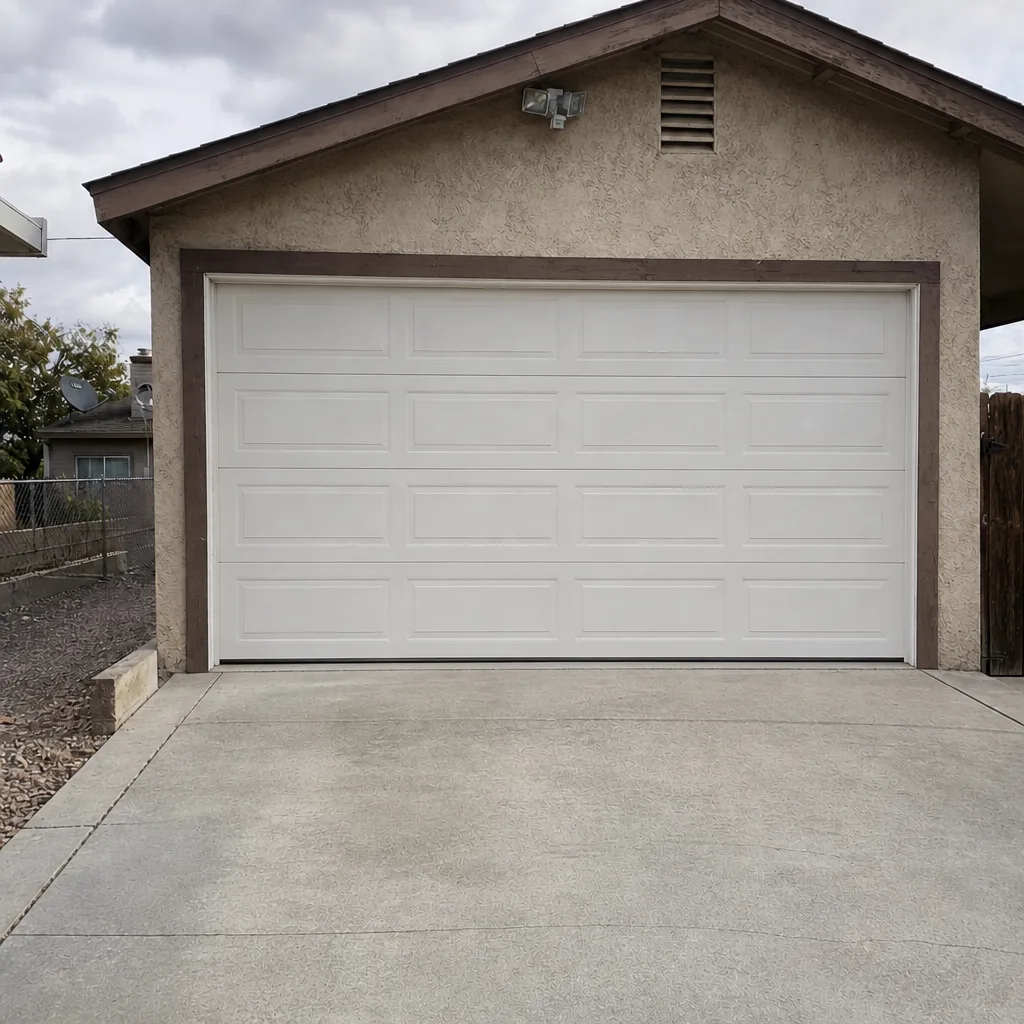
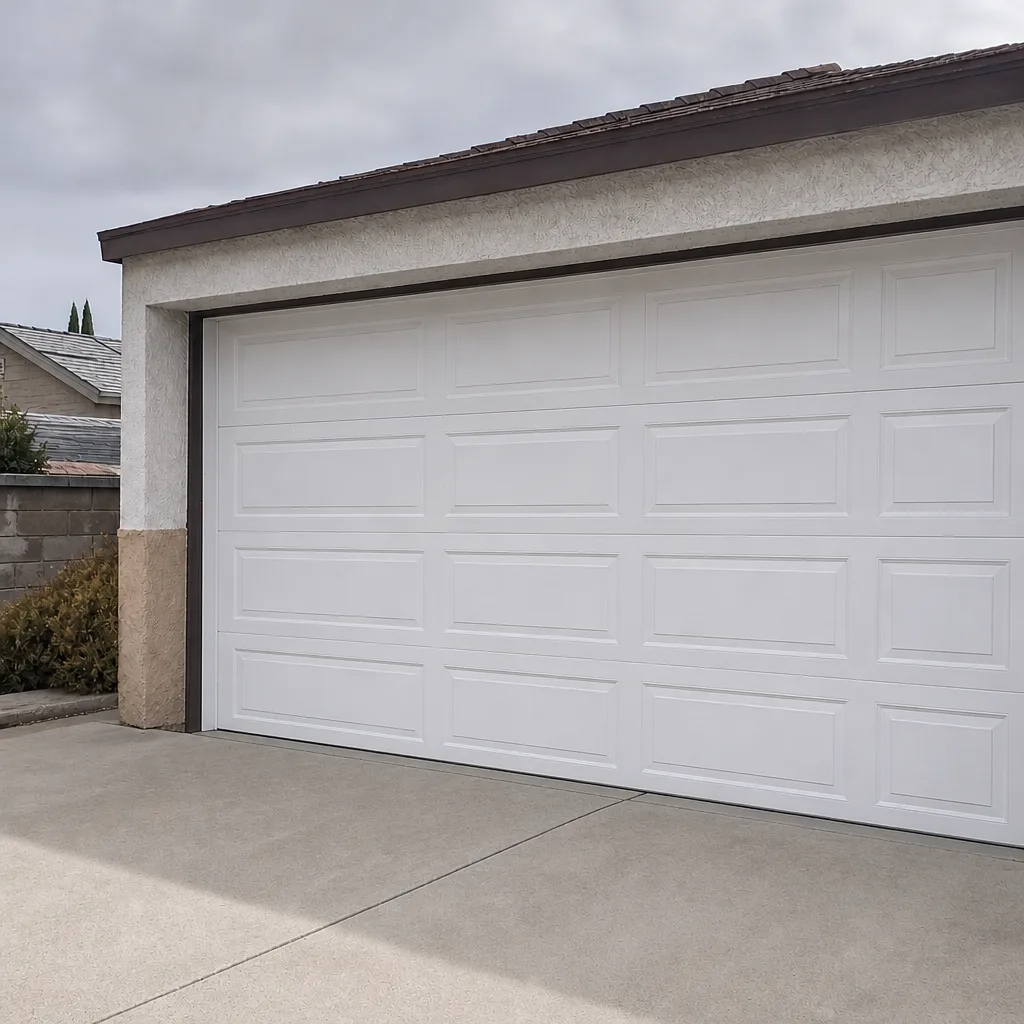
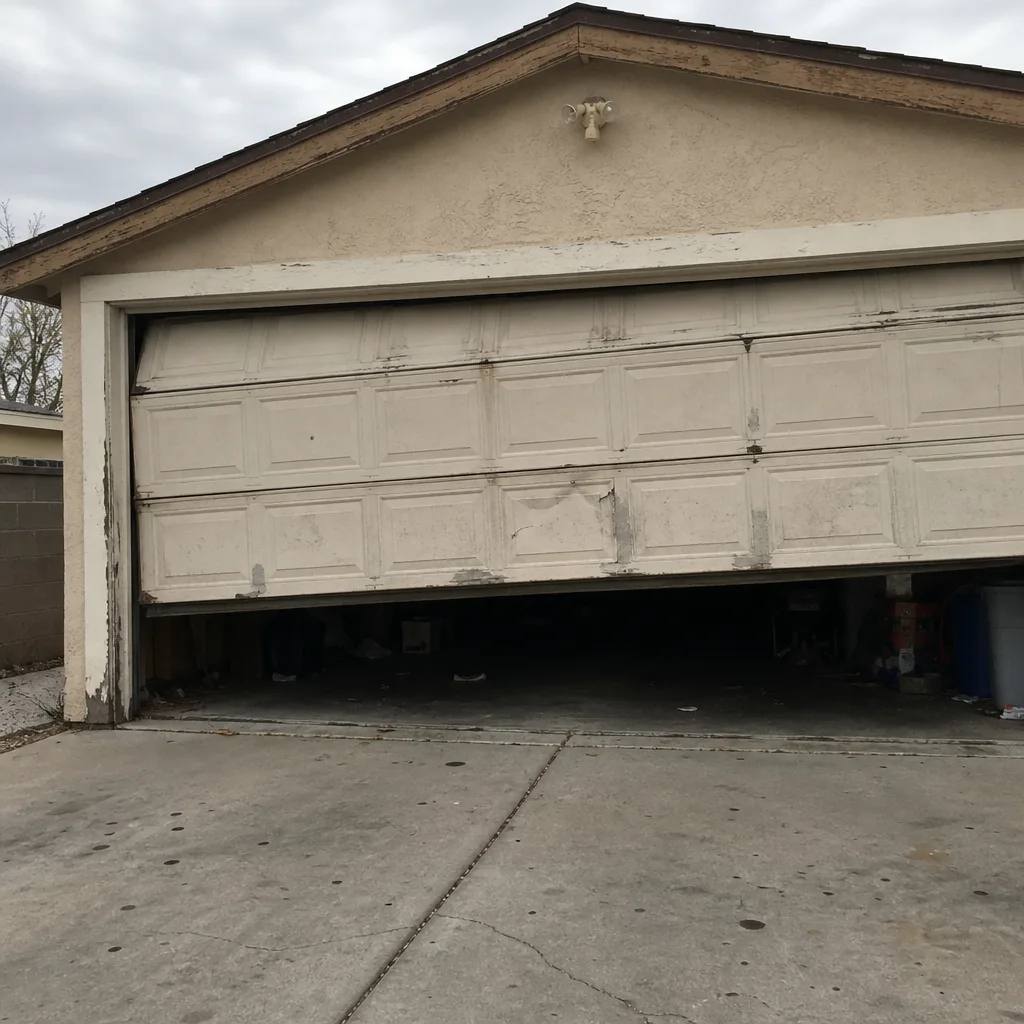
See the difference
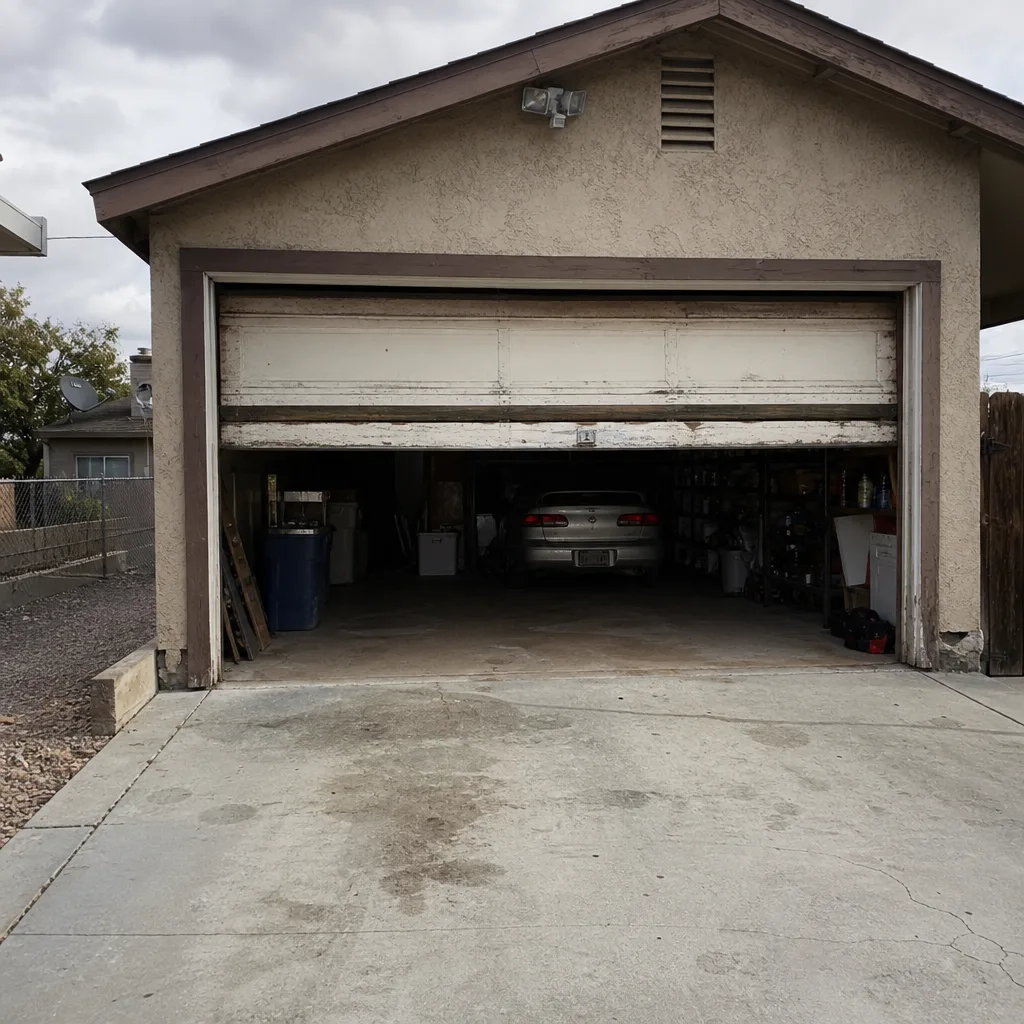 Before
 After
 Before
 After
 Before
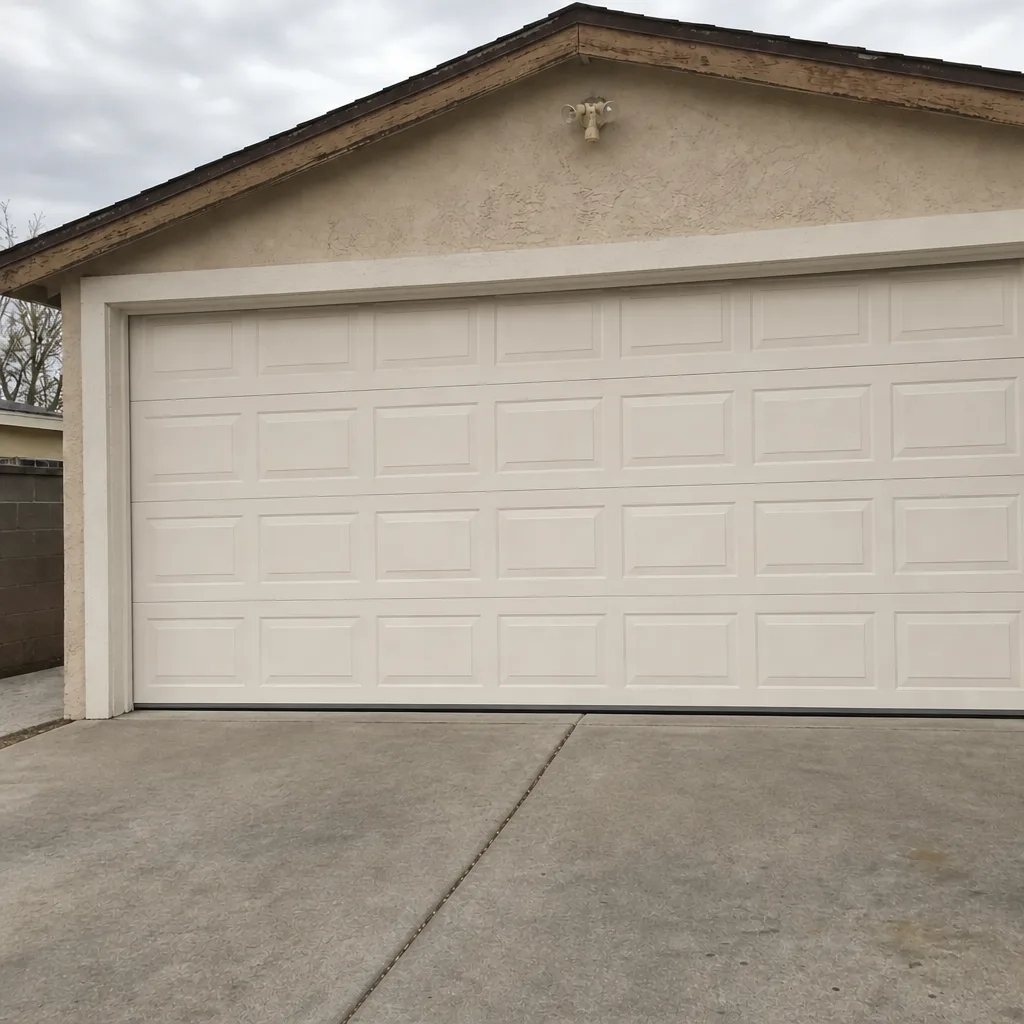 After
When to Call a Professional
Call us the same day if the door has broken a spring, a cable is frayed or off its drum, the door reverses on its own, or anything about it feels heavy, uneven, or wrong. Those are the stop-and-call items, and we answer the phone around the clock, including nine at night when a spring lets go and your truck is sealed inside. For the rest – the grind, the scrape, the quarter under the seal, the chalky panels – schedule it inside the month. Otto’s Garage Door Sunrise Manor offers free estimates in Sunrise Manor, no trip charge inside the county, and a free second opinion on any written estimate you’ve already got. Call (888) 274-8795. The price is quoted and agreed before anyone touches the door, and it doesn’t move between the phone and the driveway.
Frequently Asked Questions
The four we see most are grinding from the opener head (gears wearing), scraping (a seized roller dragging a track), a bottom seal with daylight under it (the quarter test), and a door that reverses on its own (a safety sensor or force issue). After those: chalking and fading panels, oxidized hardware that’s gone grey, and popping at the springs. Any of them is worth a look; a break in a spring or a frayed cable is worth a call today.
A gear-and-sprocket replacement on a grinding opener typically runs $150 to $200; a seized roller and track adjustment is often $120 to $180; a bottom seal is usually $100 to $150; a torsion spring replacement for a two-spring door is commonly $250 to $350. A new opener installed runs $450 to $900 depending on the drive and the door. These are Sunrise Manor ranges based on what we actually quote. Call (888) 274-8795 for an exact number – estimates are free.
Yes. We answer the phone around the clock, and a stuck door with a car inside is exactly the call we mean when we say emergency. Otto quotes the job on that call and holds the number when he gets there. Broken springs, snapped cables, and doors that won’t open for a vehicle get priority. Call (888) 274-8795.
No. The price we quote on the phone is the price on the invoice, and it doesn’t move between the phone and the driveway. If we get there and the job is genuinely different from what we quoted – say, a second broken spring we couldn’t hear over the phone – we’ll show you before we touch it and you decide. It’s quoted and agreed before any work starts.
Yes. Every technician is background-checked and comes in uniform, and we’re happy to show you the license number before anyone starts. If a door job comes back wrong, the 90-Day Done Right Promise is written on every invoice, and one call brings us back.
Not long. Grinding usually means the opener’s drive gear is rounding off, and once it strips you’re into a new opener head rather than a gear. In our experience you’ve got a window of weeks, not months, before the cheap fix becomes the expensive one. If you’ve been hearing it a while, it’s already costing you. Call (888) 274-8795 – the $40 off any repair over $200 is standing.
The Bottom Line
A garage door tells you what’s about to fail if you know how to listen. Grinding is gears, scraping is a roller, popping is a spring or a hinge, and a door that reverses on its own is a safety system that’s stopped doing its job. In Sunrise Manor, add the desert: chalky panels, oxidized rollers, and a bottom seal that opens a quarter-inch gap and lets a summer’s worth of cool air out of your house. Sort the signs by the response clock – this month versus stop using it today – and the expensive surprises mostly go away. “The name on the van is the name on the invoice and the name on the license” – and the phone’s answered by a person, any hour. Call (888) 274-8795. Estimates are free, and we’d rather see you at the hardware store than on the wrong end of a snapped cable.
Written by the team at Otto’s Garage Door Sunrise Manor.