
Last updated November 17, 2026
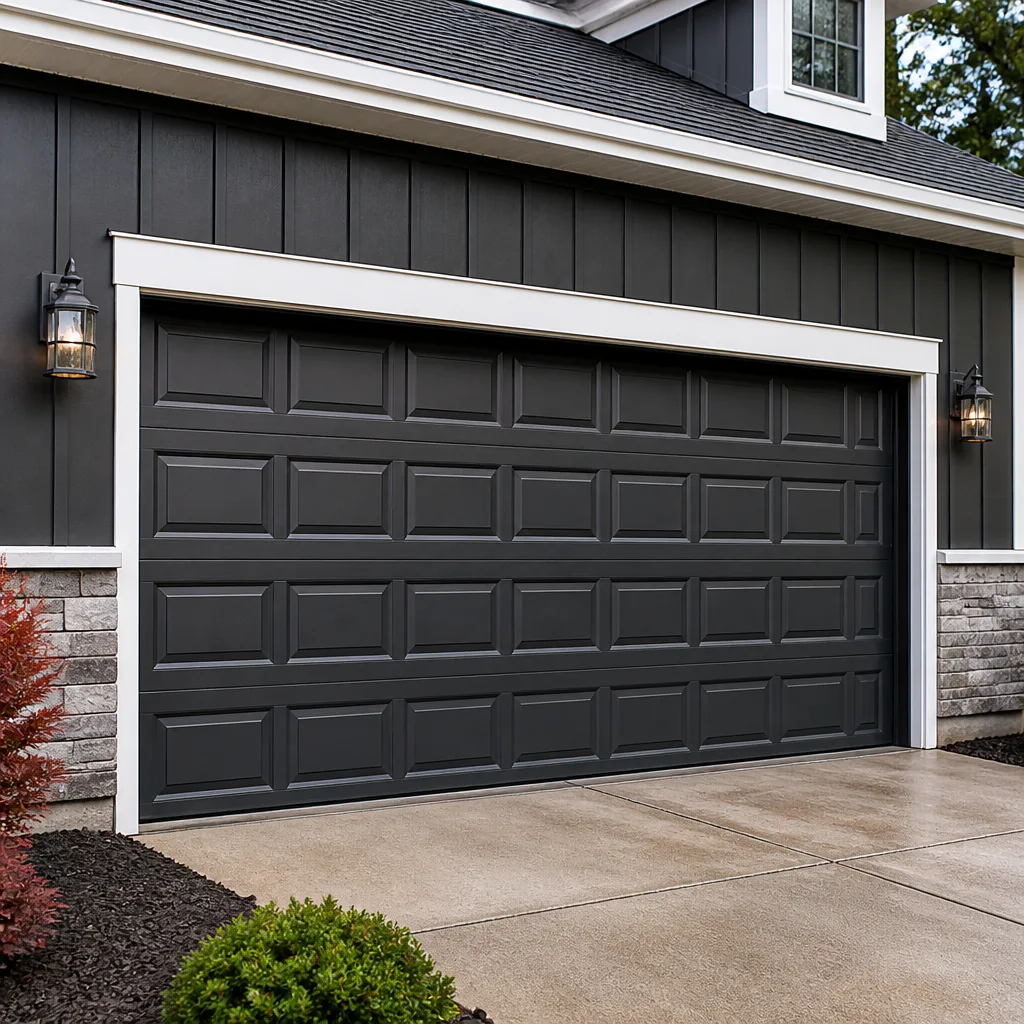 Raised-panel steel
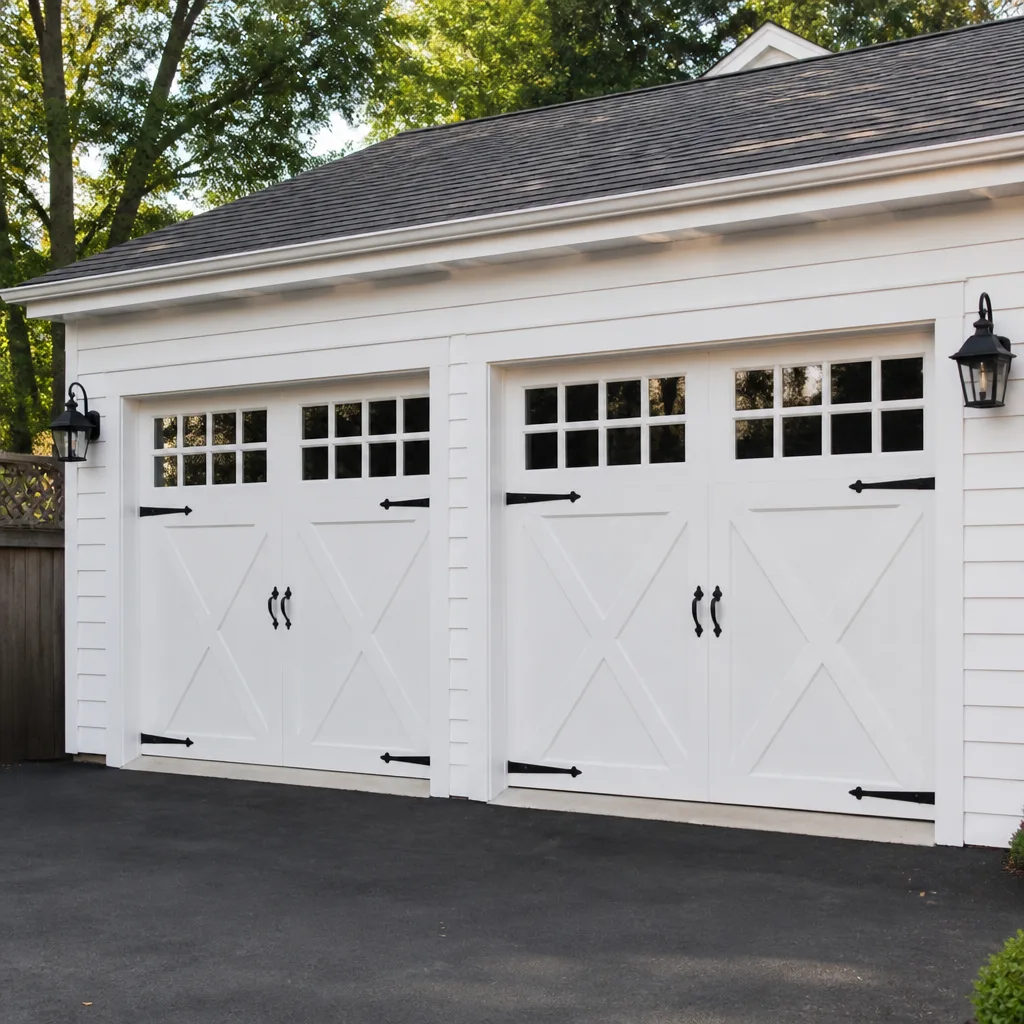 Carriage house
 Modern flush
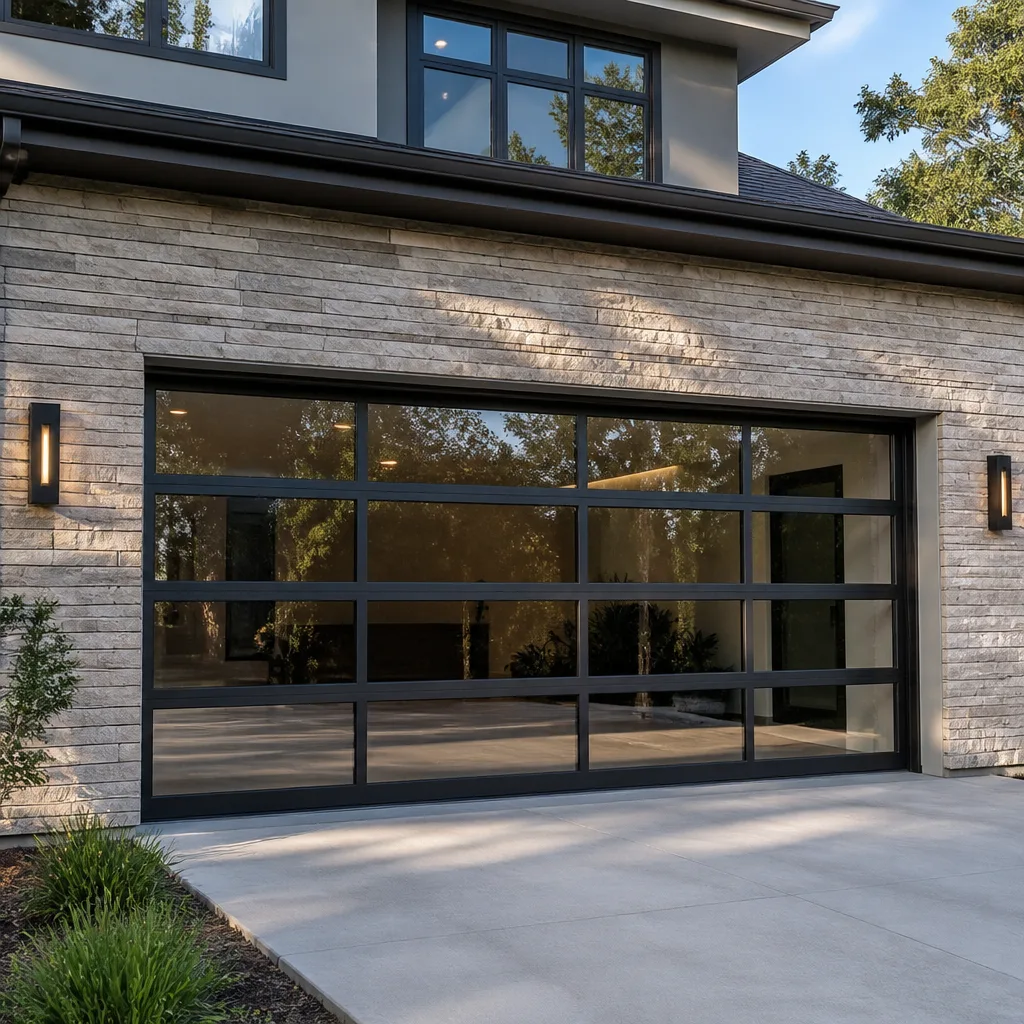 Full-view glass
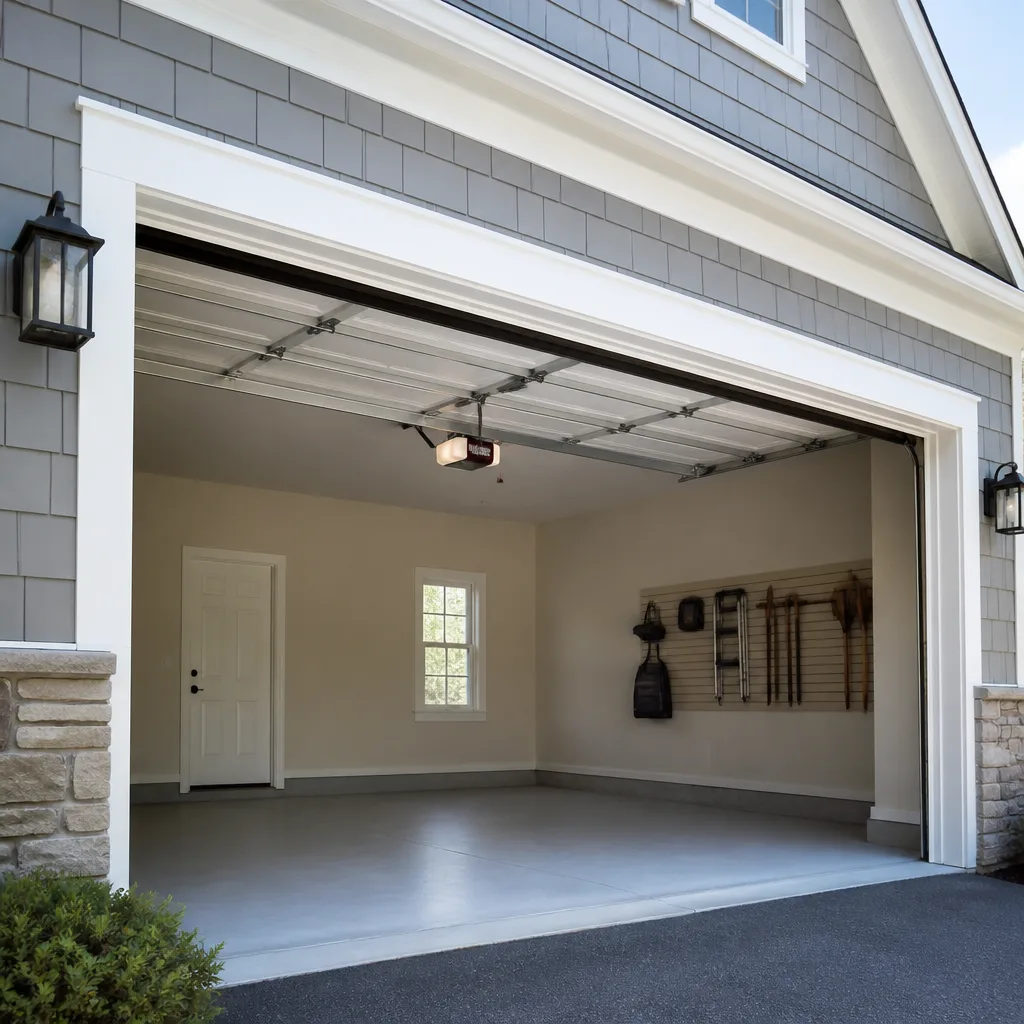 LiftMaster openers
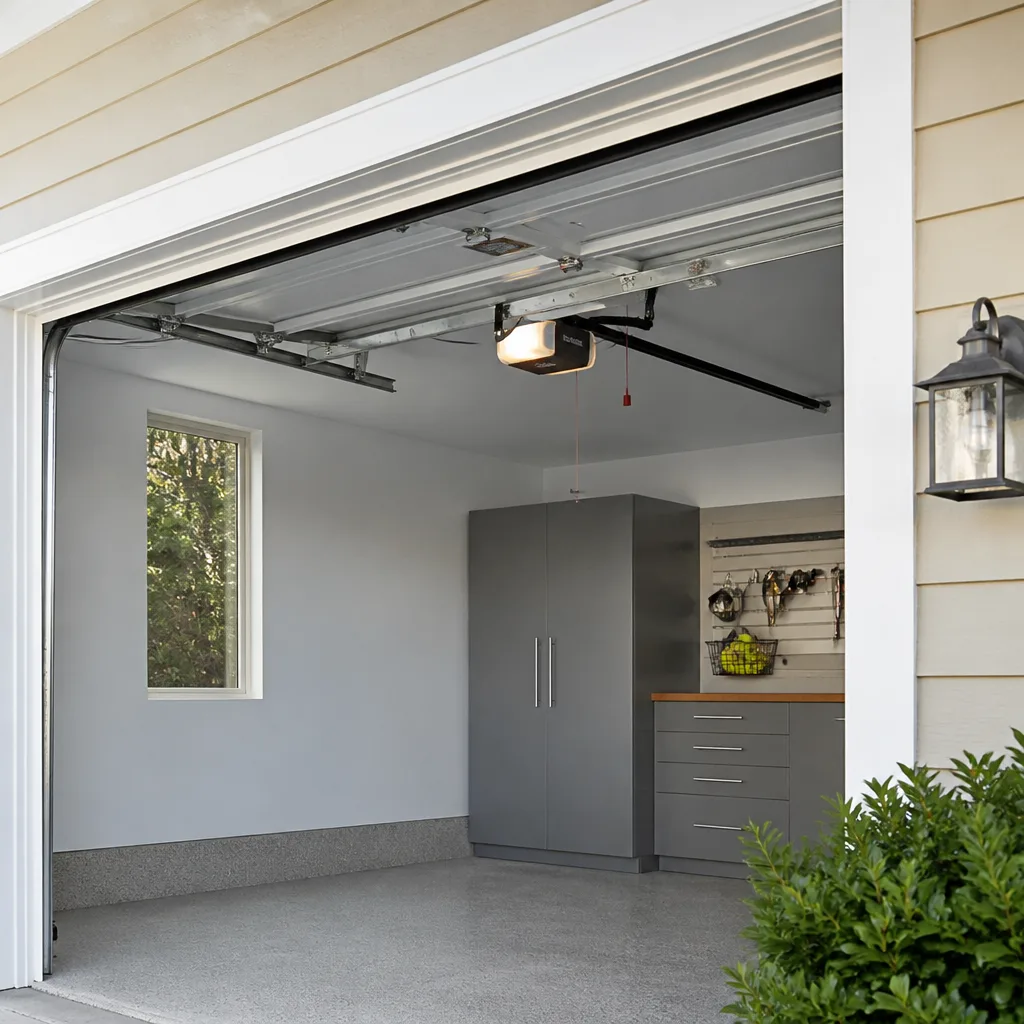 Chamberlain openers
Full 25-point door and opener safety check with every visit - springs, cables, rollers, tracks, and your LiftMaster or Chamberlain opener included
You get a price before we start. It does not change when the pro arrives.
Get your free estimateGarage Door Repair Warning Signs Every Homeowner Should Know
The most dangerous garage door we’ve ever seen looked completely normal from the curb. It opened, it closed, and it ran quiet. What nobody saw for six months was the cable fraying on the inside drum, strand by strand, in the one spot a homeowner never thinks to check. Most warning sign advice stops at loud noises and slow movement. The signs that predict a failure before it happens are quieter than that, and they’re hidden in the parts of your door you’ve been looking past every single morning. This guide trains you to see them, starting with a 60-second walkaround that fits in the time it takes to warm up the car in Sunrise Manor.
Quick Answer
The warning signs that matter most are frayed cables at the drums, a visible gap in the spring coils, flat spots on the rollers, a rust line creeping up the track, and hairline stress cracks at the door panel corners. A door that runs slightly slower than it did last season is telling you spring tension has changed. Burning or metallic smells mean stop using the door and call a technician. If you spot any of these, get a professional eyes on it, especially the springs and cables, which can cause serious injury.
Styles & brands we work with
- Raised-panel steel
- Carriage house
- Modern flush
- Full-view glass
- LiftMaster openers
- Chamberlain openers
Table of Contents
- The 60-Second Walkaround: Five Signs You’ve Never Been Told to Look For
- What Door Speed Changes Are Really Telling You About Spring Tension
- That Door That “Occasionally Doesn’t Close All the Way”
- The Smell Test: Burning or Metallic Odors During Operation
- How to Log Warning Signs Over Time
- When the Opener Gets Blamed for a Door Problem
- Desert-Specific Wear: What Sunrise Manor Doors Face
- What You Should Never Try to Fix Yourself
The 60-Second Walkaround: Five Signs You’ve Never Been Told to Look For
Give us one minute at your door and we can usually tell you more than a homeowner who’s lived with it for ten years. That’s not a sales line. It’s that we know where to look, and most of the damage happens in spots that face away from the street. Do this walkaround monthly, and right after any big wind or dust storm, which Sunrise Manor gets plenty of.
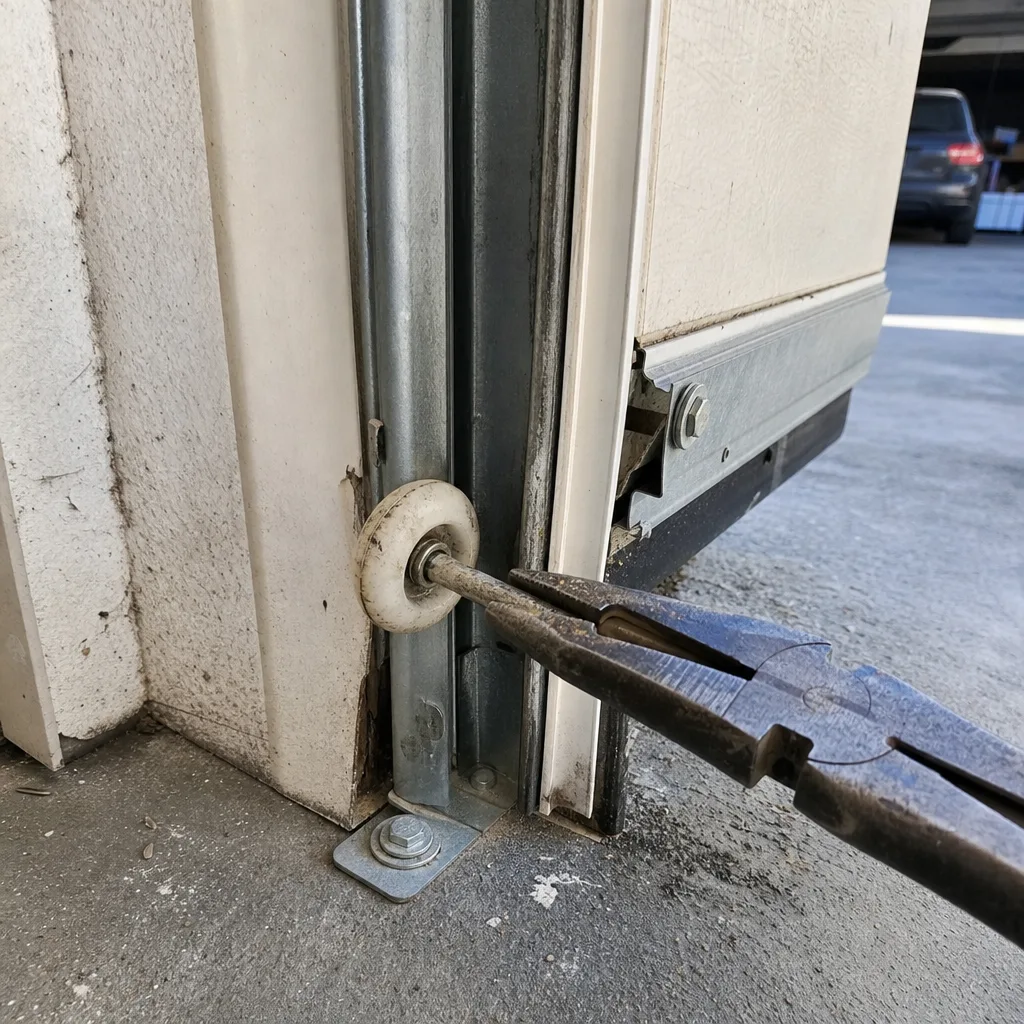
- Cable fraying at the drum. On each side of the door, up top where the cable wraps the metal drum, look for broken strands poking out like a frayed rope end. A healthy cable is smooth. A fraying one is on a short clock. This is the single most overlooked sign and the one behind our opening story.
- Spring gap. Look at the long spring (or two) running above the door. If you see a visible gap of a half-inch or more between the coils while the door is closed, the spring is losing tension or has already broken. Don’t touch it. Just note it.
- Roller flat spots. The little wheels that ride in the track shouldn’t have flat worn patches or grind. Run a finger along a few (with the door down and the power off) and feel for a thunk.
- Track rust line. A vertical streak of rust on the track is where a roller is dragging instead of rolling. Rust in one line means friction in one spot.
- Panel corner stress cracks. At the corners of each panel, look for hairline cracks or paint splitting. Cracks there mean the panel is flexing under stress it wasn’t built for.
None of these require a tool or a ladder. They require knowing where to point your eyes. That’s the whole difference. For a full diagnosis of what you find, our Garage Door Repair in Sunrise Manor page walks through what each repair involves.
What Door Speed Changes Are Really Telling You About Spring Tension
A door that’s gotten a little slower over three months isn’t “just how it is now.” It’s reporting on your springs. Springs are what lift the weight of the door, and as they lose tension the opener has to work harder to do the same job. A slow, labored rise is usually the first physical symptom, and because it happens gradually, most homeowners adapt to it without realizing they have.
Here’s how we read it:
- Gradual slowdown over weeks or months usually points to a spring that’s losing tension or reaching the end of its cycle life. Springs are rated in cycles, and we count spring cycles the way you count tire miles, so we can tell you roughly what’s left on yours.
- A sudden speed change, hot opener, or the door struggling on one side usually means something closer to failure: a spring, a cable, or a bound roller.
- The door reversing or stopping on its own and needing a second press points toward opener force settings or a sensor, not the spring. Different problem, different fix.
The tell is timing. If your door used to hit the ceiling in the same count every morning and now it takes noticeably longer, that’s not your imagination. Write down the month you noticed it. When a technician arrives, that one note narrows the diagnosis in minutes. And here’s the thing worth saying plainly: if the opener is straining, the problem is almost never the opener. Replacing a tired opener to fix a slow door is throwing money at the wrong part. Rosy spring tension is the usual culprit.
That Door That “Occasionally Doesn’t Close All the Way”
When your door stops halfway, backs up, or refuses to close on the first press, the default assumption is alignment: the tracks must be off. In our experience, that’s not the story most of the time. A door that occasionally won’t close is often a safety sensor that’s on its way out, not a track that’s bent.
The safety sensors are the two small eyes near the floor on each side of the door. When they lose their beam (dust, a spider web, a misaligned bracket, or a dying sensor), the opener reads it as an obstruction and refuses to close. In Sunrise Manor, dust and grit are constant, so blocked sensors are common. What worries us more is the intermittent kind: it works on Monday, sticks on Thursday. Failing sensors don’t announce themselves, and a door that won’t close reliably leaves your home open.
Before you assume the worst, wipe both sensor lenses with a dry cloth and check that the little indicator lights on each sensor are steady, not flickering. If one flickers or won’t light at all, the sensor itself needs replacing. That’s a quick, inexpensive fix and one of the most common calls we get in Sunrise Manor.
The Smell Test: Burning or Metallic Odors During Operation
If your door smells like burning rubber, hot electronics, or a metallic grinding scent during operation, stop using it and call a technician. This is one of the few signs where the answer is genuinely “right now,” not “next week.”
- Burning rubber usually means a belt or roller is overheating, or the opener’s motor is straining against a door it can’t lift. When the opener is straining, the problem is usually the door’s balance, not the motor.
- Burning electronic/melted plastic smell points to the opener’s circuit board or wiring, which is a fire question worth respecting. Shut the opener off at the wall switch.
- Metallic grinding is dry, worn, or seized metal on metal, usually rollers or a spring missing its lubrication.
Don’t run the door to “test it one more time.” Every cycle works the failing part harder. Turn it off, leave it down, and get a real diagnosis. Spring and cable work carries real injury risk, so this is a professional’s job, full stop.
How to Log Warning Signs Over Time
The single most useful thing a homeowner can hand us is a short history of what the door’s been doing. It shortens diagnostic time and prevents guesswork. You don’t need an app. You need a three-column note on your phone.
- Date and what you noticed. “Jan 12 – door slower going up.” “Feb 3 – wouldn’t close on first press, second press worked.”
- How often and when. Morning only? Afternoon heat? Every other day? Patterns point to specific parts.
- Anything that changed. A big dust storm, a kid cycling the door for fun, a power blink, a cold snap.
A log like that lets a technician skip the “is this new or have you had it for years” back-and-forth and get straight to the right diagnosis. We’ve seen a two-line note save a homeowner a whole extra visit. If your log shows a spreading problem, our Garage Door Opener Repair & Installation in Sunrise Manor page covers the opener side of the equation.
When the Opener Gets Blamed for a Door Problem
Homeowners often call about the opener when the real problem is the door. Here’s how to tell the difference. If the opener groans, lights up, or clicks but the door moves slowly or unevenly, the opener is probably doing its best with a door that’s become heavy. Springs, rollers, and cables do most of the heavy lifting; the opener mostly guides. A door that’s out of balance makes any opener look broken, even a good LiftMaster or Chamberlain.
The test is simple and safe: close the door, pull the release cord to disconnect the opener, then lift the door by hand. A balanced door lifts with modest effort and stays roughly where you let go. A door that feels like dead weight, or slams down, is out of balance. That’s a door problem, and no opener on the market will fix it. If the door lifts smoothly by hand but the opener still struggles, now you’re looking at the opener. Getting that distinction right saves you from replacing the wrong part, and it’s exactly the kind of thing we check during a free second opinion on any written estimate.
Desert-Specific Wear: What Sunrise Manor Doors Face
What You Should Never Try to Fix Yourself
A garage door is 200 pounds riding on two springs. Respect it. Some issues are quick and safe to handle, like cleaning the sensor lenses. Others carry real injury risk and belong to a trained technician.
- Springs. The tension is stored energy, and releasing it the wrong way can cause serious injury. Never attempt spring work.
- Cables. Same story. A cable under tension can snap and whip. Frayed cables should be replaced, not taped.
- Door panel replacement or structural adjustment. The spring is already doing its work; adjusting the door by hand while it’s under tension is dangerous.
- Opener circuit board or wiring. Electrical work and fire risk are not worth the money you’d save.
The safe line is clear: if a spring or cable is involved, stop and call. The money you’d save doing it yourself is not worth the risk.
Common Mistakes to Avoid
- Waiting for a loud noise before acting. The dangerous failures we see didn’t announce themselves loudly. A quiet frayed cable was the problem. Watch for the quiet signs.
- Blaming the opener for a slow door. Nine times in ten it’s the door’s balance or springs, and replacing the opener is money down the drain.
- Taping or ignoring a fraying cable. That’s a stopgap that hides a real risk. Get it replaced.
- Assuming an intermittent closing problem is alignment. More often it’s a failing safety sensor, and it’s an inexpensive fix.
- Skipping the walkaround after dust and wind. In Sunrise Manor, that’s a frequent wear event, and a monthly look catches it early.
- Not writing anything down. A three-line note about dates and symptoms shortens the diagnosis and often saves a visit.
- Running the door to “test it” after a burning smell. Every cycle works the failing part harder. Stop it and call.
See the difference
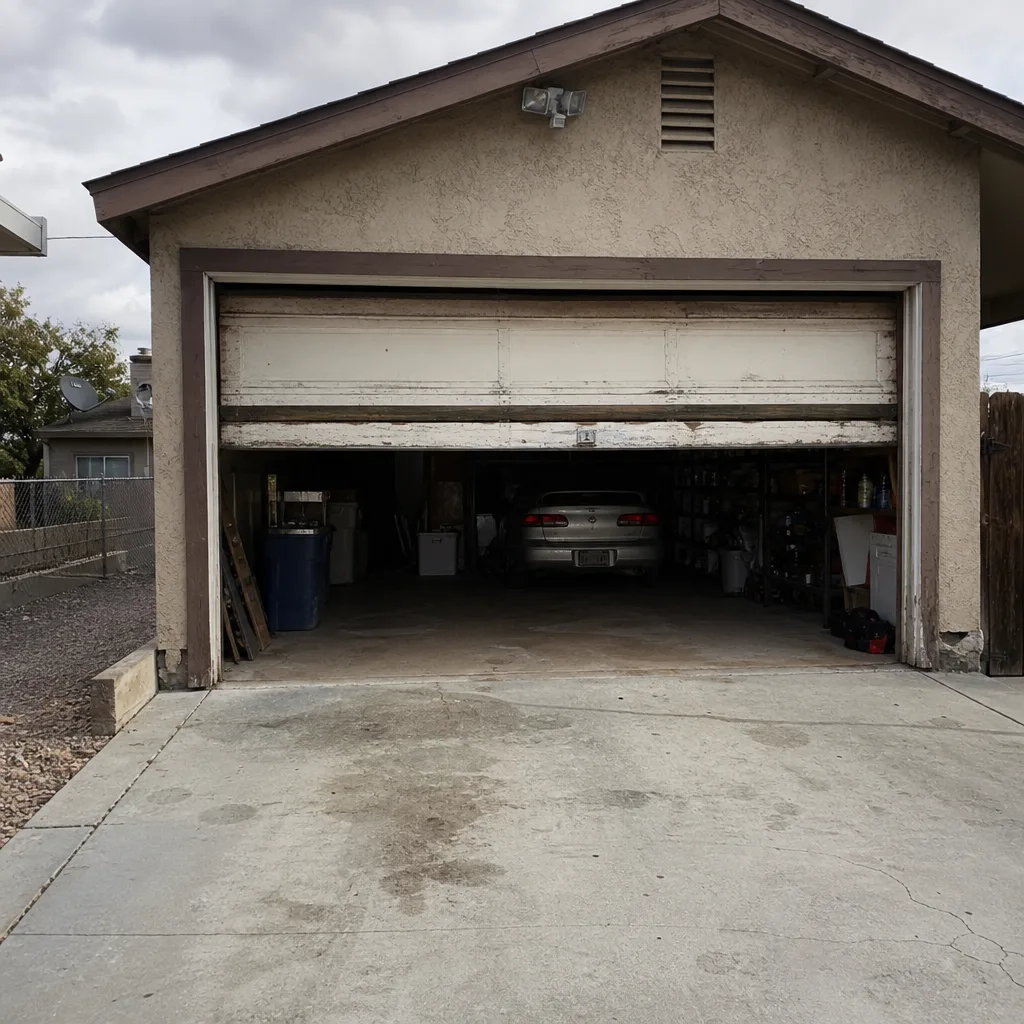 Before
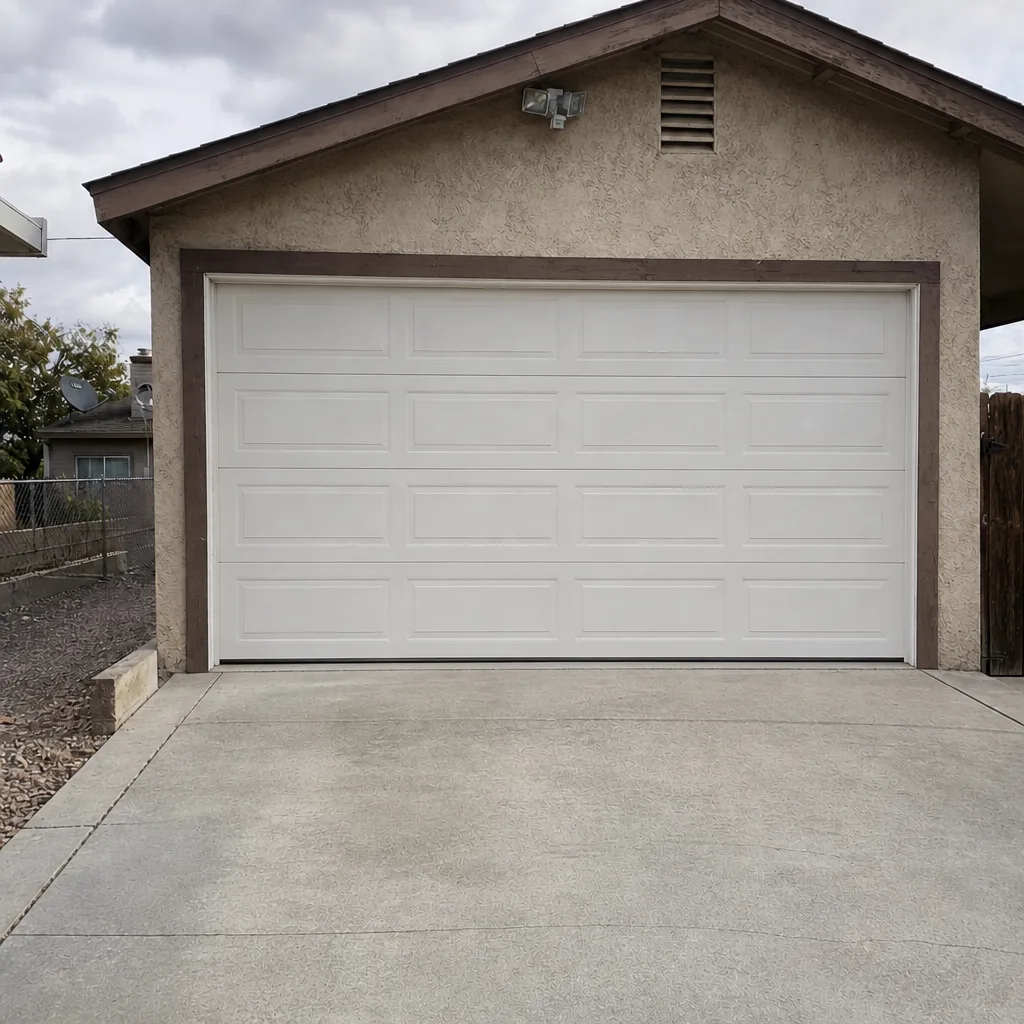 After
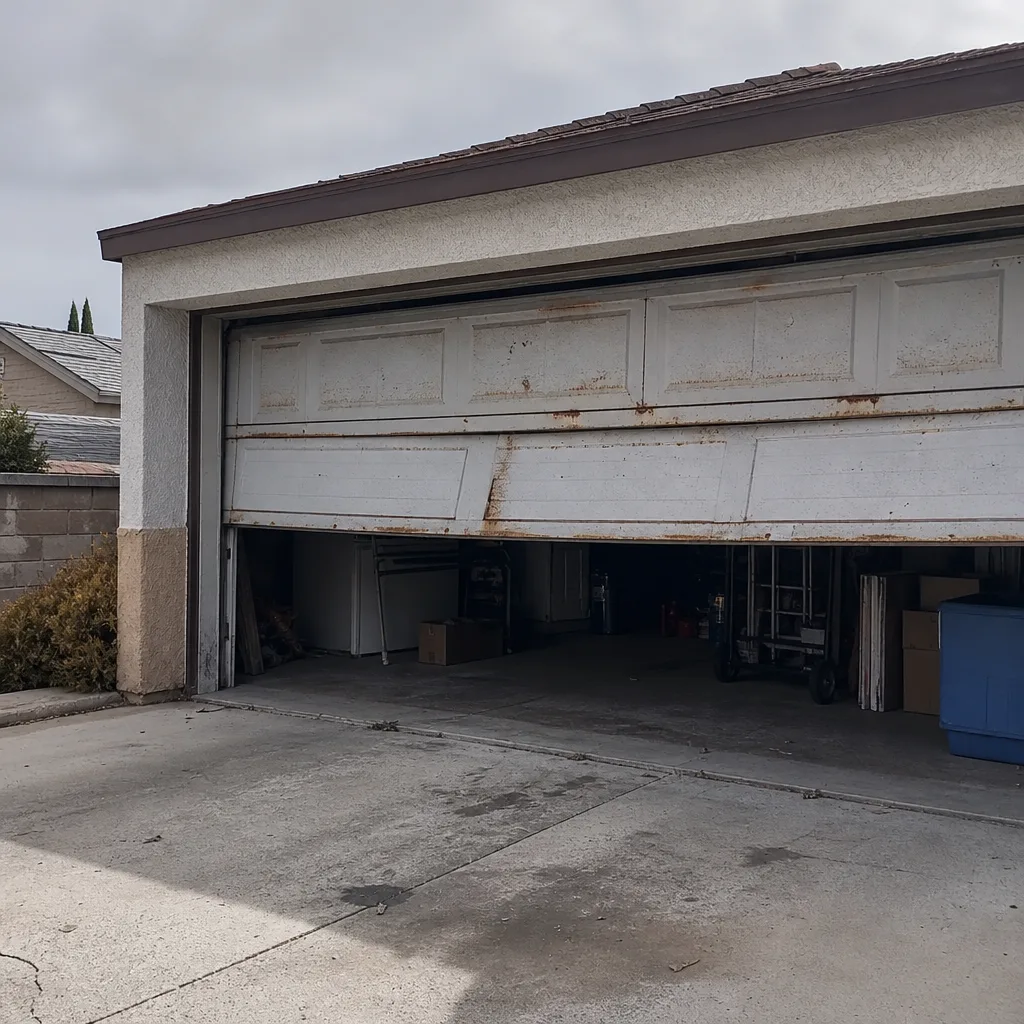 Before
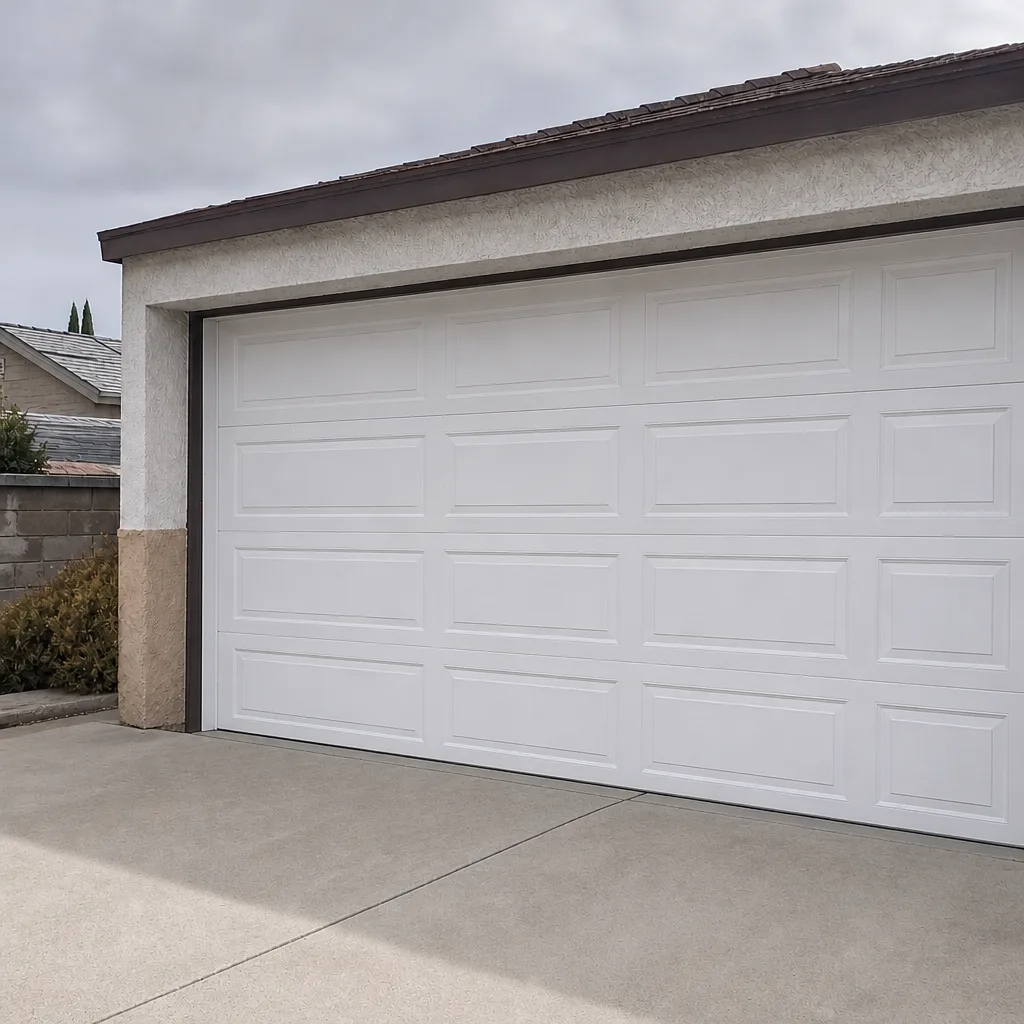 After
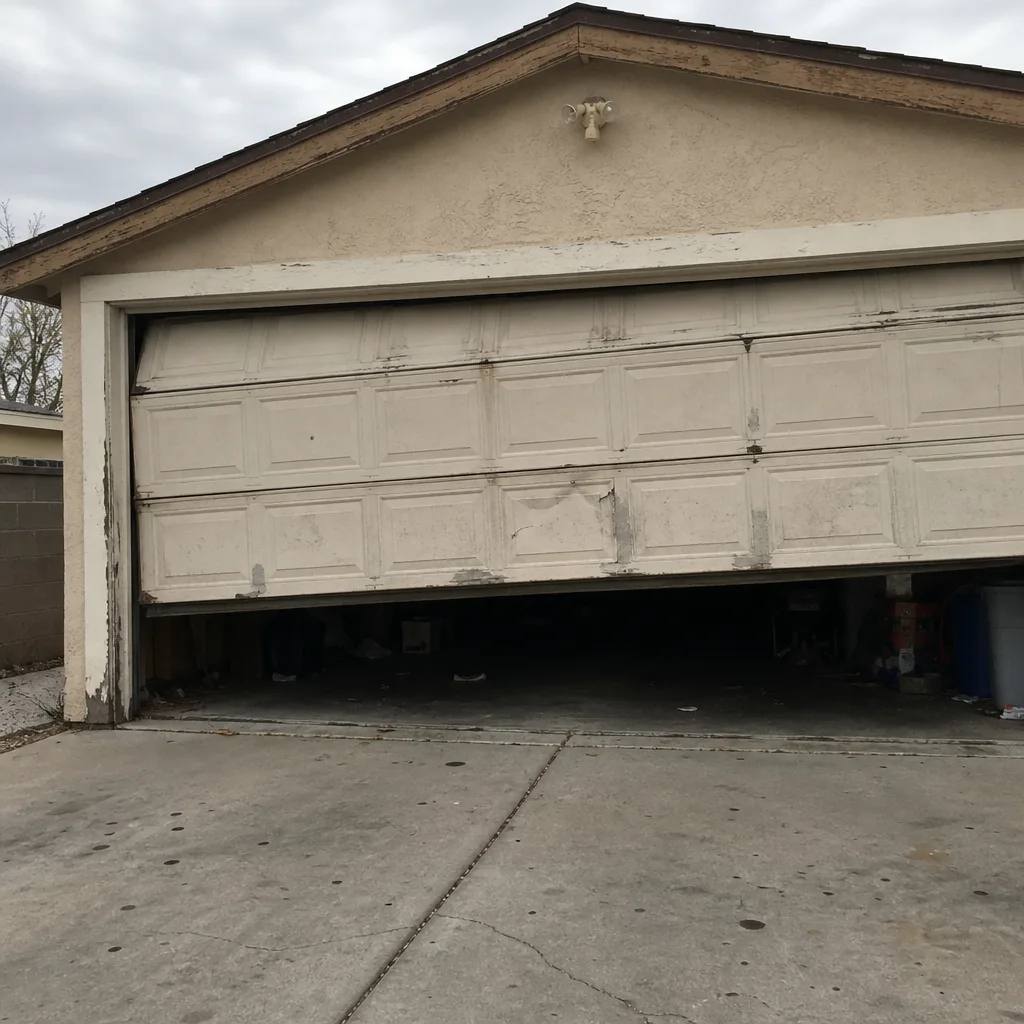 Before
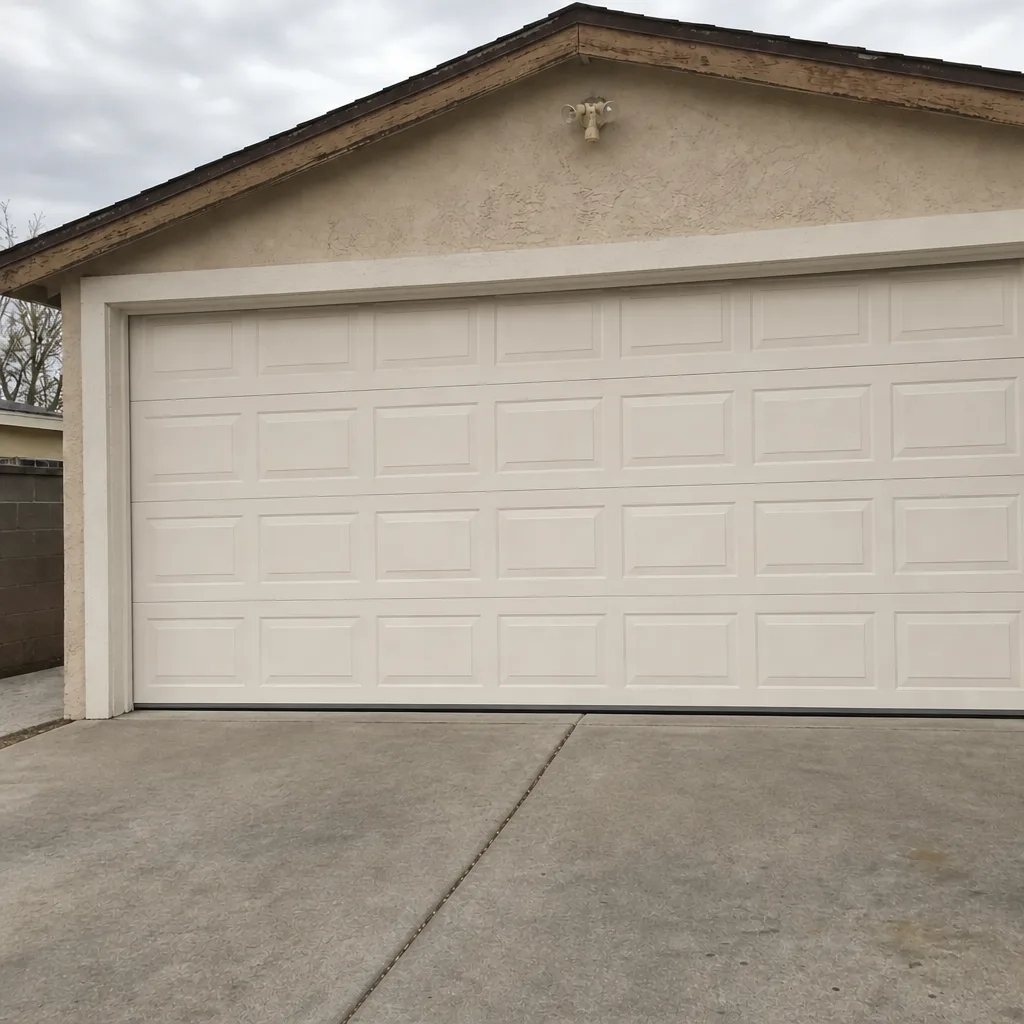 After
When to Call a Professional
Call a professional the moment you find a frayed cable, a spring gap, a burning or metallic smell, a door that suddenly loses speed, or a safety sensor that won’t stay lit. Those are the signs that carry real risk or turn into larger repair bills. If your door is slow, uneven, or feels heavy by hand, that’s a scheduling job, not an emergency. The people at Otto’s Garage Door Sunrise Manor offer free estimates, and you can reach a live person at (888) 274-8795. Upfront pricing is quoted before the visit and holds when we get there. Our technicians have up to 22 years of experience, and the work is backed by our 90-Day Done Right Promise in writing on every job.
Frequently Asked Questions
The earliest signs are usually frayed cables at the drum, a visible spring gap, flat spots on the rollers, a rust line on the track, and hairline cracks at panel corners. A door that’s gradually gotten slower over a few months is often reporting spring tension before anything breaks. Do a 60-second walkaround monthly to catch these early. Call (888) 274-8795 for a free estimate if you spot any of them.
Not usually. In our experience, an intermittent closing problem is often a safety sensor that’s blocked, misaligned, or failing, not the tracks. Wipe the sensor lenses and check that both indicator lights are steady. If one flickers or won’t light, the sensor needs replacing. Call (888) 274-8795 for a quick repair and a free estimate.
A gradual slowdown is usually your springs losing tension, not the opener going bad. Springs lift the door’s weight, and as they lose tension the opener has to strain to keep up. Note the month you first noticed it and get the door checked. If the opener is straining, the problem is almost never the opener. Call (888) 274-8795 and we’ll confirm it on the phone and hold that price at the door.
Stop using the door and call a technician. A burning rubber or electronic smell usually means a belt or roller is overheating or the opener is straining, and a melted-plastic smell points to a circuit board or wiring issue. Shut the opener off at the wall switch and leave the door down. Call (888) 274-8795 for a free estimate.
No. A cable under tension can snap and cause serious injury. Frayed cables should be replaced by a trained technician, never taped or handled by hand. If you see broken strands at the drum, leave the door down and call. Call (888) 274-8795 and we’ll take it from there.
Do a 60-second walkaround once a month, and right after any big dust or wind storm. The dry heat and blowing grit in Sunrise Manor wear the moving parts faster, so a quick monthly look catches problems early. If you find something, call (888) 274-8795 for a free estimate and a straight answer.
The Bottom Line
The signs that predict a garage door failure are usually quiet, and they’re hidden on the parts you don’t think to look at. Check the cable drums, the spring gap, the rollers, the track, and the panel corners once a month. Track speed changes and log what you notice. Treat a burning smell as a stop-now problem and never touch a spring or cable yourself. For a door that’s getting louder, slower, or heavier, call a technician before it becomes a bigger repair. If you’re in Sunrise Manor, Otto’s Garage Door Sunrise Manor is happy to take a look. Otto’s Garage Door Sunrise Manor home. Call (888) 274-8795 for a free estimate.
Written by the team at Otto’s Garage Door Sunrise Manor.