
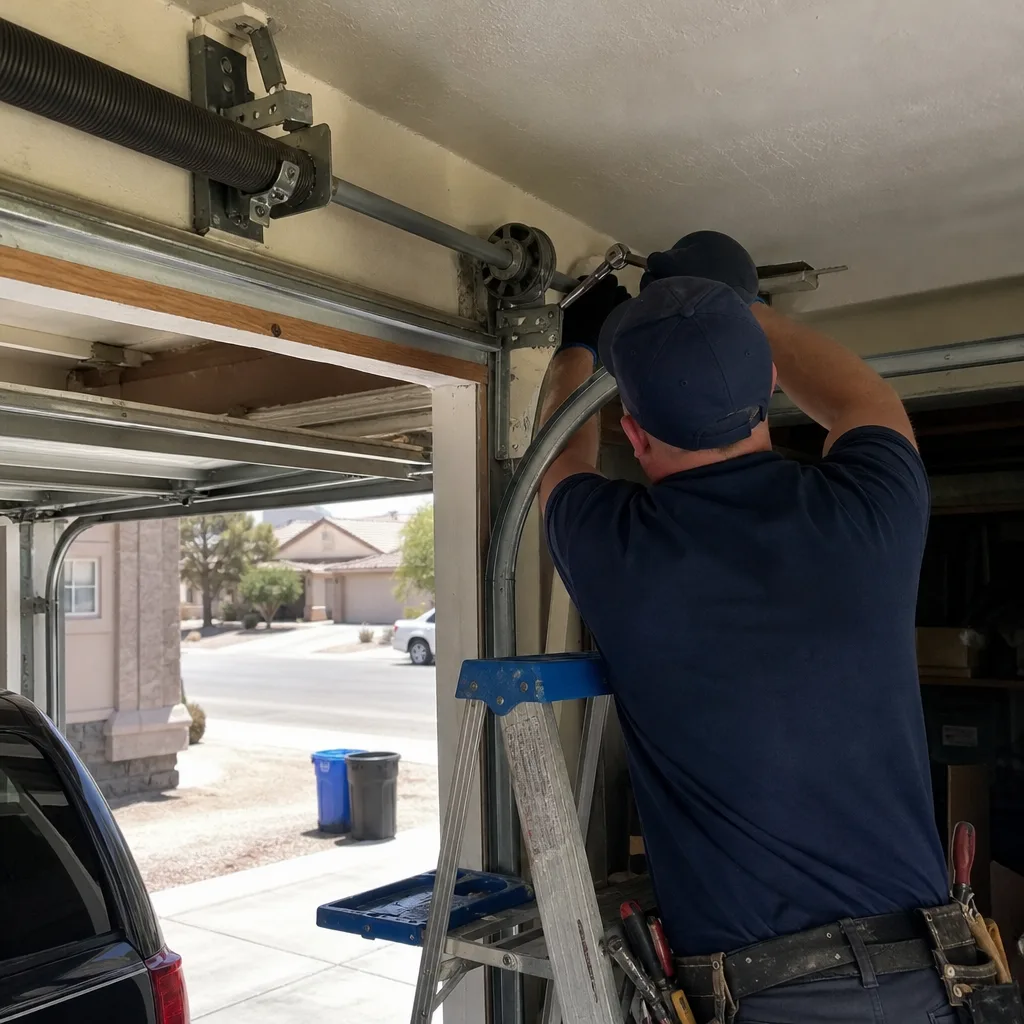
Last updated November 17, 2026
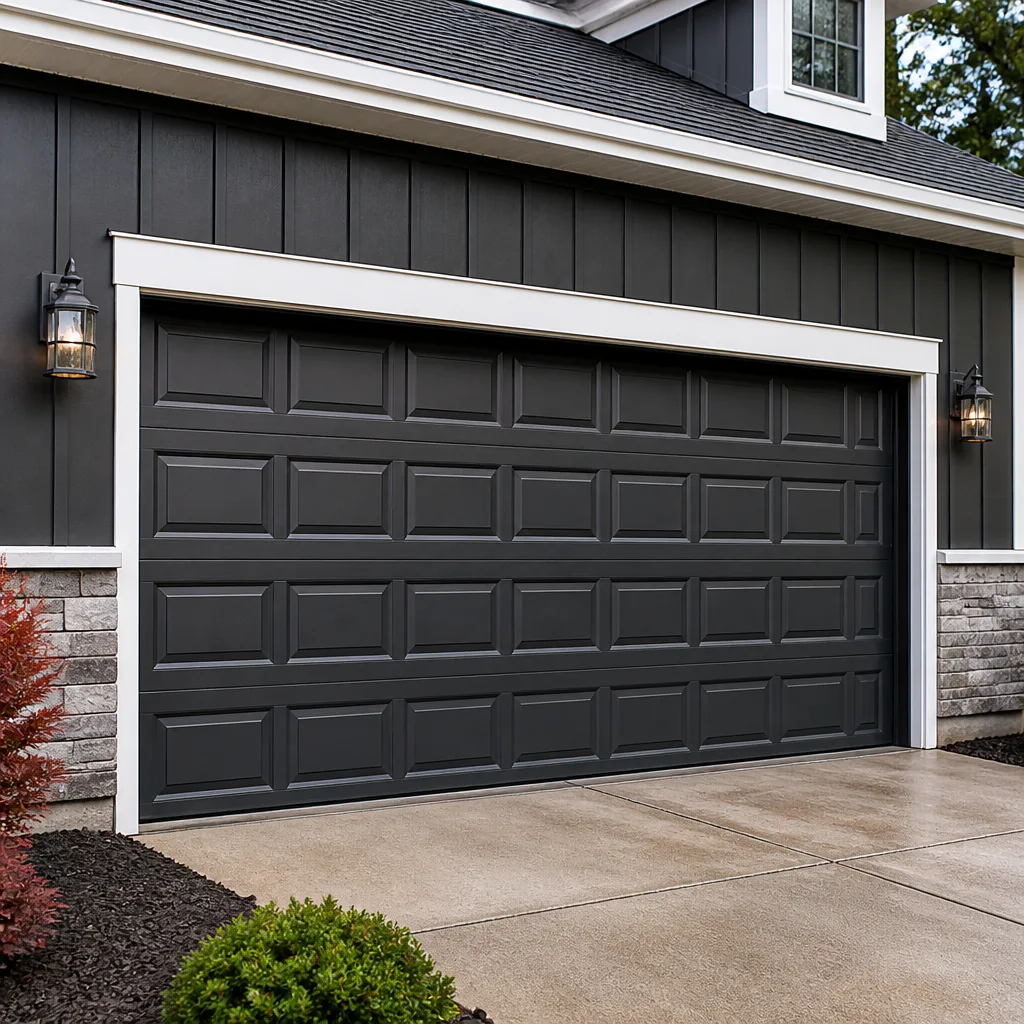 Raised-panel steel
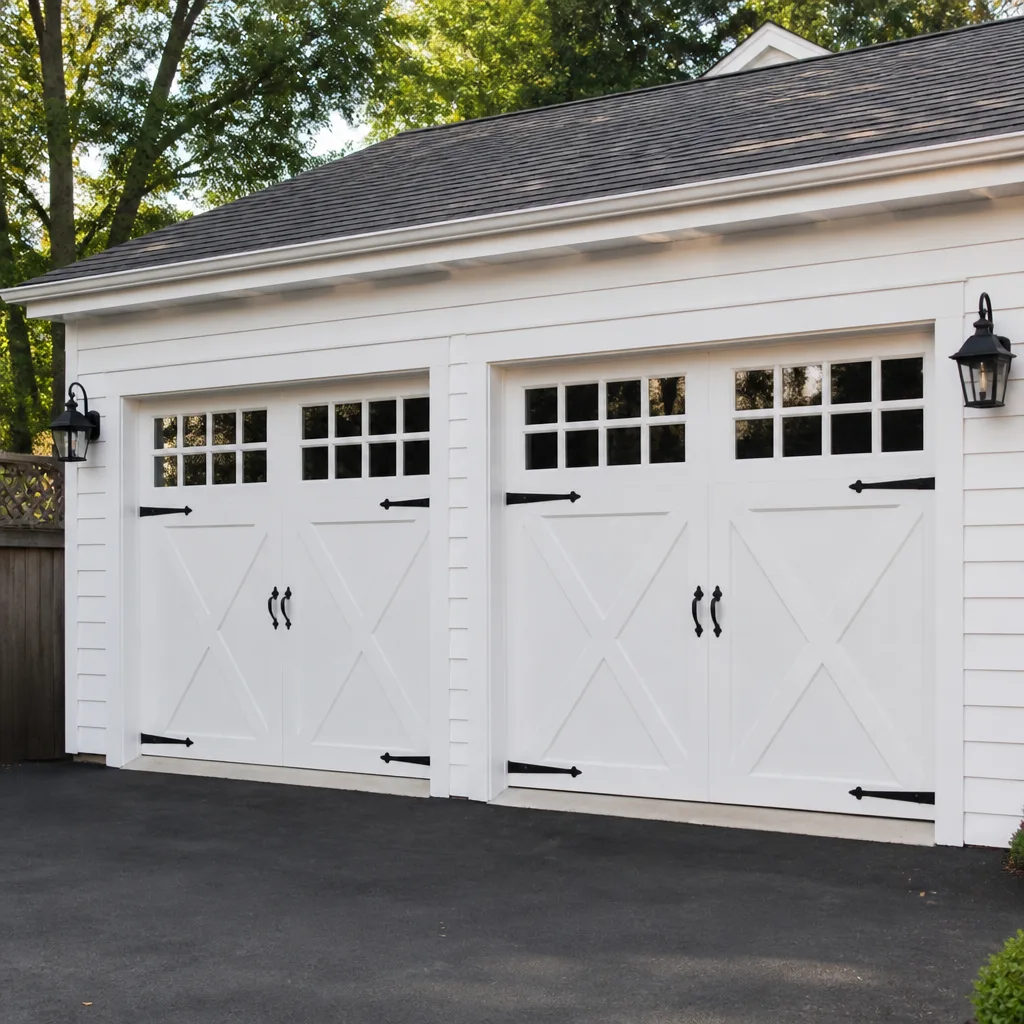 Carriage house
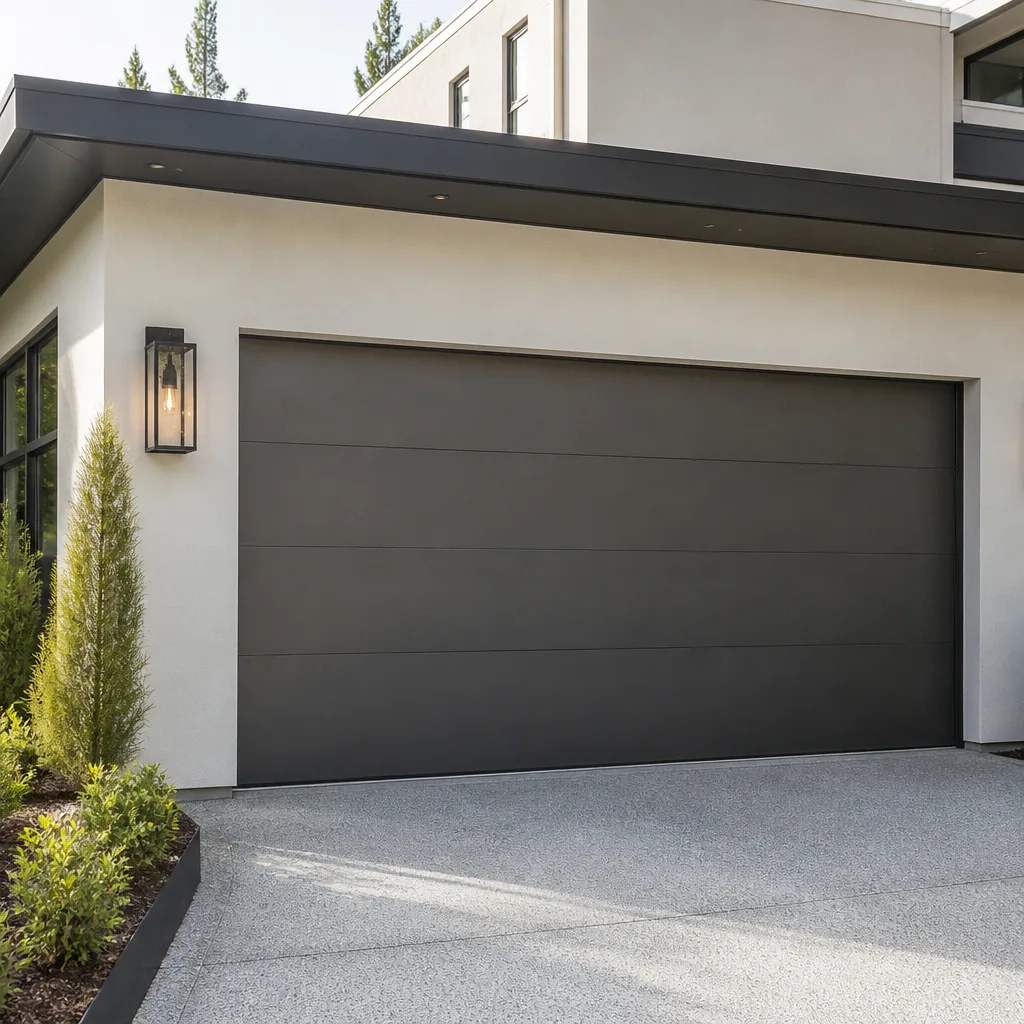 Modern flush
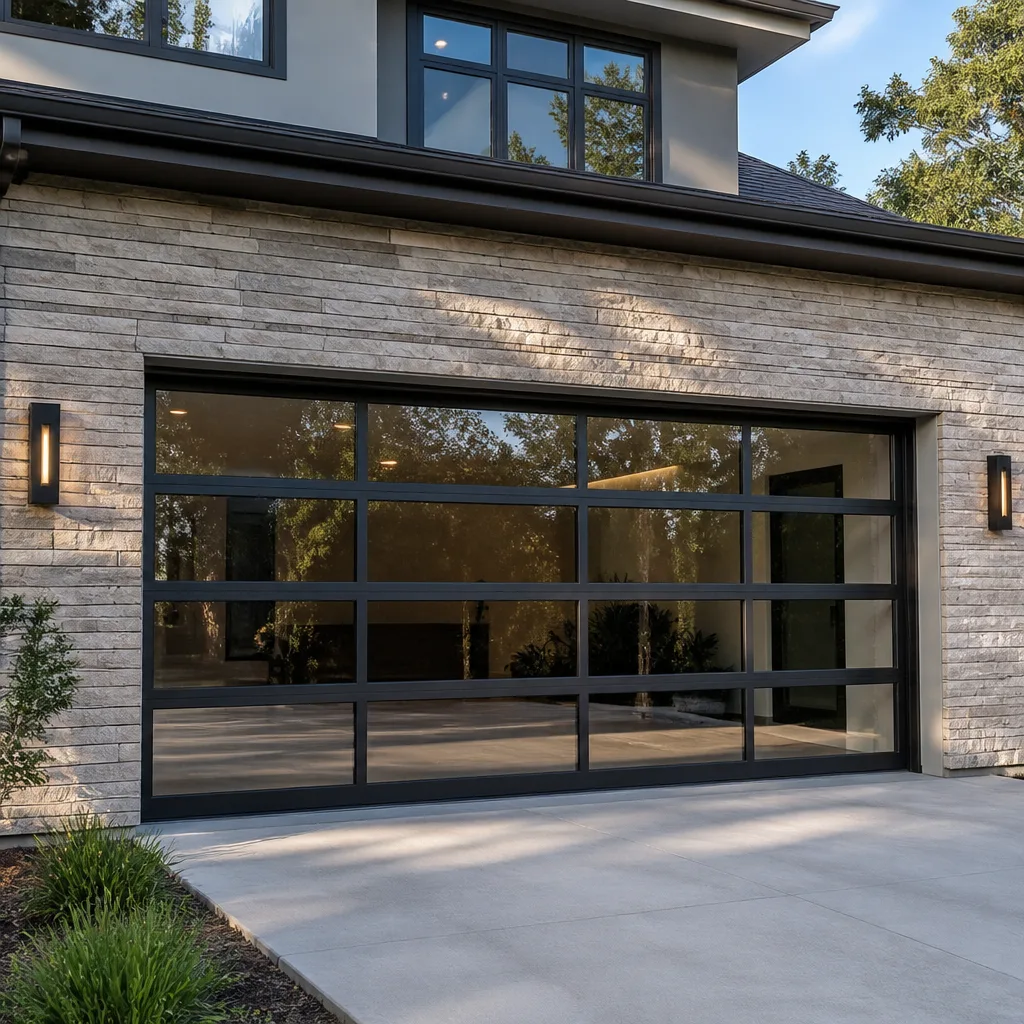 Full-view glass
 LiftMaster openers
 Chamberlain openers
Full 25-point door and opener safety check with every visit - springs, cables, rollers, tracks, and your LiftMaster or Chamberlain opener included
You get a price before we start. It does not change when the pro arrives.
Get your free estimateGarage Door Parts Troubleshooting: Common Problems and How to Fix Them
Nine out of ten people who call about a broken spring actually have a broken cable. The spring is fine, just unloaded because the cable snapped. Those are two different repairs at two different price points, and the homeowner has spent the whole morning bracing for the wrong one.
Troubleshooting a garage door the right way means starting with what the door is doing wrong, not what part looks broken. The symptom tells you the cause. The part is usually not the one you think it is. In this guide, we’ll walk through how to read the symptoms, which parts actually cause each one, and what you can safely check yourself before calling anyone. We’ve been at this in Sunrise Manor long enough to have seen every one of these mix-ups at least a hundred times.
Quick Answer
Start with the symptom, not the part. A door that won’t open at all is usually an opener, remote, or safety-sensor issue, not a spring. A door that opens crooked or halfway is usually a broken spring, a snapped cable, or a bent track. A door that makes noise but still moves is usually a roller, hinge, or bearing problem. Photograph the door’s tracks, hinges, and the springs above it, and a technician can give you an accurate phone estimate in most cases before they ever drive out.
Styles & brands we work with
- Raised-panel steel
- Carriage house
- Modern flush
- Full-view glass
- LiftMaster openers
- Chamberlain openers
Table of Contents
- Why won’t my garage door open at all?
- Why does my garage door open crooked or partway?
- Why is my garage door so loud but still working?
- What does “the door feels heavy” actually mean?
- Which parts get blamed for other parts’ failures?
- What are the top five parts homeowners try to fix themselves?
- What should I photograph before I call for an estimate?
- Common mistakes to avoid
Why won’t my garage door open at all?
When a door is completely dead, the problem is almost never the springs. If the door is just sitting there and the opener isn’t running, nine times out of ten it’s electrical or it’s the opener itself. Springs break and the door goes crooked or heavy. Springs don’t break and the opener just sit silent. That distinction alone saves a lot of misdiagnosis.
The first thing to rule out is power to the opener. In Sunrise Manor, we see a surprising number of “dead door” calls after a monsoon-season power bump, and the opener just needs a reset. Check the wall switch, the breaker, and whether the opener’s light comes on when you press the remote. If the light comes on but the door doesn’t move, the opener is getting power but something is telling it to stop, usually a safety sensor out of alignment or blocked by a leaf, a kid’s bike, or a sun-angle problem on the safety beam.
If the opener runs but the door won’t lift:
- Pull the manual release rope to disconnect the door from the opener and try lifting it by hand. If it’s heavy, you have a spring or cable issue and the opener is fine.
- If it lifts easily by hand but not with the opener, the opener’s gear, drive belt, or chain is likely stripped or slipping.
- If nothing happens at all, check the safety sensor alignment and the wall switch before assuming the opener is dead.
All of these are repairable, and most are the kind of thing we can quote over the phone if you can describe what the door is (and isn’t) doing. Our Garage Door Opener Repair & Installation in Sunrise Manor page goes deeper on the electrical side if that’s where yours lands.
Why does my garage door open crooked or partway?
A door that goes up crooked, or lifts partway and stops, is almost always telling you the two springs aren’t doing equal work. One spring has broken or lost tension, so the opener is lifting one side of the door while the other side drags. It’ll look like the door is “torqued” or lifting at an angle. That’s your symptom. The cause is usually a snapped spring, a snapped cable, or a cable that’s slipped off its drum.
This is where the spring vs. cable mix-up bites people. When a cable snaps, the spring on that side loses its anchor point and unloads. It looks exactly like a broken spring because on that side of the door, there’s no tension. The spring itself may be fine. The repair is a cable replacement, not a spring replacement, and the cost is different. A trained eye can tell them apart in about ten seconds by looking at whether the spring coils are intact and whether the cable is still wrapping the drum.
Other causes of a partial or crooked lift:
- Bent track: the roller jumps the track and the door binds on one side. Usually visible as a dented or kinked track on one edge.
- Broken or jumped roller: the roller pulls out of its hinge or the stem snaps, and that corner of the door drags.
- Uneven spring tension: the springs are intact but the door was never properly balanced, which shows up more as the door gets older.
Do not keep running the opener against a crooked door. You’ll burn out the opener’s gear or bend the track worse. Stop when it binds, and call for a diagnostic. Our Garage Door Repair in Sunrise Manor page has the repair options spelled out, or you can call us at (888) 274-8795 and describe what you’re seeing.
Why is my garage door so loud but still working?
A loud door that still goes up and down is actually good news: nothing is broken yet. The noise is friction and wear talking. If you’ve lived with a grinding, squealing, or banging door for a while, it’s usually one of these four culprits, in order of how often we find them:
- Worn steel rollers: the most common. Old steel rollers with dry bearings howl and rumble. Nylon rollers run quiet but wear out and get sloppy.
- Loose or dry hinges: the hinge plates chatter against the door panel; a quick lube and tighten helps, replacing them if the metal is fatigued.
- Torsion spring rubbing or binding: a gritty metal-on-metal squeal coming from above the door, often a sign the spring needs service.
- Opener drive wear: a worn chain, belt, or gear makes a whine or grind at the opener head itself. LiftMaster and Chamberlain openers with belt drives tend to be the quietest, so a grinding belt drive is a strong hint it’s time for service.
Ignoring noise is how a $40 roller job turns into a $1,200 track and panel repair. The wear compounds. A door that’s been grinding for a year is wearing out its hinges, its tracks, and its opener gear all at once. Get it quiet again and it’ll run another decade.
What does “the door feels heavy” actually mean?
It means the springs aren’t doing their job. A properly balanced garage door should lift with one hand, easily, because the springs are counterbalancing almost the entire weight. A door is 200 pounds riding on two springs. When you pull the manual release and the door feels heavy or won’t stay up when you let go, the springs are the issue. Not the motor. Not the opener. The opener never lifts the door’s weight on its own; the springs do that, and the opener just steers.
That’s why the problem is almost never the opener when a door “gets heavy.” The opener’s been struggling to lift a door it never should have had to lift alone. You replacing the opener in that situation just buys you a brand-new opener that also fails early, because it’s doing the springs’ work.
Signs that the springs are the real problem, not the motor:
- The door lifts a few inches and stops, or reverses itself, then eventually lifts fully after a second or third try.
- The door slams down harder than it used to instead of landing softly at the bottom.
- The door feels like it weighs more than it did a year ago, or takes more effort to lift by hand.
- You can see a visible gap in a spring coil, or the spring looks visibly stretched on one side.
That gap in the spring is a broken torsion spring. It’s not a “let me see if I can fix this” situation. It’s a professional job, and fast, because running the opener against it will burn out the motor. If you’re in Sunrise Manor and this sounds familiar, we cover the full fix on our garage door repair page. We’ll quote you on the phone and hold that number when we arrive.
Which parts get blamed for other parts’ failures?
This is where troubleshooting really separates the pros from the parts-changers. Some parts fail so loudly they take the blame for a quieter failure next to them. If you just swap the loud part, the door breaks again in a month. Here’s the pattern we see most.
Rollers blamed for a bent track. A roller feels stiff, so the homeowner replaces the roller. Six weeks later it’s stiff again, because the track is bent and every roller that runs through the bend is getting forced. The fix is straightening or replacing the track, then the rollers. If a roller keeps failing at the same spot, look at the track above it.
Springs blamed for a failing cable drum. The spring looks worn. But the drum the spring is wound around has a worn groove or a loose set screw, or the cable has jumped the drum slightly. The spring isn’t the problem. The drum is, or the cable is. A technician checks drum set screws and cable wrap before quoting a spring.
Opener blamed for a bind in the door. The opener strains, so the homeowner thinks the opener is dying. It’s not. It’s fighting a door that’s dragging on one side because of a bent track, a worn roller, or a door that’s out of balance. Replacing the opener is a $600 fix for a $120 problem.
Hinges blamed for a loose panel. The hinges rattle, so the homeowner tightens them. But the actual cause is a fatigued hinge plate or a stripped screw hole in the panel. Tightening it just delays the failure. The hinge needs to be replaced, not tightened.
A good diagnostic always looks for the thing causing the failure, not just the thing that looks worn. That’s how you fix it once.
What are the top five parts homeowners try to fix themselves?
There’s real money to be saved in a few of these. There’s real danger in others. Here’s an honest rundown, in order of how often we see homeowners take a crack at them, with the safety reality attached.
- Rollers: usually fine to replace yourself if the door is up and locked off and you can reach the hinge plate. The bearing is a press fit. Many people get it done. This is the safest one on the list.
- Weather seal at the bottom of the door: a straightforward homeowner job with a rubber tube and some lubricant. Nobody gets hurt. Skip the electric opener entirely and do it by hand.
- Safety sensor alignment: carefully unscrewing the sensor bracket and turning it a hair is fine. It’s a fast fix and usually the answer to a door that won’t close. The trick is to line up the sensor LED and pull the door to test the beam before you trust it.
- Hinges and brackets: the smaller hinges are fine to swap if the door is fully down. Do not loosen or remove the hinge plate that holds the bottom bracket, because that bracket is under spring tension through the cable and can snap back violently.
- Springs and cables: this is the one that sends people to the hospital. Torsion springs under a charged load can release at extreme force with almost no warning. The bottom bracket is a very real crushing and amputation hazard. Cables are under tension too. Do not touch these. A wound torsion spring can take fingers off, and it does not care how careful you are.
If you’re not sure which of these you’re looking at, stop. A photo and a call to (888) 274-8795 will sort it before anybody gets hurt.
What should I photograph before I call for an estimate?
Good photos are the difference between a phone estimate and a call-back “let me come look.” Getting a real number over the phone puts you in a much better position with any technician in Sunrise Manor, including us. Here’s what to shoot, and it takes about two minutes.
- Wide shot of the whole door, from inside. Stand back so the door, tracks, and springs above are all visible. This tells us the door type and settle balance.
- Close-up of the torsion spring or extension springs above the door, with a flashlight if needed. Look for the visible gap in a spring coil. That’s the specific spring shot we need.
- Close-up of the bottom corners of the door, inside. The bottom bracket and cable drum on each side. This is where cable failures show.
- The tracks, especially any visible kink or dent. Shoot down the track from the bottom, so we can see if it’s straight or bent.
- The opener head and the safety sensor eyes. Snap the model number sticker if you can find it. Most openers (LiftMaster and Chamberlain especially) have a clear sticker on the back or side.
- A shot of the door’s panel and glass or window sections, if there’s any damage. It matters for repair options and for whether a Clopay replacement would match.
Text those to us, or describe them on the call. Nine times out of ten we can quote you a number on that call with confidence. Ten percent of the time we’ll want to swing by first, and we’ll tell you why. If you’d like the full catalog of what we repair, our Garage Door Repair in Sunrise Manor page has it. Or if you’re considering replacing the door entirely, see Garage Door Installation in Sunrise Manor for what that involves.
Common Mistakes to Avoid
- Replacing the opener when the problem is the door. If the door feels heavy, the springs are the issue. A new opener will strain against the same heavy door and fail early. Diagnose the door weight first, always.
- Greasing the tracks. This sounds innocent. It’s not. Lubricant on the tracks collects desert dust in Sunrise Manor, and the door then binds worse. Grease the springs, hinges, and rollers. Never the flat surface of the track.
- Ignoring a crooked lift. Every day a door runs crooked, it wears the opener gear and the rollers on one side. What would have been a cable job turns into a full track and opener job. Stop running the door when it’s obviously struggling.
- Assuming a photo of a “broken spring” is always a broken spring. It might be a snapped cable with the spring unloaded. Two different quotes. Let a technician confirm before you accept a spring price.
- Closing a door on a misaligned sensor. If the sensor LED is blinking rather than steady, the door’s safety reverse might be off. That’s the single most dangerous state a garage door can be in. Test it monthly.
- Hiring the cheapest quote without verifying the license and address. This is the classic Sunrise Manor driveway mistake. Ask for the license number and a published address before anyone shows up. A real local operation will hand them over.
- Not getting the price in writing before work starts. The number should match between the phone and the driveway. If a price is “rough,” ask for the written one before the technician opens the toolbox.
See the difference
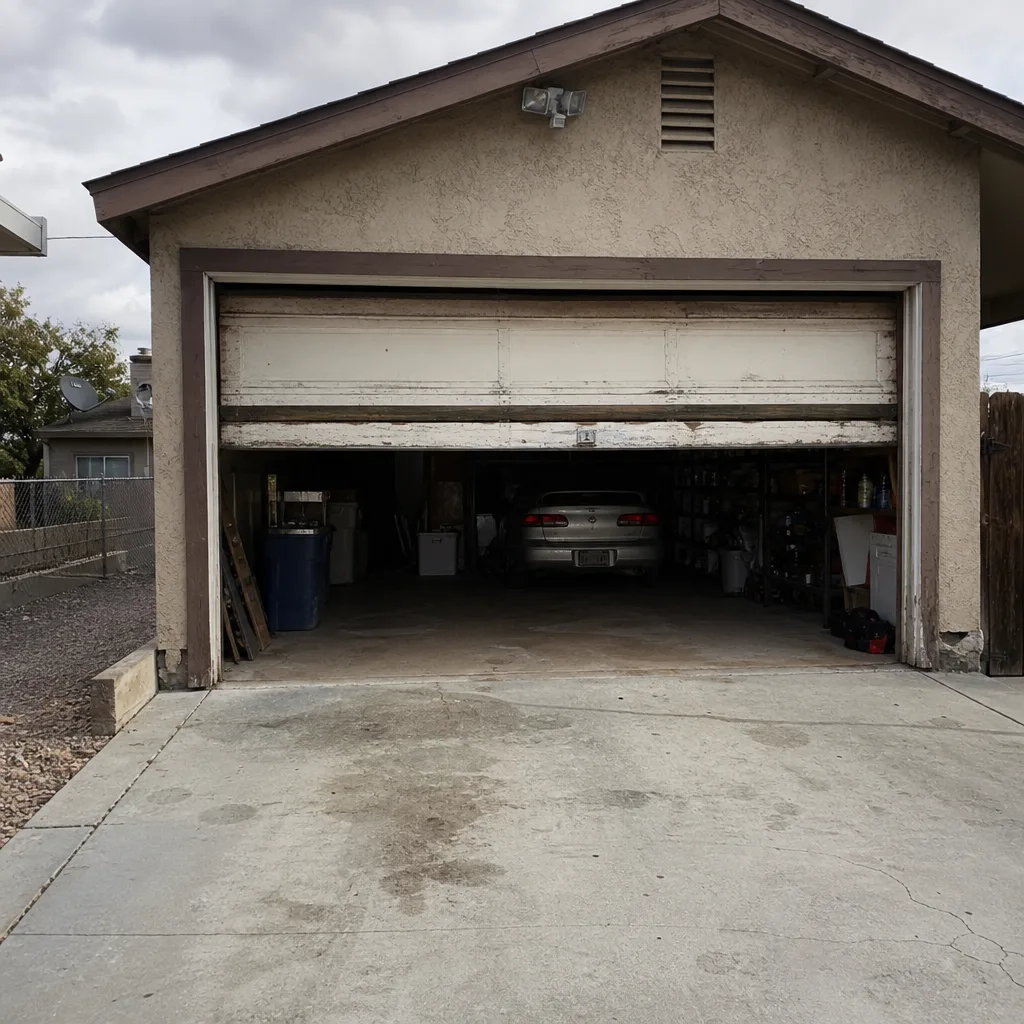 Before
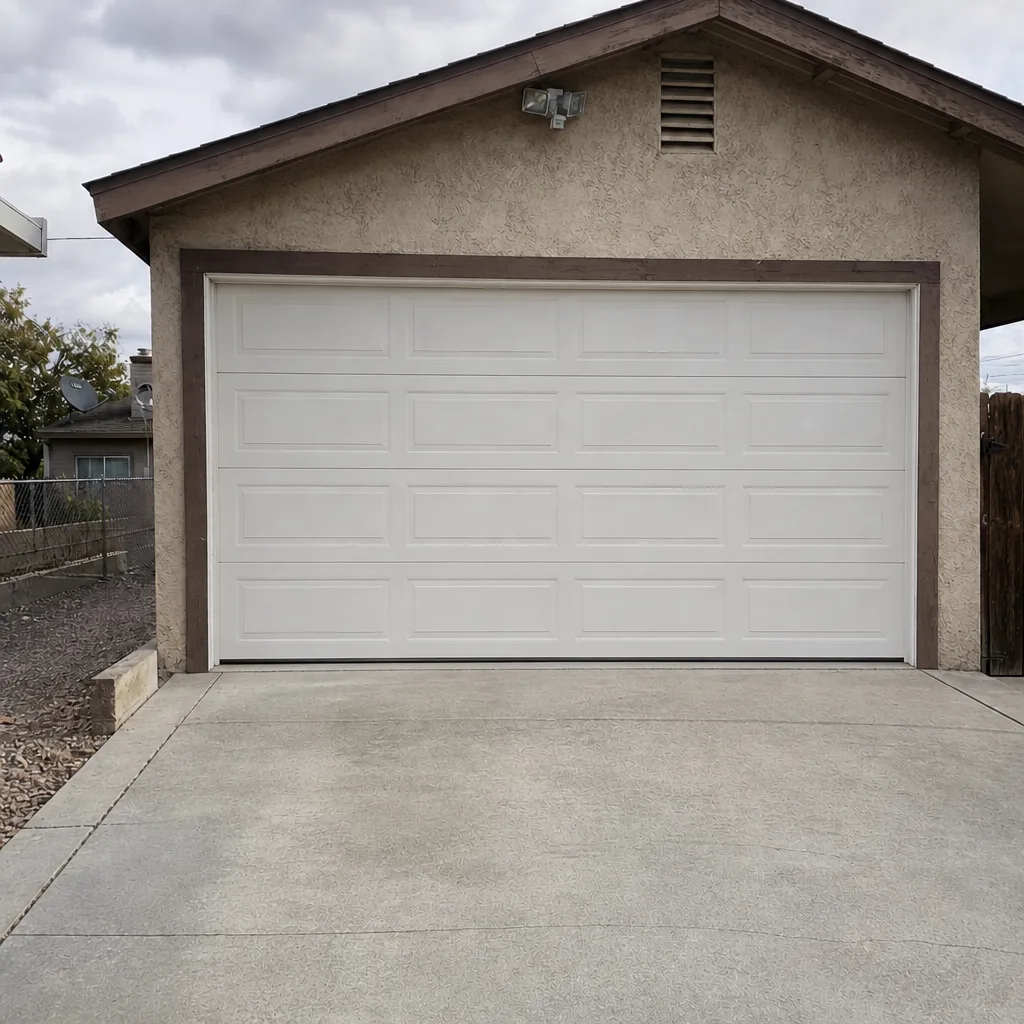 After
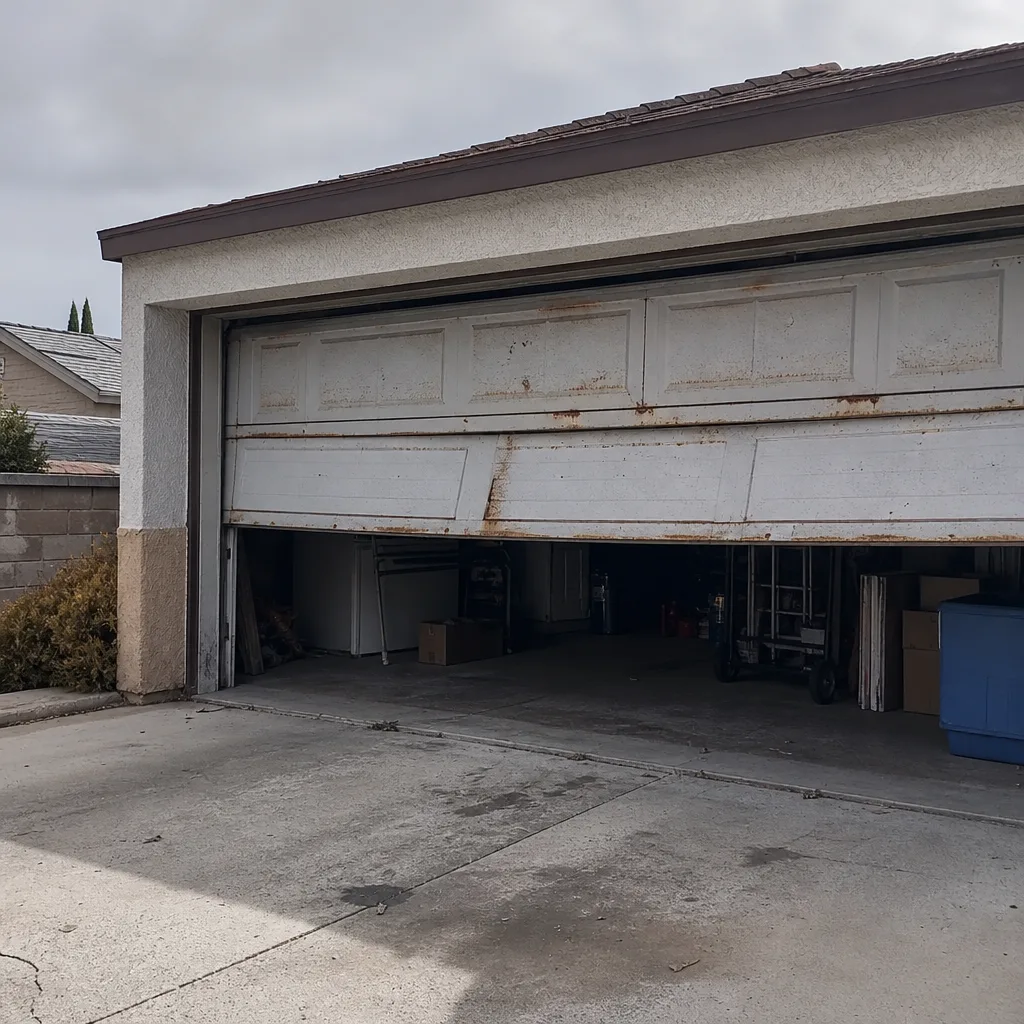 Before
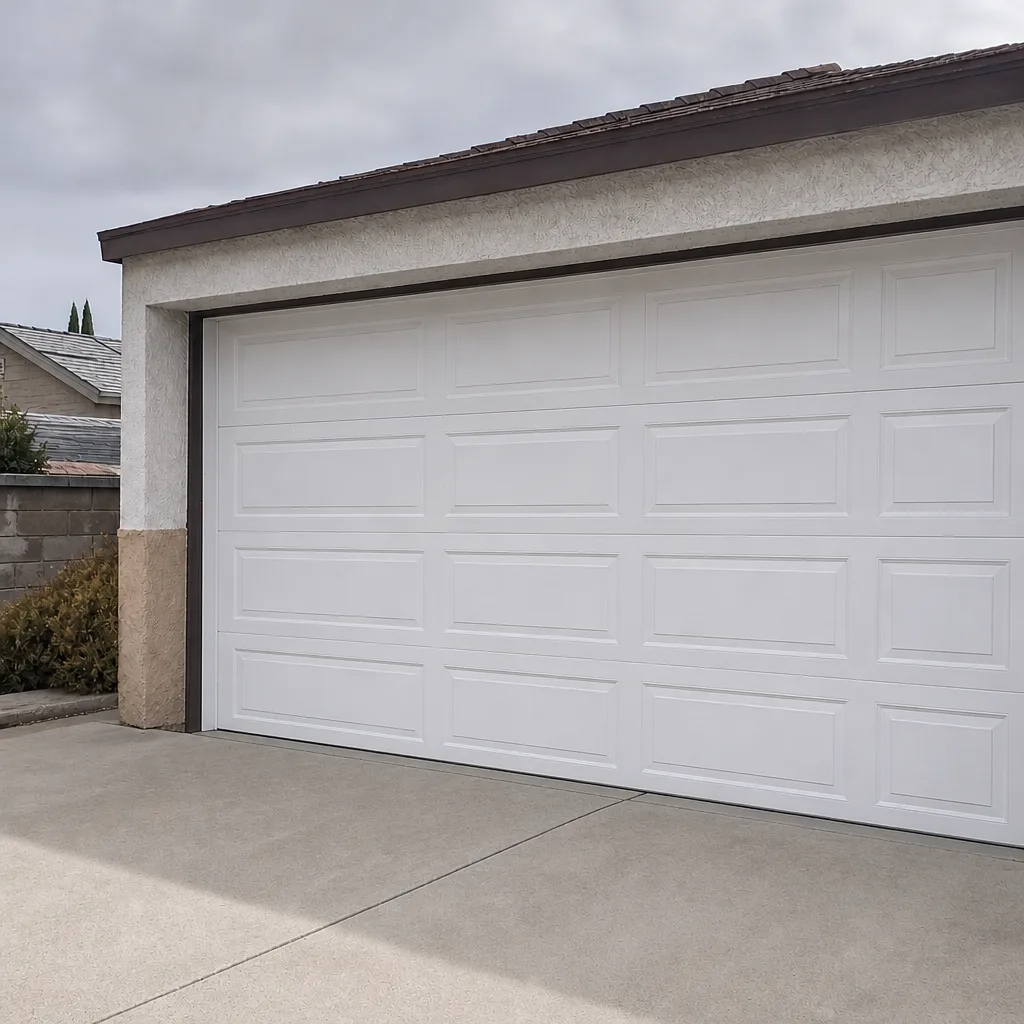 After
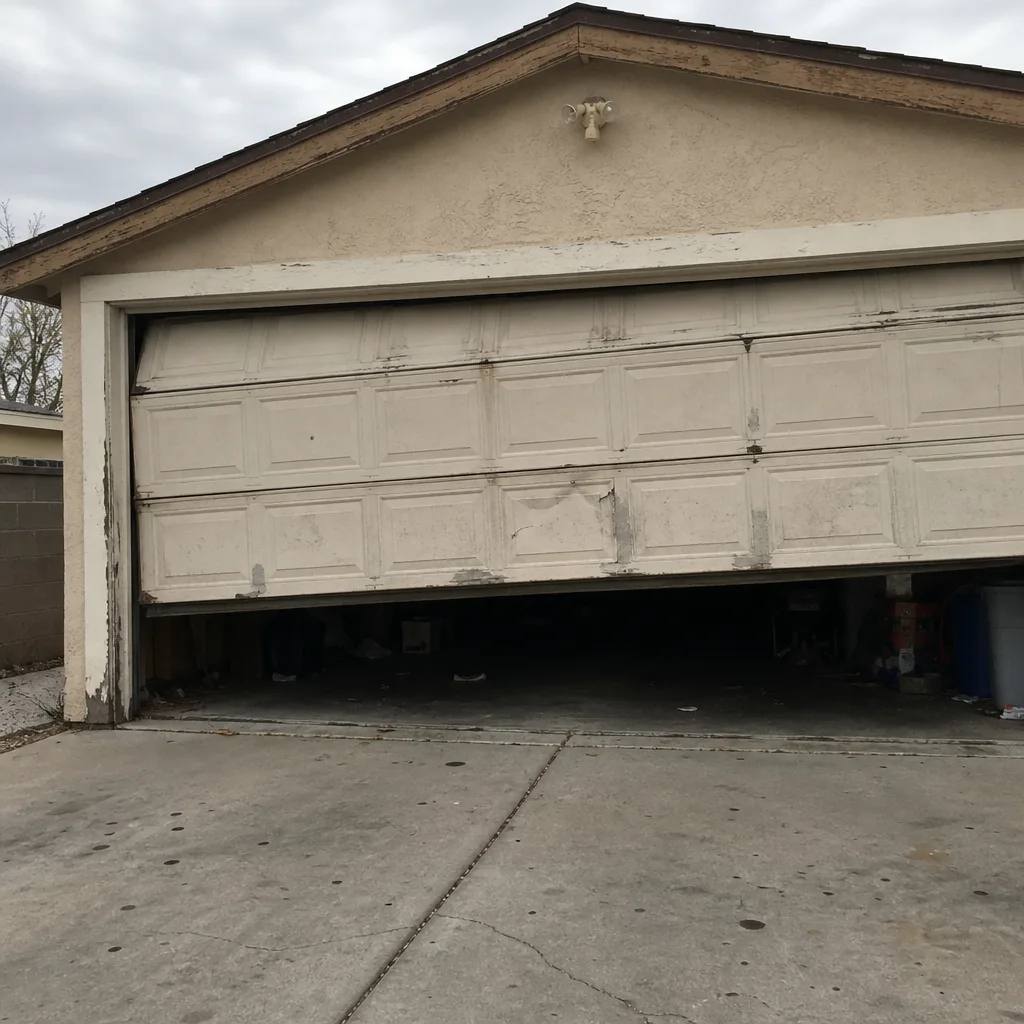 Before
 After
When to Call a Professional
Call us when the door is crooked, when the door is heavy, when you see a broken spring or a snapped cable, or when the opener runs but the door doesn’t. Call when you’ve tried the simple fixes (reset the opener, check the sensors, check the breaker) and the door still won’t work. Call if you’re not sure which of these you have. That last one is the most common reason people call, and it’s a good reason. It’s much cheaper to get a diagnostic than to buy a part you didn’t need.
Springs, cables, and bottom brackets aren’t a homeowner job, full stop. Everything else, we’re happy to walk you through on the phone. Otto’s Garage Door Sunrise Manor offers free estimates in Sunrise Manor – call (888) 274-8795. If there’s a written estimate from someone else already, we’ll give you a free second opinion, no trip charge inside the home county. And if you don’t have a quote yet, we’ll give you a real number before anybody gets in a vehicle. That’s the whole reason our customers stay with us for years.
Frequently Asked Questions
Spring repair in Sunrise Manor typically runs a few hundred dollars per spring, and a proper two-spring replacement runs higher than a single because both springs should match in age and tension. The exact price depends on the door size and the spring gauge. Call (888) 274-8795 for an exact quote – estimates are free, and we don’t revise the number upward at your door.
You can physically replace one spring, but you shouldn’t. The second spring has been doing all the work, and it’s aged out twice as fast. It’ll fail in six to twelve months, and then you’re paying the trip charge a second time. Both springs get replaced together, and a good technician will tell you why before quoting it.
That’s a safety sensor problem 90% of the time. The sensor eyes on either side of the door see the beam as blocked or misaligned. Look at the LED on each sensor: if one is blinking rather than steady, that’s your answer. Check for a leaf, a kid’s bike, or debris in the beam path first, then check alignment. If both are steady and it still won’t close, call (888) 274-8795.
Look for a visible gap in the spring coil above the door. If the coils are intact but the door is crooked or the spring is “loose,” it’s very likely a snapped cable holding that spring unloaded. A photo of the spring and the drum on each side gets you a phone diagnosis. In Sunrise Manor, we can usually tell from a single photo before we ever drive out.
No. Do not run the opener against a broken spring. The opener is pulling the full 200-pound weight of the door on its own and it will burn out the motor or strip the gear within a few cycles. Also, a broken spring door can drop. Keep it down, disconnect the opener if you can reach the release safely, and call us.
Yes. LiftMaster, Chamberlain, Genie, Clopay, Amarr, Wayne Dalton, Craftsman, and Raynor all show up on our calls regularly. We carry the common replacement parts and get the brand-specific ones ordered if we don’t have them. If you’re not sure of your brand, the sticker on your opener or the edge of your door panel will tell you.
The Bottom Line
Troubleshoot by symptom, not by part. A dead door is usually electrical or the opener. A crooked door is springs or cables. A noisy door is rollers or hinges. A heavy door is always the springs. And a “broken spring” is often a snapped cable. Knowing which of these you have before you make the call puts you in a better position with any technician in any town, and it keeps you from buying the wrong part or getting the wrong quote. If you get stuck, photograph the door from a couple of angles and call the person who’s been at it in Sunrise Manor for twenty-plus years. We’ll quote on the call and hold the number at your door. See what we do at our Otto’s Garage Door Sunrise Manor home page, or just pick up the phone.
Call (888) 274-8795 for a free estimate. Every repair is backed by our 90-Day Done Right Promise in writing, and if a written estimate from someone else has you wondering, we’ll give you a free second opinion. No trip charge inside the home county. Senior and veteran discount, always.
Written by the team at Otto’s Garage Door Sunrise Manor.