
Last updated November 17, 2026
 Raised-panel steel
 Carriage house
 Modern flush
 Full-view glass
 LiftMaster openers
 Chamberlain openers
Full 25-point door and opener safety check with every visit - springs, cables, rollers, tracks, and your LiftMaster or Chamberlain opener included
You get a price before we start. It does not change when the pro arrives.
Get your free estimateGarage Door Repair Maintenance Schedule: What to Do and When
We replaced 14 sets of weatherstripping in one week last September. Every single homeowner said the same thing: “It was fine in April.” It wasn’t fine in April. They just couldn’t see the UV cracking yet. That’s the trap with garage door maintenance in the Mojave. The four-season checklist you’ll find on most websites was written for a place with real winters, and if you follow it here, you’ll skip the months that matter most. This guide is a month-by-month schedule built for Sunrise Manor heat, wind, and dust: what to do, when to do it, and why waiting until August costs you a repair call.
Quick Answer
In Sunrise Manor, check your garage door’s balance and listen to it run once a month, lubricate the moving parts every three months with white lithium grease (not WD-40), inspect weatherstripping and springs by eye every season, and test the auto-reverse force setting every six months. The heat-sensitive tasks – lubrication, seal inspection, and balance – should land in April and May, before summer heat stress peaks. Springs, cables, and opener force settings are inspections, not DIY jobs; leave the hardware to a trained professional.
Styles & brands we work with
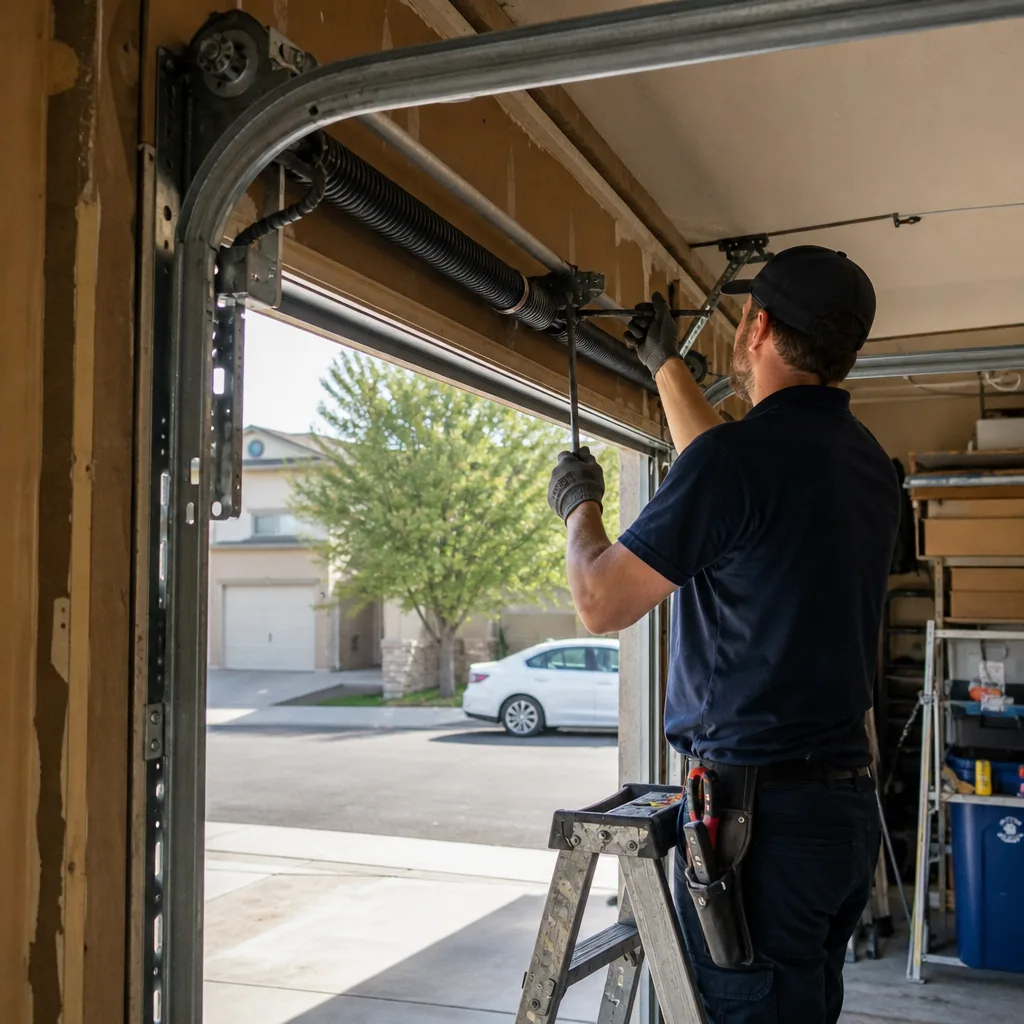
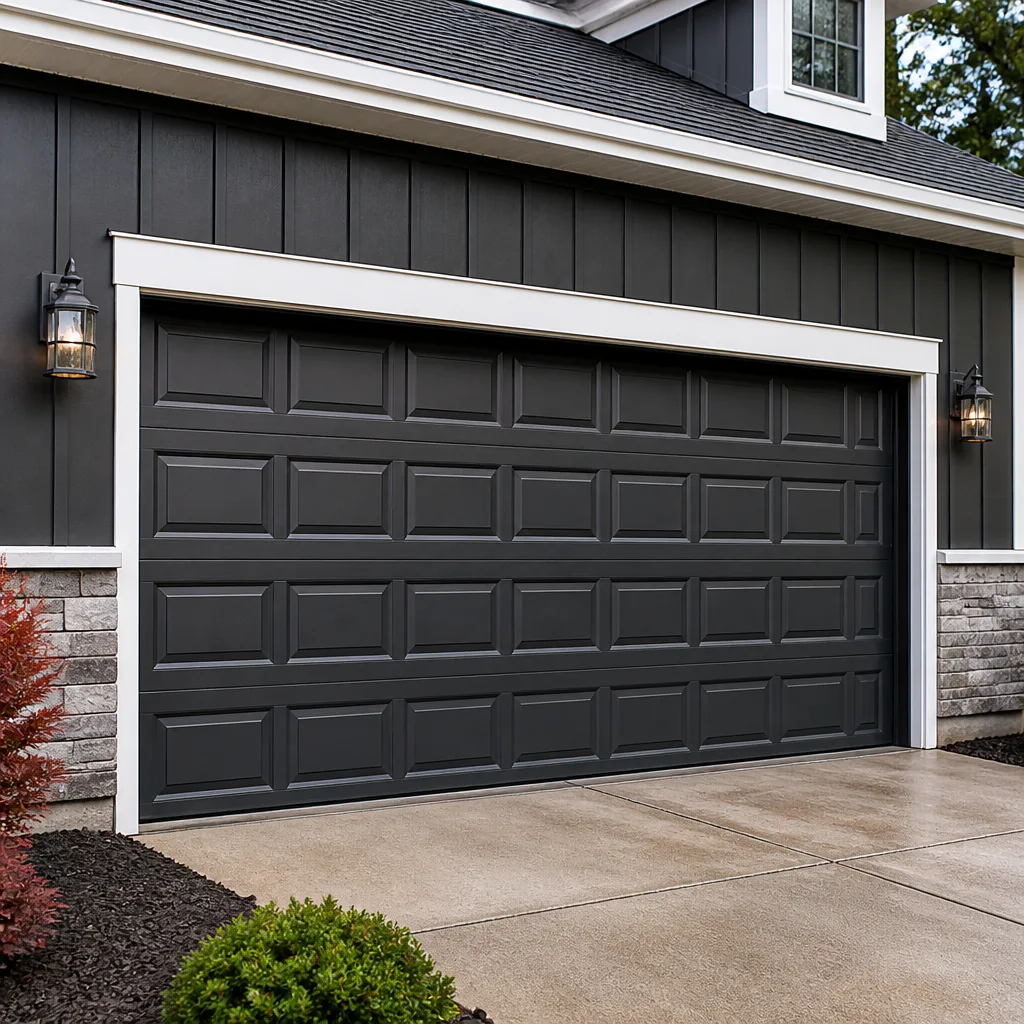
- Raised-panel steel
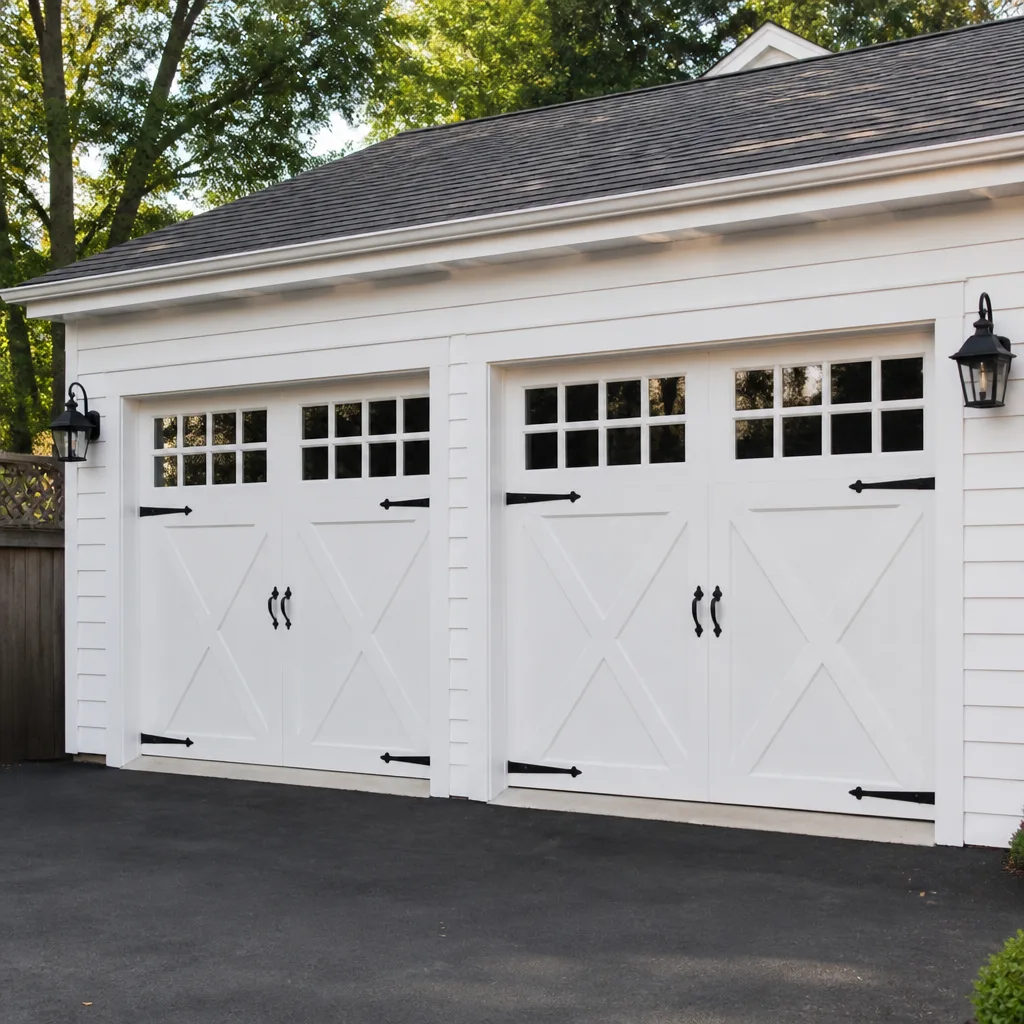
- Carriage house
- Modern flush
- Full-view glass
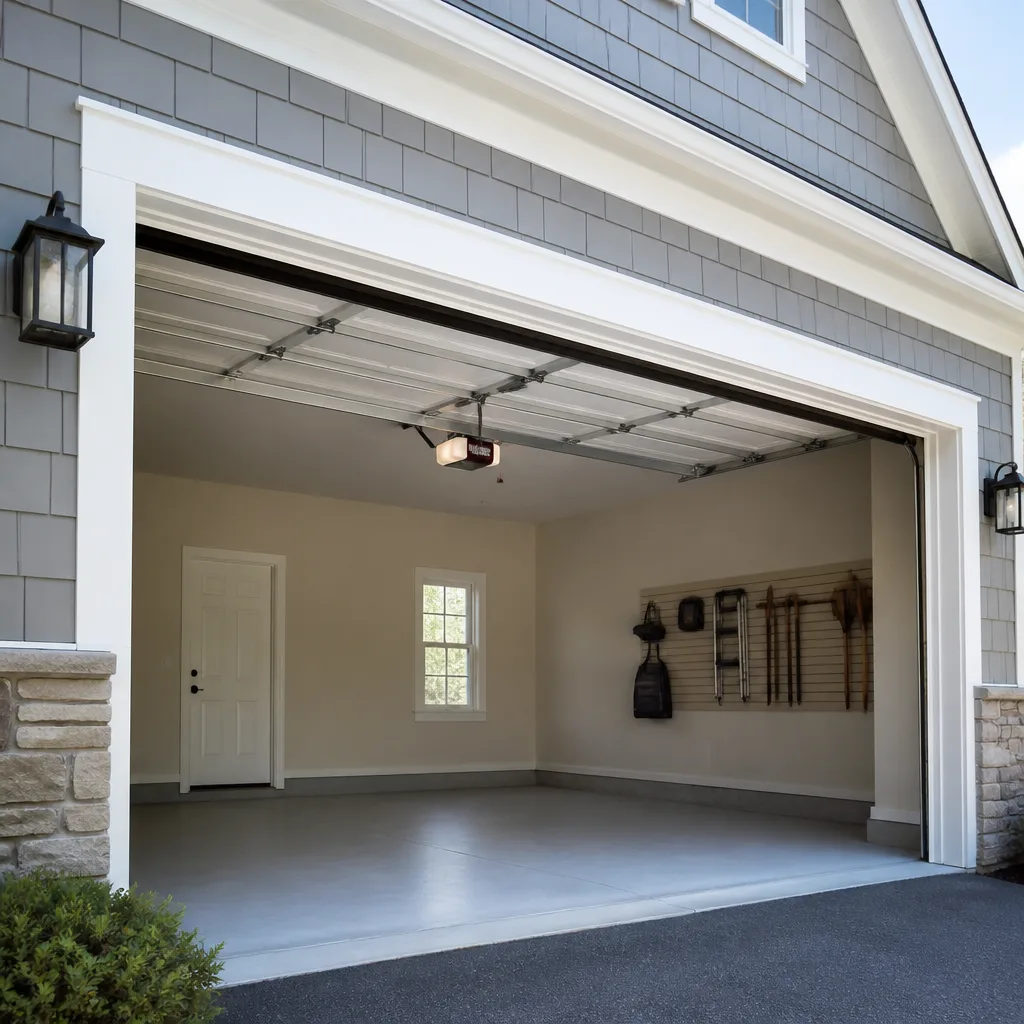
- LiftMaster openers
- Chamberlain openers
Table of Contents
- Why Sunrise Manor Runs on a Different Calendar
- The Monthly Five-Minute Check
- Lubrication: Which Products Survive 110°F and Which Make It Worse
- Spring and Cable Inspection: Eyes Only, No Hands
- The Two-Minute Balance Test
- The Task Almost Everyone Skips (and It Voids Your Warranty)
- The Sunrise Manor Month-by-Month Schedule
- Weatherstripping, Dust, and the September Surprise
Why Sunrise Manor Runs on a Different Calendar
Most garage door maintenance advice assumes four gentle seasons and a few months of real cold. Sunrise Manor doesn’t work that way. Our garage doors run a summer gauntlet: exterior door faces that hit 140°F in direct July sun, blowing dust off the desert that works into every track and roller, and monsoon wind that pushes grit against the bottom seal. Then the high desert drops to 35°F on January nights and the same materials contract. That swing is harder on a door than a steady cold.
The Midwest schedule says “lubricate in fall, inspect in spring.” Here, if you wait until October to lubricate, your rollers have already spent five months grinding dry through the worst heat of the year. The wear happened in July. The repair call comes in September.
That’s why the timing in this guide flips: your heavy maintenance lands in April and May, your inspections land after the summer, and your checks run monthly all year. A homeowner in Sunrise Manor who does the April work spends a lot less on repair by September than one who follows a generic annual list.
One more piece of local reality: doors facing west and south take the worst of it. If your garage faces the afternoon sun, everything on this schedule should happen on the early end. If you want the bigger picture on the repairs this schedule is designed to prevent, our Garage Door Repair in Sunrise Manor page covers what we see most.
The Monthly Five-Minute Check
This isn’t a maintenance day. It’s a five-minute look that tells you whether you need one. Do it on the same day each month – the first Saturday works fine – and you’ll catch problems while they’re still small.
- Listen first. Stand in the garage and run the door up and down. Healthy is a steady hum with maybe a soft click at the limits. Grinding, squealing, or a door that shudders in the track is telling you something.
- Look down the tracks from the doorway. Both tracks should look identical and clean. If you see daylight gaps, dirt buildup, or a track that looks bent out of line, note it and don’t try to straighten it yourself.
- Check the bottom seal from inside the closed door. Get a flashlight and look for light coming through at the floor, or for cracks, tears, or a seal that’s flat and hard instead of flexible.
- Eyes on the spring. Look at the torsion spring (the coil above the door) or extension springs (the coils running along the sides). You’re looking for rust, a visible gap in the coil, or a spring that looks stretched out compared to how it sat last month. Don’t touch anything.
- Run the safety reverse. Lay a 2×4 flat under the closing door. When the door hits it, it should reverse. If it doesn’t, stop using the door until it’s fixed.
Write down what you see. A noise that shows up in May and is still there in June is a phone call, not a coincidence.
Lubrication: Which Products Survive 110°F and Which Make It Worse
This is the single biggest place homeowners in Sunrise Manor get it wrong, and it’s usually because they grabbed what was in the garage. Both of these products are good products. They just do different things in desert heat.
- White lithium grease is the right choice. It’s built for high-load, high-temperature metal-on-metal contact – exactly what your hinges, rollers, and torsion spring are doing every day. It stays put when it’s 110°F and it doesn’t migrate onto the tracks.
- WD-40 is the wrong choice here. It’s a penetrant, not a long-term lubricant. In our heat it flashes off fast and the thin residue it leaves collects desert dust. That combination – dried carrier and grit – turns into a sticky paste that accelerates roller wear instead of preventing it. We’ve pulled rollers that were lubricated monthly with WD-40 and they were worse off than the dry ones.
Here’s how to apply it, roughly every three months:
- Wipe each hinge and roller stem with a clean rag first. Grease on top of dirt just holds the dirt.
- Apply white lithium grease to the hinges, the roller stems (not the roller wheels – those run on the track and shouldn’t be greased), and the torsion spring if it’s accessible from the front. A light coat, not a blob.
- Wipe a thin film of silicone-based lubricant on the tracks with a rag, never a spray can. Grease in a track attracts grit.
- Spray silicone on the weatherstripping once so it stays flexible and doesn’t tear.
- Run the door twice to work everything in.
If you have a Garage Door Opener Repair & Installation in Sunrise Manor question at the same time, get it checked before you add lubricant – a straining opener is a separate problem.
Spring and Cable Inspection: Eyes Only, No Hands
We need to be blunt here: the spring and cables are the reason we recommend a professional for most of this job. A residential garage door weighs around 200 pounds and it’s all riding on those two springs. A torsion spring under load can seriously hurt someone who takes a wrench to it without the training. So the inspection on this part of your door is an inspection with your eyes – no adjustments, no tightening, no WD-40 on anything under tension.
What to look for:
- A visible gap in the torsion coil. That’s a broken spring. Stop using the door.
- Rust streaks or orange powder around the spring. Rust thins the steel. The spring is closer to failing than it looks.
- A loose or sagging cable. Cables should sit tight and even. A cable that’s off the drum is a serious safety issue – don’t open or close the door.
- Extension springs without a safety cable running through them. If you have older extension springs and no safety cable, that’s a call to us, not a job for a Saturday afternoon.
- A door that seems heavier than it used to. That’s a sign the spring is losing tension, and it strains the opener.
Our technicians count spring cycles the way you count miles on a tire – we can tell you roughly what’s left on yours before it lets go. That’s a different conversation than “it broke, come fix it.” If your springs are original to a door you installed years ago, a professional look each spring before summer is worth the visit.
The Two-Minute Balance Test
This is the diagnostic most homeowners skip, and it’s the one that tells you the most about the health of the whole system. It takes under two minutes and requires nothing but your hands and the manual release.
- Close the door and pull the red manual release cord to disconnect the opener. The door is now free of the motor.
- Lift the door to about halfway open with both hands. Use your legs, not your back.
- Let go. The door should hold in place or drift slightly under its own weight. If it slams down or flies up, that’s out of balance.
- Lower the door to fully closed by hand, then lift it all the way up by hand. It should lift with light, even effort – maybe 10 to 15 pounds of pressure.
- Reconnect the opener by pulling the cord back through and running the door once.
What does “off by more than three inches” cost you? It’s the threshold most opener manufacturers publish, and it’s the difference between a motor that coasts a 200-pound door and a motor that fights it every single cycle. An out-of-balance door can wear out an opener motor years early. The motor is almost never the problem – the balance is.
If you’ve got a Genie or a LiftMaster that’s been running louder than it used to and the balance test shows drift, the door is usually the culprit, not the opener. Questions about that go to our opener repair page.
The Task Almost Everyone Skips (and It Voids Your Warranty)
Here’s the maintenance task that most homeowners in Sunrise Manor don’t know exists: checking the auto-reverse force setting on the opener. Most opener warranties specify that the force setting needs to be tested and adjusted correctly, and if a failed auto-reverse is traced back to a force setting that was never maintained, the warranty claim can get denied. We’ve seen it happen.
The force setting controls how hard the door pushes before it stops and reverses. In our heat, the door’s friction changes – rollers dry out, tracks pick up grit, weatherstripping stiffens – and the opener either needs more force to close the door or is pushing too hard against a board. Both are problems. Too much force and the door doesn’t reverse on contact. Too little and the door stops halfway up.
Here’s what to do:
- Find the force adjustment dial or setting on your opener. On most Genie, Chamberlain, and LiftMaster units it’s on the back or side of the motor housing. The opener manual tells you where.
- Do the 2×4 test again (lay a board flat under the closing door, run the door down). It should reverse on contact every time.
- Check that the door goes all the way down and all the way up without stopping.
- If either test fails, don’t adjust the force dial to make it work – that’s masking a door problem with an opener adjustment. Call us and we’ll look at both the door and the opener.
On a newer door, this setting is one of the first things our technicians dial in when we install a new opener. On an older door where the force setting has been nudged up over the years to compensate for a stiff door, we’re often able to bring the door back to spec and return the force to factory – which is what you want.
The Sunrise Manor Month-by-Month Schedule
This is the calendar we give our own neighbors. Print it, tape it to the inside of the garage door frame, and use it.
January through March: Low-Heat Inspection Window
The desert cools down and materials contract. Run the monthly five-minute check. If you hear a new squeal that showed up with the cold, note it. This is also when we like to shift any older door’s scheduled service – fewer emergency calls competing for attention and you have time to make decisions. That’s the right window to plan a new door if you’ve been thinking about it. See Garage Door Installation in Sunrise Manor.
April and May: The Heavy Maintenance Window
This is the most important two-month stretch on the Sunrise Manor calendar. Before the heat stress hits:
- Full lubrication with white lithium grease – hinges, roller stems, torsion spring.
- Silicone on the weatherstripping and the tracks, wiped clean first.
- Balance test, and note results.
- Force setting test with the 2×4.
- Spring and cable eyes-only inspection.
- Professional look at anything on the “note it” list from the monthly checks.
June through August: Watch, Don’t Work
It’s too hot to be on a ladder or working over your head in the garage. Stick to the monthly five-minute check and listen for new sounds. If a spring breaks in July, that’s an emergency – call us and we’ll be there. Don’t try to move a door with a broken spring yourself.
September and October: The Post-Summer Recovery
This is where the September weatherstripping conversation comes from. After a summer of 110°F, the bottom seal that looked fine in April has UV cracks running through it. Inspect the weatherstripping carefully, look at the door’s exterior for sun bleaching or warping, and clear any wind-blown dust out of the tracks. Then do one more full lubrication before the cool season.
November and December: Pre-Winter Check
Run the monthly check and the balance test one more time. Cold nights make stiff materials more brittle – it’s the right time to catch a track that got bumped by a bike or a car, before it becomes a bigger repair.
Weatherstripping, Dust, and the September Surprise
The bottom seal is the cheapest part on your door and the most consequential when it fails. When the weatherstripping goes, everything else starts to suffer: dust blows in through the gap, the door rattles, and if it’s bad enough, daylight shows under the door on a windy day. Then the heat and cold reach the inside of the garage – which matters if you’ve got a water heater, an HVAC unit, or anything else you’re trying to protect from the extremes.
What most homeowners don’t realize is that UV damage to weatherstripping is invisible for months. The rubber stays flexible and looks normal right up until it doesn’t – and in Sunrise Manor the crack-through happens fast, usually in the tail end of summer. That’s the September Surprise. The way to avoid it is April inspection, October inspection, and getting the bottom seal replaced before it fully fails, not after.
Doors from major manufacturers like Clopay, Amarr, and Wayne Dalton all use different weatherstripping profiles, and getting the wrong profile means it doesn’t seat properly against our desert floors, which are rarely perfectly level. That’s why we bring the right seal for what’s actually on the door. Our technicians are fluent across those brands and can match the seal without guesswork.
Common Mistakes to Avoid
- Lubricating with WD-40. It’s a penetrant, not a lubricant, and in Mojave heat it dries into a sticky residue that grabs desert dust. Use white lithium grease.
- Greasing the tracks. It feels like you’re helping, but grease on a track collects grit, which accelerates roller wear. Use a silicone-wiped rag instead.
- Following a Midwest four-season checklist. Lubricating in October means the door has already gone through the entire hot season dry. The big maintenance lands in April here, not September.
- Adjusting opener force to fix a stiff door. Turning up the force dial masks a door problem and can leave the auto-reverse too weak to stop on contact. Fix the door.
- Trying to adjust springs or cables. A door is 200 pounds riding on two springs. This is the number one way a homeowner ends up in the ER. Don’t touch them.
- Skipping the 2×4 test. If the door doesn’t reverse on a flat board, it’s a safety issue and one call to us speeds a repair we’d rather do now than after something worse happens.
- Waiting for the bottom seal to fully fail. Replace weatherstripping at the first sign of cracking. By the time it’s visibly gone, dust and heat have already been getting in.
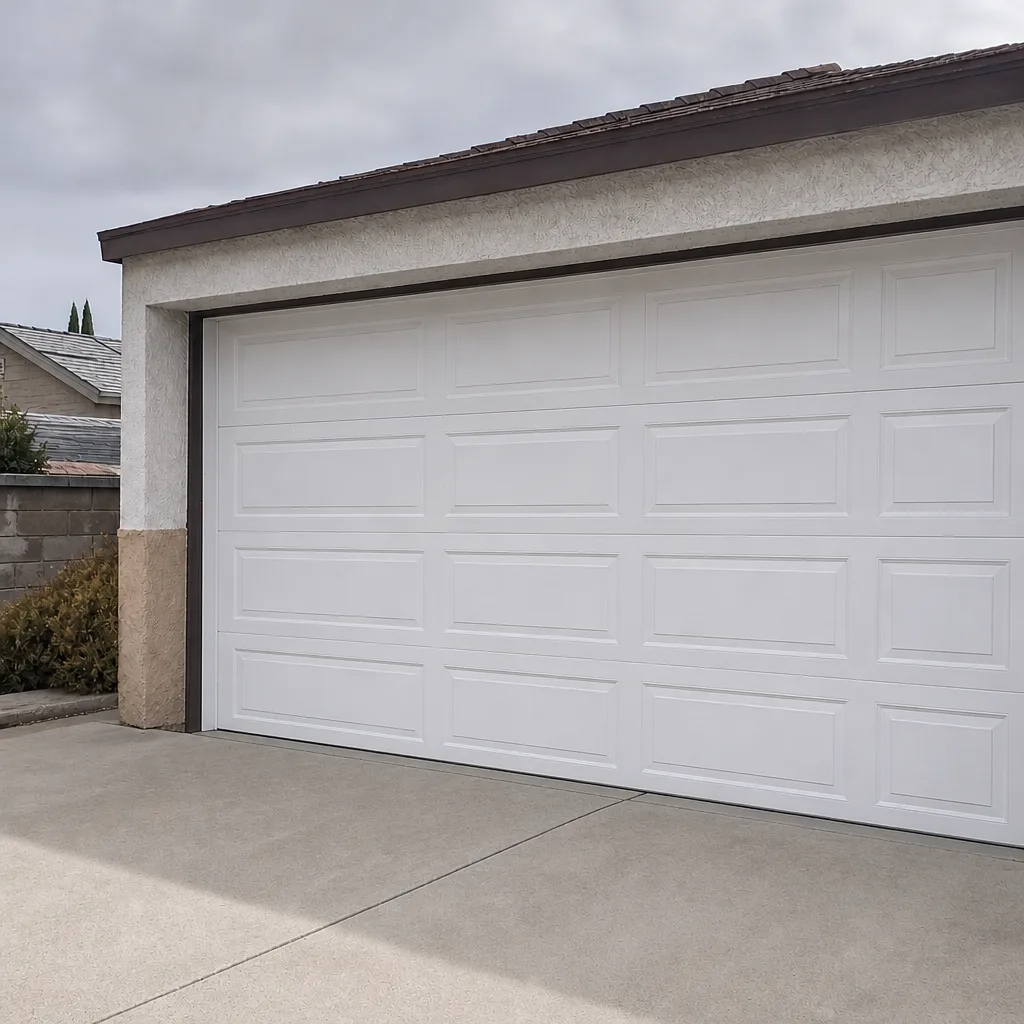
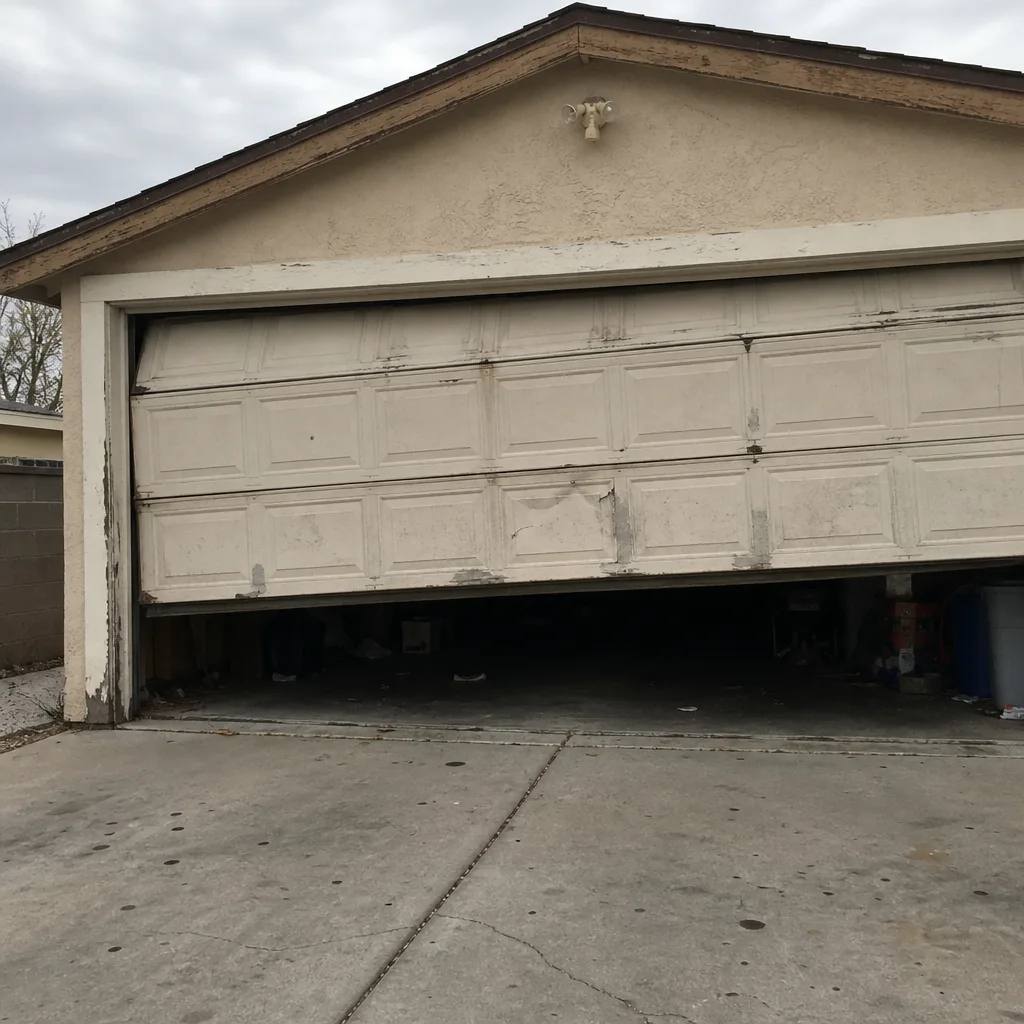
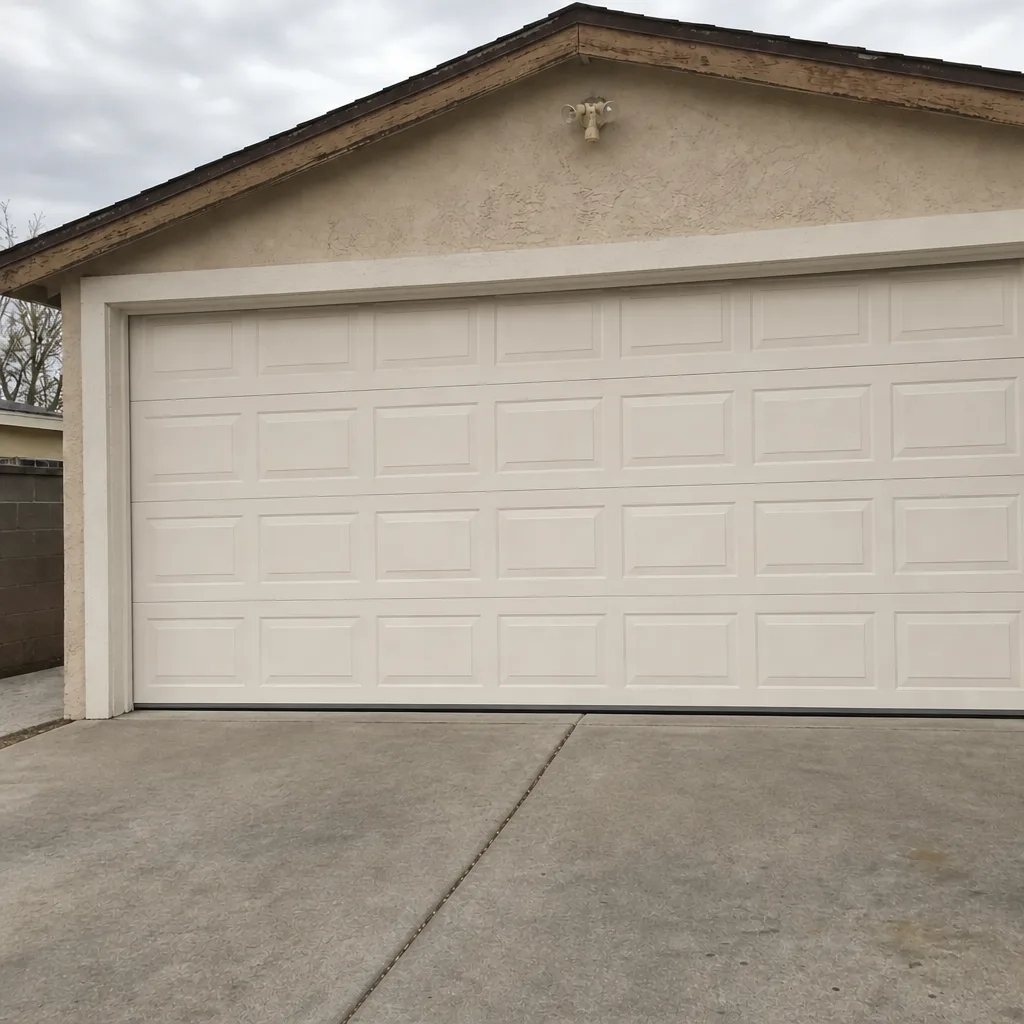
See the difference
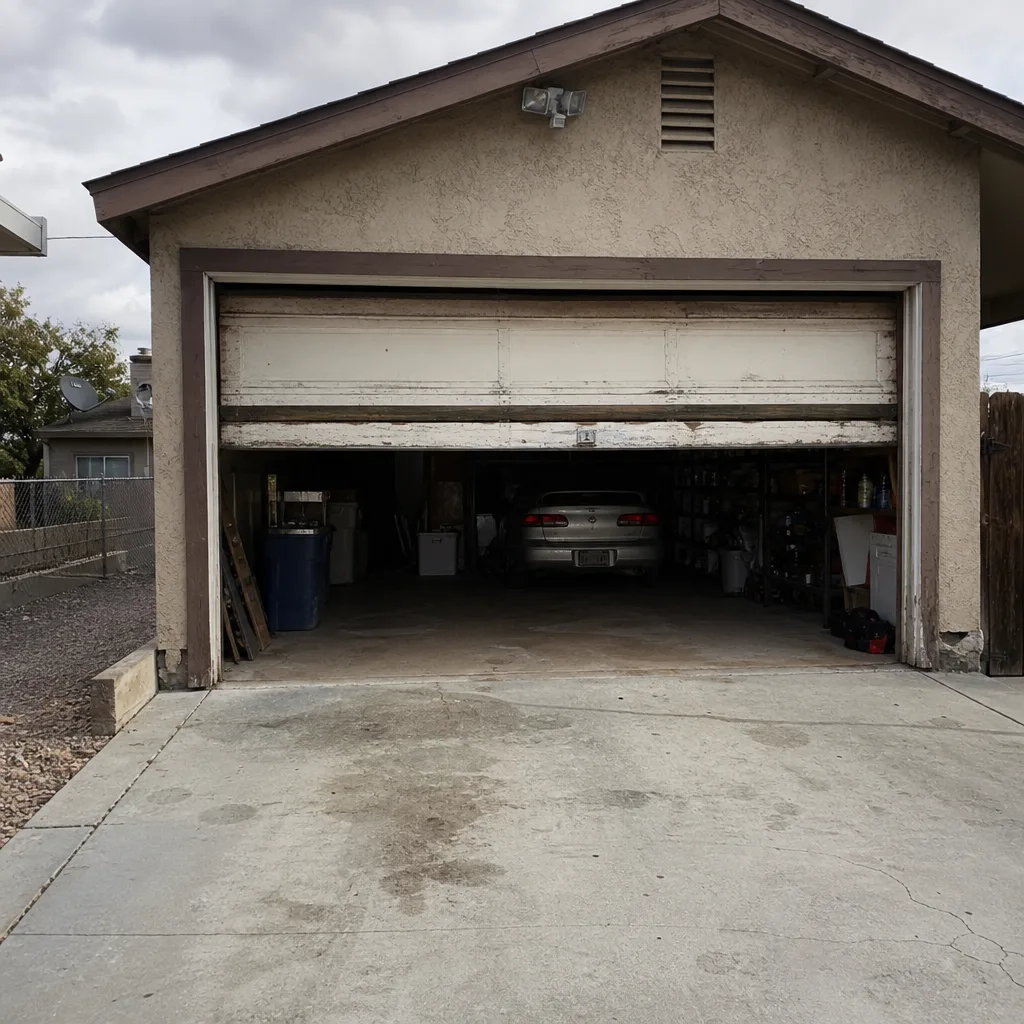 Before
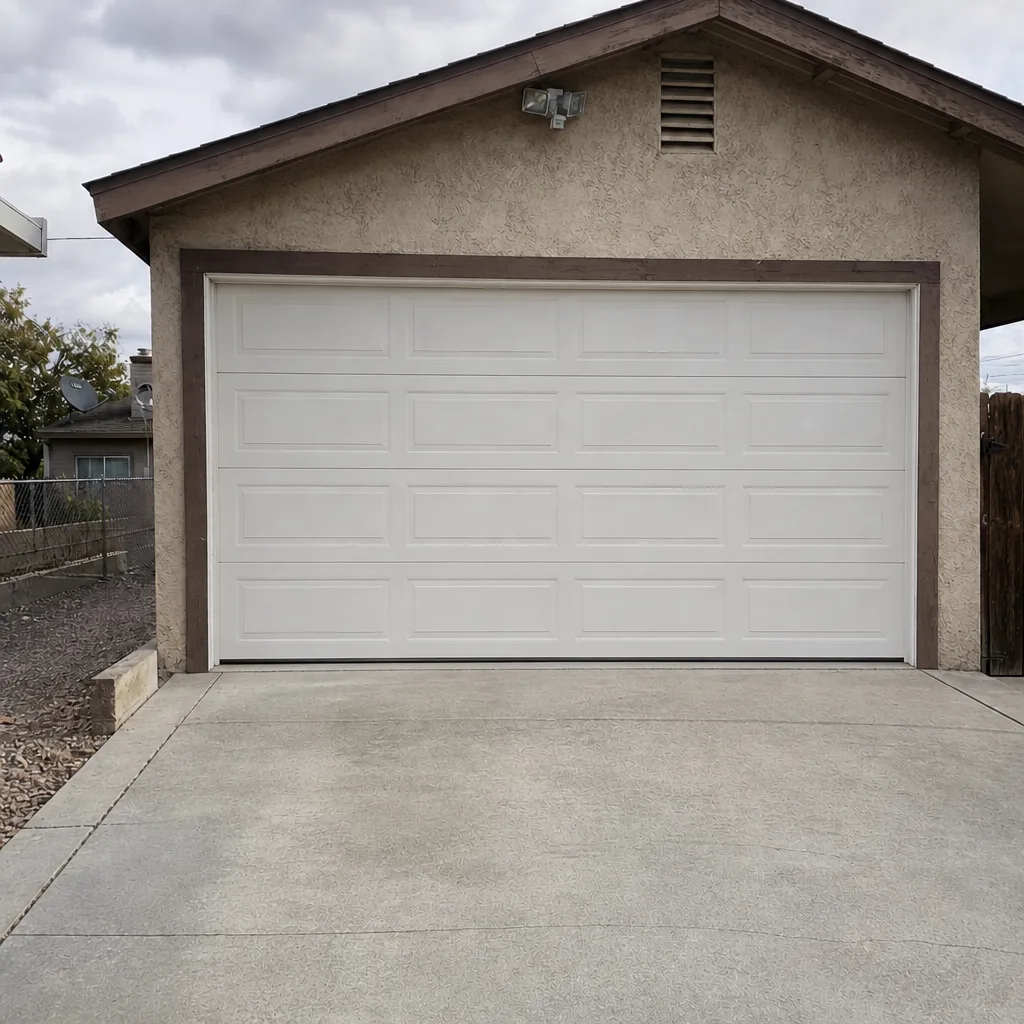 After
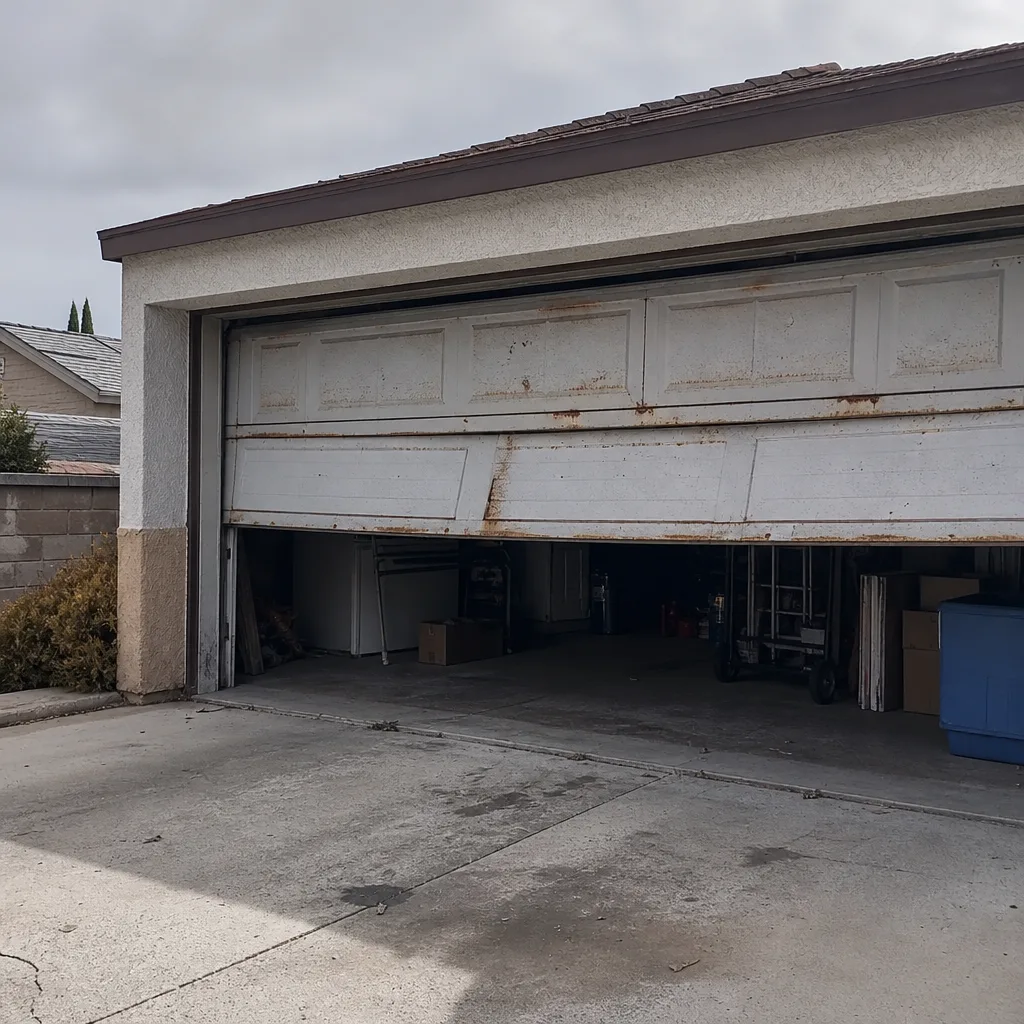 Before
 After
 Before
 After
When to Call a Professional
Get on the phone for a broken or sagging spring, a cable that’s off the drum, a door that won’t stay balanced, a track bent out of line, an opener that fails the 2×4 reverse test even after a force adjustment, and any grinding or screeching that shows up in the monthly check. Those are not DIY repairs, and we won’t walk you through them on the phone for good reason. Our team has up to 22 years of experience on doors and openers, and we’re honest about whether the door needs work or just a tune-up. Free estimates in Sunrise Manor – call (888) 274-8795. If you’re curious what we do on a service call, the Otto’s Garage Door Sunrise Manor home page has the overview.
Frequently Asked Questions
Every three months, with heavier attention in April and May before the heat hits. White lithium grease on the hinges, roller stems, and torsion spring, and a silicone-wiped rag on the tracks. Skip the WD-40 – it dries into sticky grit in desert heat. Call (888) 274-8795 if you want us to walk you through what to use on your specific door.
The bottom seal is one of the few maintenance jobs a reasonably handy homeowner can do – it’s a matter of removing the old seal, cleaning the retainer, and sliding the new one in. The catch is getting the right profile for your door. Clopay, Amarr, and Wayne Dalton all use different retainers, and a wrong-profile seal won’t seat correctly. If you’re not sure, we’ll bring the right one when we’re out on a repair.
Usually the opener isn’t the problem – the door is. In our experience, a loud opener is usually a symptom of an out-of-balance door, dry rollers, or a worn spring the motor is straining against. Run the balance test in this guide and check your lubrication schedule. If both are good and the noise is still there, call (888) 274-8795 for a look.
There’s no perfect warning sign, but there are signals: rust streaks on the coil, a visible gap, a door that feels progressively heavier, or a new metal-on-metal groan. Springs fail after a set number of cycles, so a professional look every spring before summer is the best insurance. Don’t touch the spring – a door is 200 pounds riding on two springs, and it’s not a homeowner job.
Yes, if it isn’t maintained. Our summers are hard on weatherstripping, roller lubricant, and steel springs. A door that gets the April maintenance window does noticeably better than one on a Midwest-schedule. The wear happens in July and August – you just don’t see the cost until September.
No – but skipping the auto-reverse force setting test can. Most opener warranties require correct force setting maintenance, and a claim traced back to a force setting that was never adjusted can be denied. Do the 2×4 test every six months, and don’t turn up the force dial to compensate for a stiff door. Call us and we’ll look at both.
The Bottom Line
Garage door maintenance in Sunrise Manor runs on our calendar, not a generic four-season checklist. The big work is April and May – lubrication with white lithium grease, balance test, force setting test, and eyes-only inspection of springs and cables. The monthly five-minute check catches what’s creeping up between the busy months. And that September weatherstripping week we had last year happens because homeowners waited for a failed seal they couldn’t see. Don’t wait. The schedule above is short enough to actually do, and it will save you a repair call in August.
If you’d like a second opinion on your door’s condition or a written estimate on anything this guide flagged, call (888) 274-8795 for a free estimate. A live person answers around the clock. We’re glad to look at the door, tell you what we’d do, and quote the number before anything starts.
Written by the team at Otto’s Garage Door Sunrise Manor.